

As July Fourth celebrations took place around the Island over the weekend, so did a Vineyard tradition that lifts up the words and legacy of Frederick Douglass, the famed orator, abolitionist and former slave.
As July Fourth celebrations took place around the Island over the weekend, so did a Vineyard tradition that lifts up the words and legacy of Frederick Douglass, the famed orator, abolitionist and former slave.
For years, Mr. Douglass’ speech What To The Slave Is The Fourth Of July has been recited both in Oak Bluffs at various locations and at the Federated Church of Martha’s Vineyard in Edgartown.
On Friday, the 21st reading of the speech in Oak Bluffs took place at the Tabernacle. The event was also a celebration of life for Abigail McGrath, who founded Renaissance House, a collaborative retreat for writers and creatives. Under Ms. McGrath’s tutelage, Renaissance House organized and hosted the reading each year.
Family and friends took the stage to speak about Ms. McGrath, who died in December at the age of 84, recalling her boundless energy and creative spirit.
Her youngest son, Benson McGrath, said the connection between his mother and Mr. Douglass’ speech is stronger than ever.
“In honor of my mother, we encourage each other to remember our triumphs, remember the lessons we learned from our setbacks, to remember our history,” he said. “In the spirit of the great American Frederick Douglass, now more than ever, please remember to encourage.”
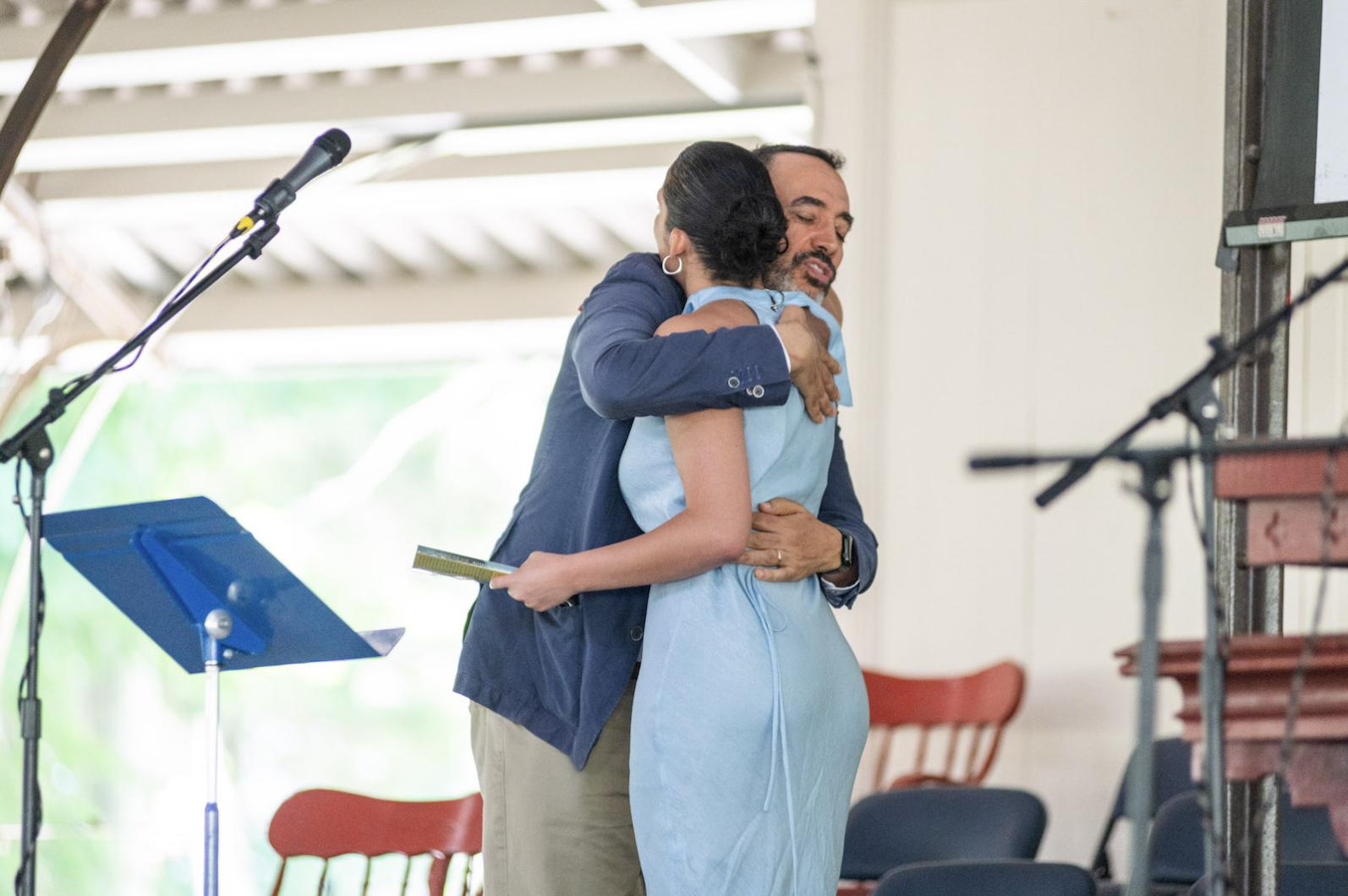
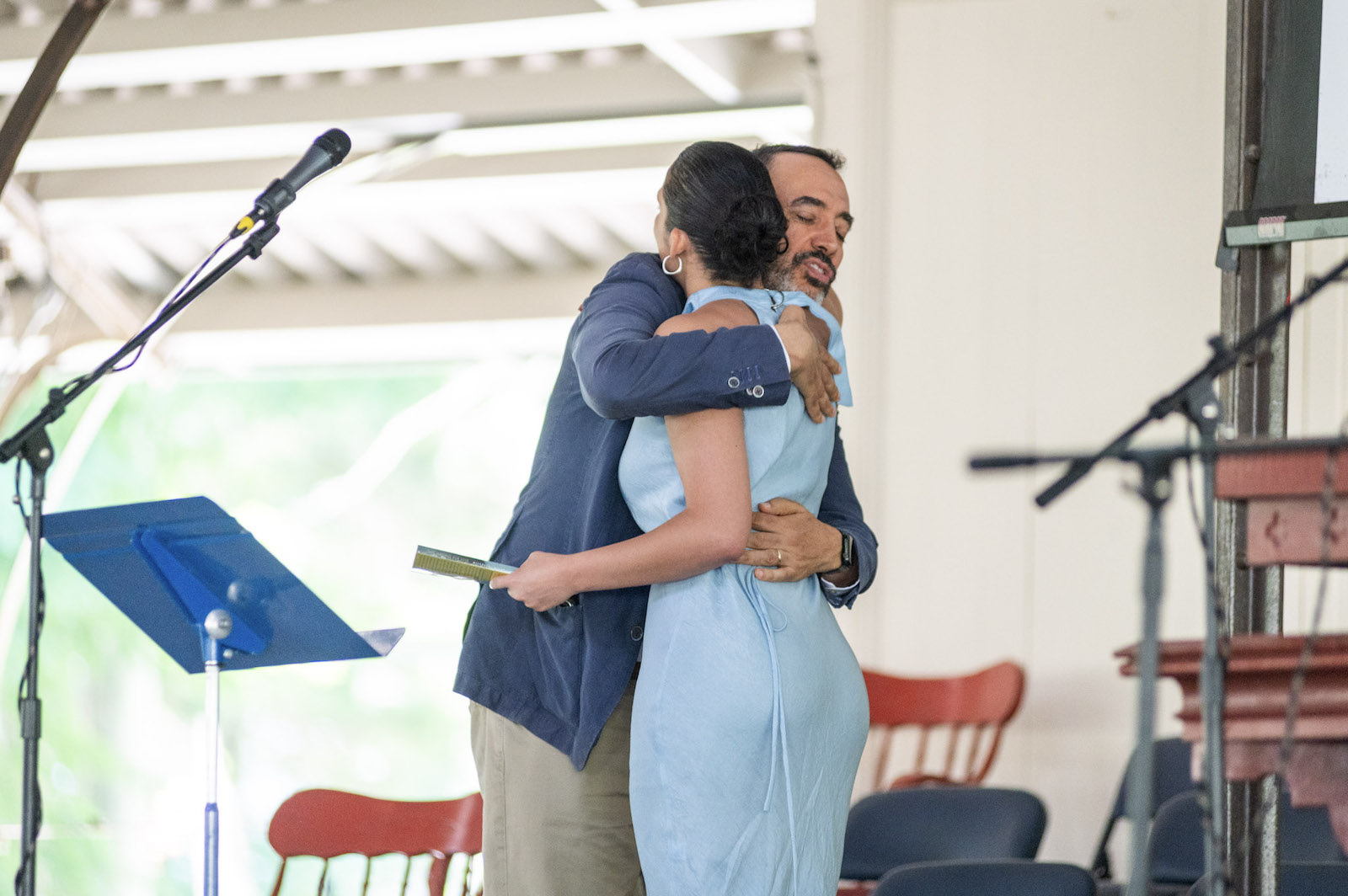
Danica Rosen, Ms. McGrath’s granddaughter, recalled a funny story about her grandmother’s memorable gift baskets.
Jason Rosen speaks to the crowd.
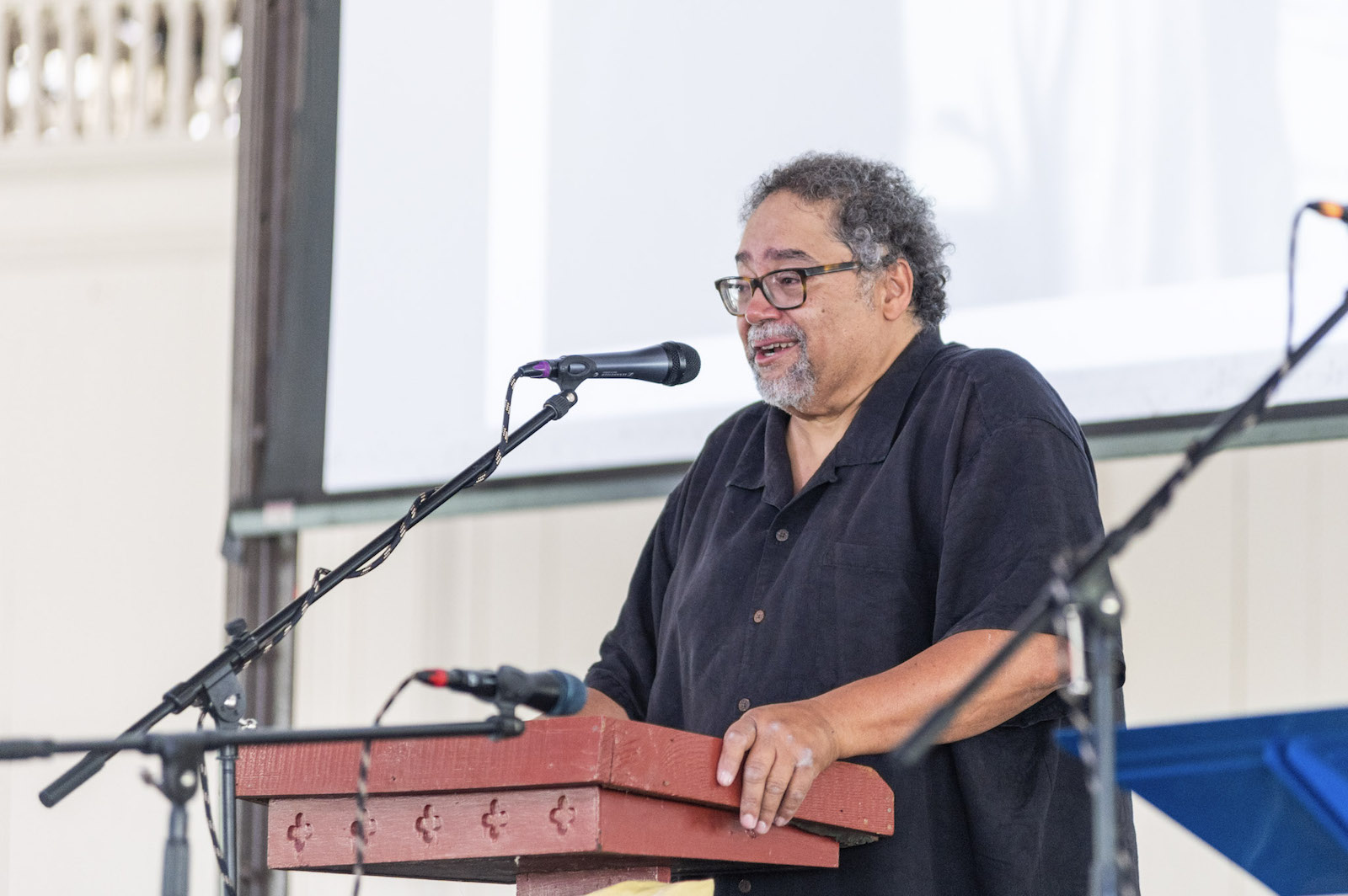
Jason Rosen speaks to the crowd.
“She brought me one of those gift baskets when I moved into my dormitory and there were some things in there that freaked my parents out,” she said with a laugh. “To this day, it left an impression on my roommates. She had that ability to stand out and have that impression — to have that presence, and she kind of couldn’t help it.”
Jessica Harris said Ms. McGrath lived many different lives in one.
“Abigail was a never ending and always unfolding gift,” Ms. Harris said. “In our conversations, I discovered that Abigail had enough life experiences to fill at least two full miniseries.”
Renaissance House and Ms. McGrath’s impact will continue to leave an imprint on the Island, according to her eldest son, Jason Rosen.
“She had two homes that were in her heart, New York City and Martha’s Vineyard,” he said. “Her family’s been here since 1906, and it’s a tradition that we’re keeping up. Renaissance House will continue in some fashion. We can’t do it the way she did. Nobody can, but give us time. We’re figuring it out.”
Ms. Rosen said that continuing her grandmother’s legacy of gathering the community together to read Mr. Douglass’ speech is a way to celebrate her life.
“This event here just makes it feel doable for us as a family and [I want] to thank everybody for allowing that space and making it feel a little bit possible,” she said.
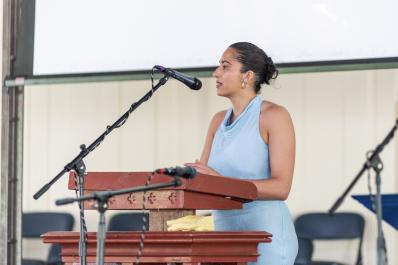
Danica Rosen
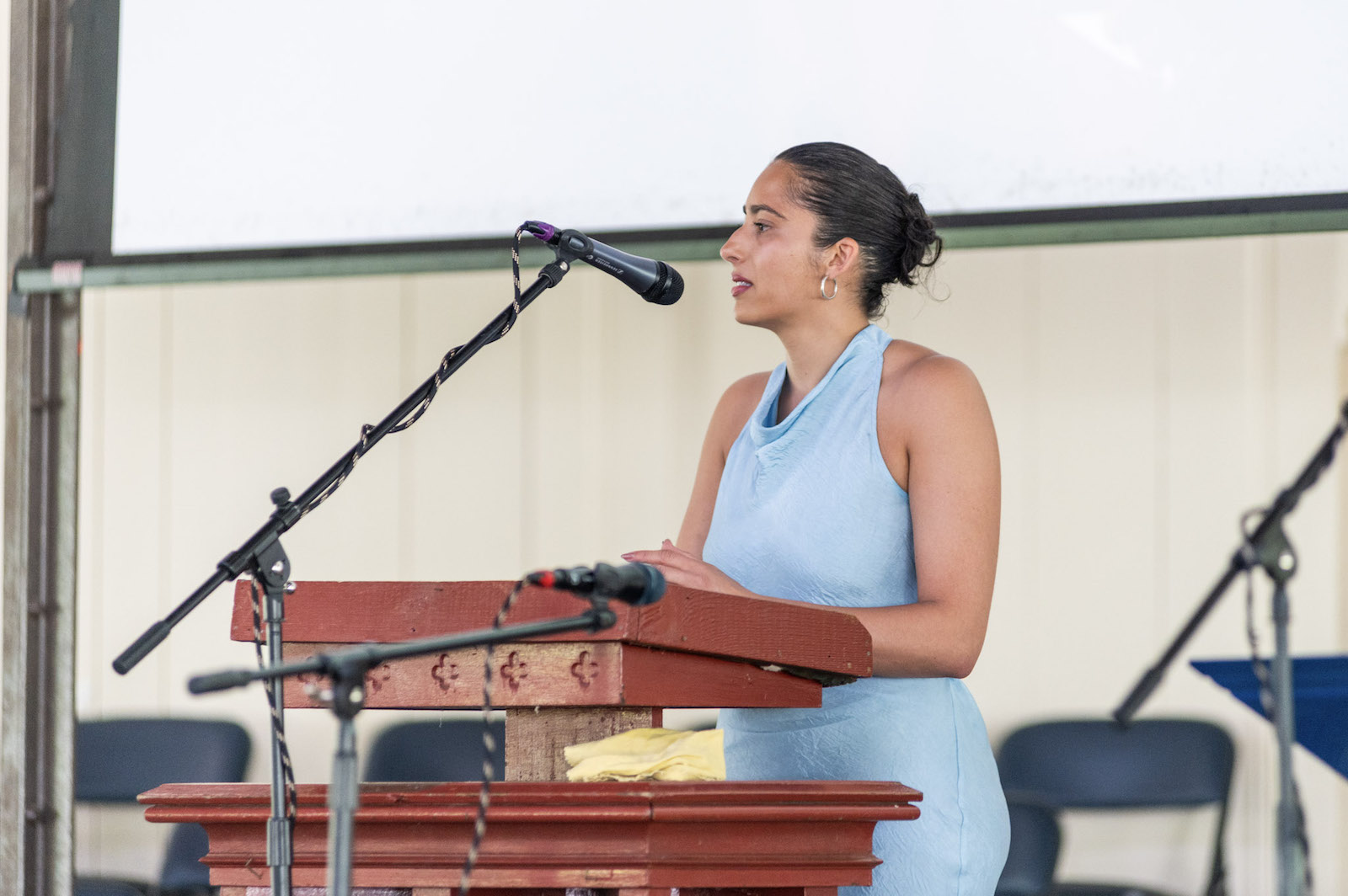
Danica Rosen
As the memorial celebration transitioned into the traditional reading, organizer Makani Themba said that Ms. McGrath’s legacy will always be a part of the proceedings.
“This [event] meant so much to [Abby] because it wasn’t just a reading of a speech, it was an opportunity to build community around justice,” Ms. Themba said. “It was so important to her to create that space, and I want to thank everyone who’s ever read who have helped create that space.”
A video of Ms. McGrath energetically introducing the speech brought smiles to all in attendance, and brought new depth to the words of Frederick Douglass, read once again by community members as a reminder that not all were free on Independence Day in 1776.
On Saturday, it was Edgartown’s turn to bring to life the fiery words of Mr. Douglass.
Fourteen people took the stage at Federated Church of Martha’s Vineyard, where Mr. Douglass spoke in 1857 on the unity of man. Readers included T. George Davis, the clerk of courts, Toni Kauffman, the former president of the Martha’s Vineyard NAACP, Joe Carter and more.
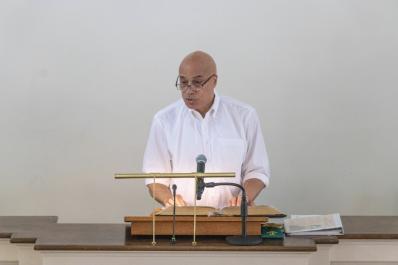
At the Federated Church George Davis reads a part of the speech.
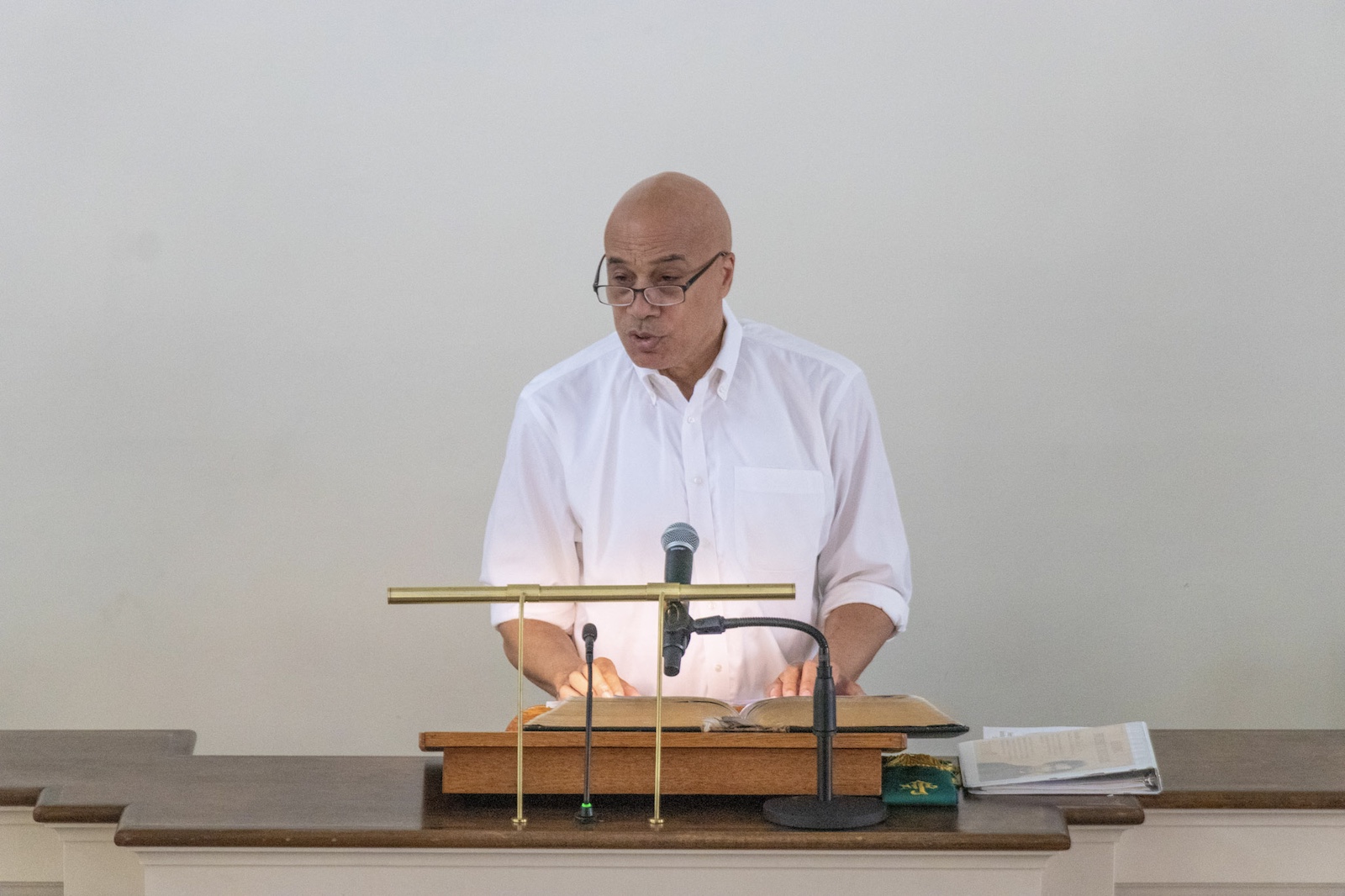
At the Federated Church George Davis reads a part of the speech.
Mark Winters, minister of the Federated Church, welcome the crowd and said that What To The Slave Is The Fourth Of July remains one of the most important speeches in the history of American rhetoric.
“It is important to pay attention because those who do not pay attention to this history are doomed to repeat it,” he said.
Mr. Douglass delivered the speech on July 5, 1852 in Rochester, N.Y. He began by acknowledging the founding fathers and their ideas of liberty, while also describing the horrors of slavery and the hypocrisy of a nation that only deemed some members fit to be able to pursue a life of freedom.
Saturday’s reading was organized by the church and Friends of the Edgartown Free Public Library, and has been a tradition since 2014. Many of the same readers have returned each year to take part.
Nis Kildegaard, a former research librarian at the Edgartown Public Library, has been a reader for a decade. He said the speech, which was first delivered 100 years before he was born, remains relevant every year.
“What fascinates me about Douglass’ speech is that it is timeliness, but it speaks to the moment differently every year,” he said.
Mr. Kildegaard said that during the reading on Saturday, the section that described enslaved people being hunted down felt particularly relevant.
“We’re not done. This is still the American predicament,” he said, referring to the recent immigration policies and raids taking place in the United States.
Event at the Federated Church is a long-standing tradition.
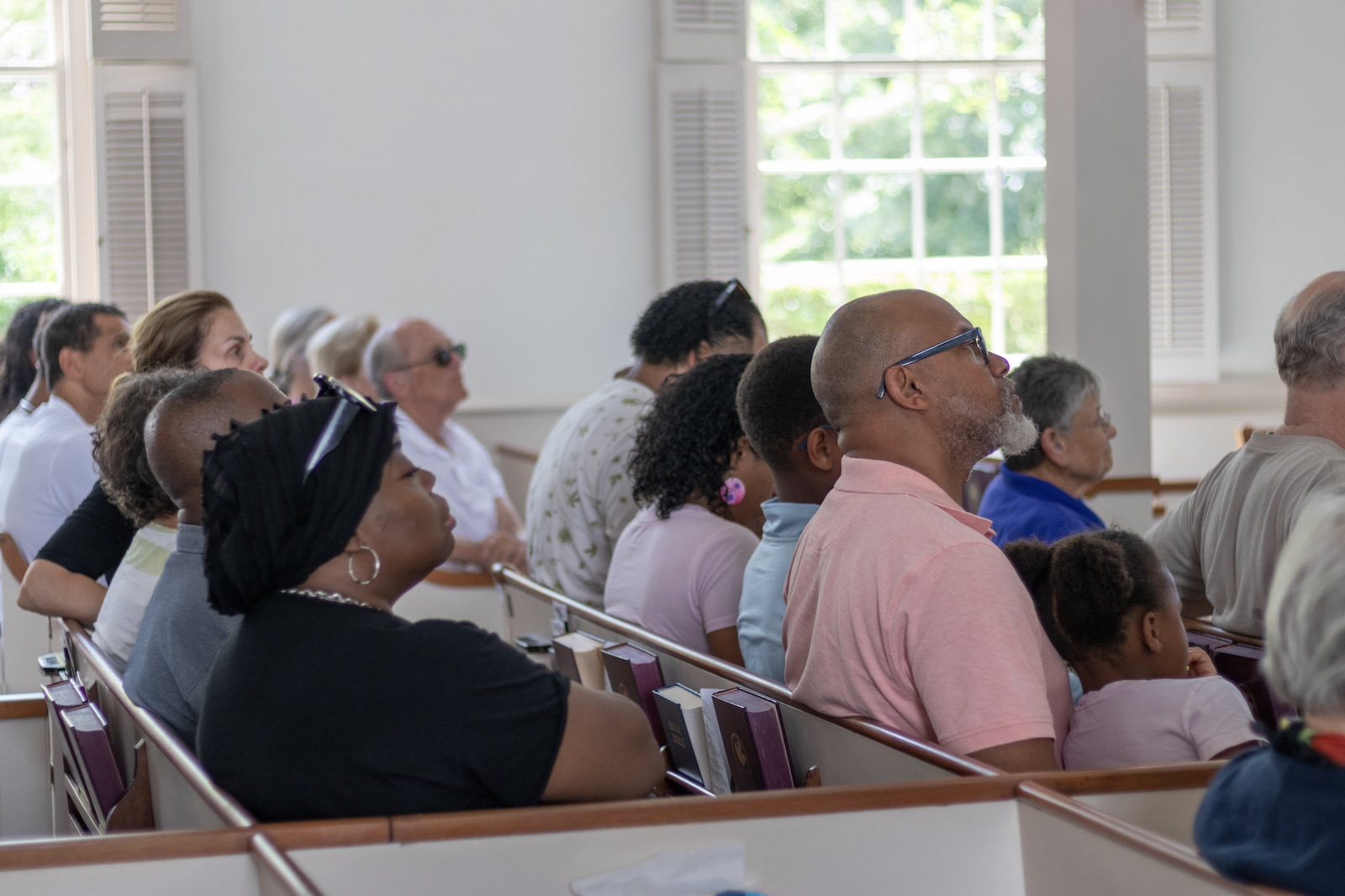
Event at the Federated Church is a long-standing tradition.
Joseph Carter, former police chief of Oak Bluffs, echoed the sentiment that reading the speech each year gives people a chance to interact with it amidst present day issues.
“In context with what we’re dealing with today, it’s important that Frederick’s words are heard and read by as many people as possible,” he said.
Add new comment