


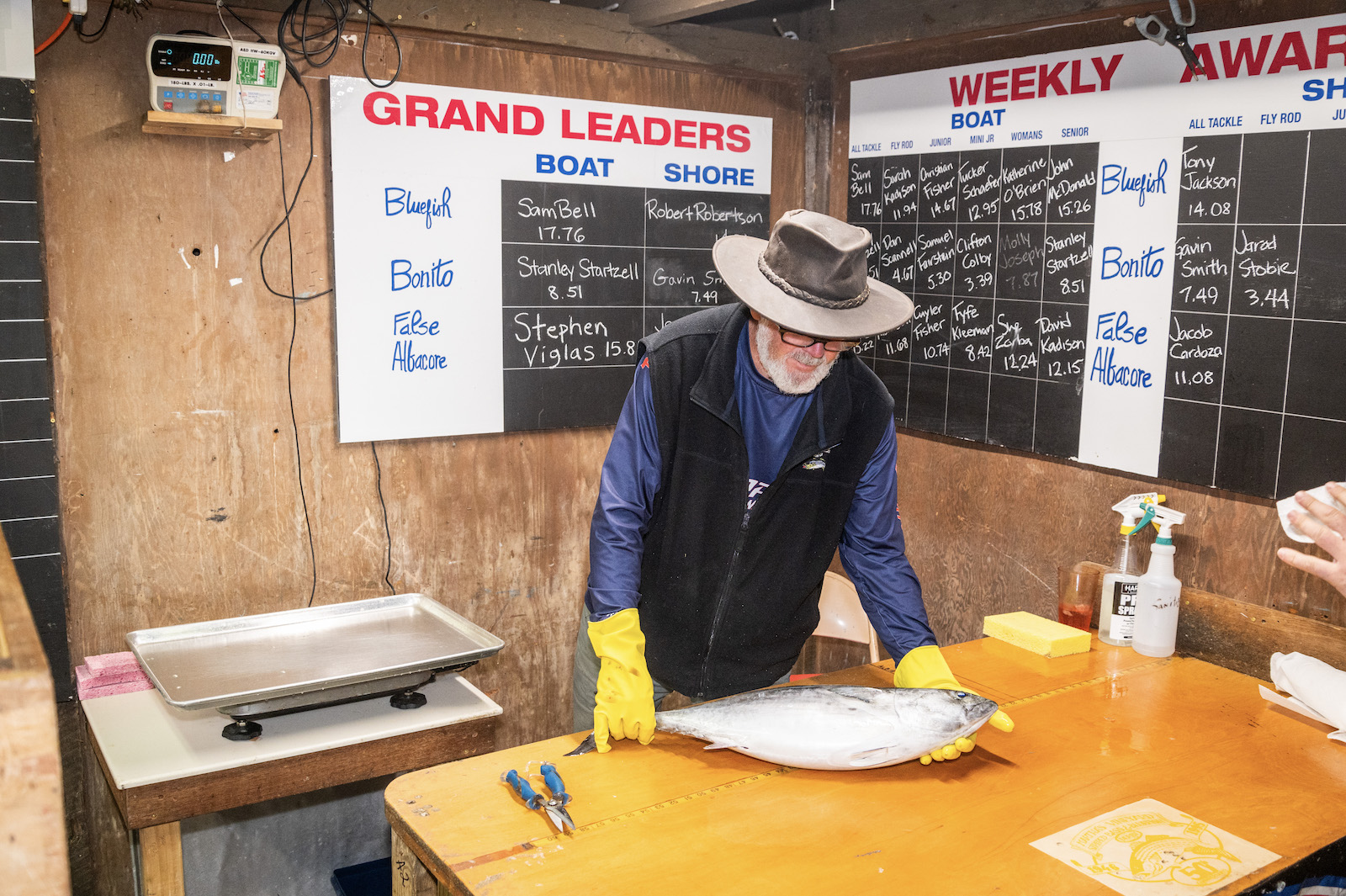
The state Marine Fisheries Advisory Commission voted late last month to adopt a 16-inch minimum size limit on the two fish, which are staples of the Martha’s Vineyard Striped Bass and Bluefish Derby.
Massachusetts is enacting the first east coast catch limits on bonito and false albacore in order to protect the understudied species.
The state Marine Fisheries Advisory Commission voted late last month to adopt a 16-inch minimum size limit on the two fish, which are staples of the Martha’s Vineyard Striped Bass and Bluefish Derby. There will also be a catch limit, with anglers able to keep, in total, a combined five false albacore and bonito per person, per day.
The state Division Marine Fisheries is working to promulgate the new regulations, which are expected to be rolled out later this season. There are currently no rules around the fish and the state decided to pursue protections because the lack of research on the stock leaves the species vulnerable to overfishing.
“These two species are really becoming a mainstay,” Dan McKiernan, the director of the Division of Marine Fisheries, said at the commission’s March 27 meeting. “This is a precautionary proposal.”

Pete Lynch walks away with a bonito.
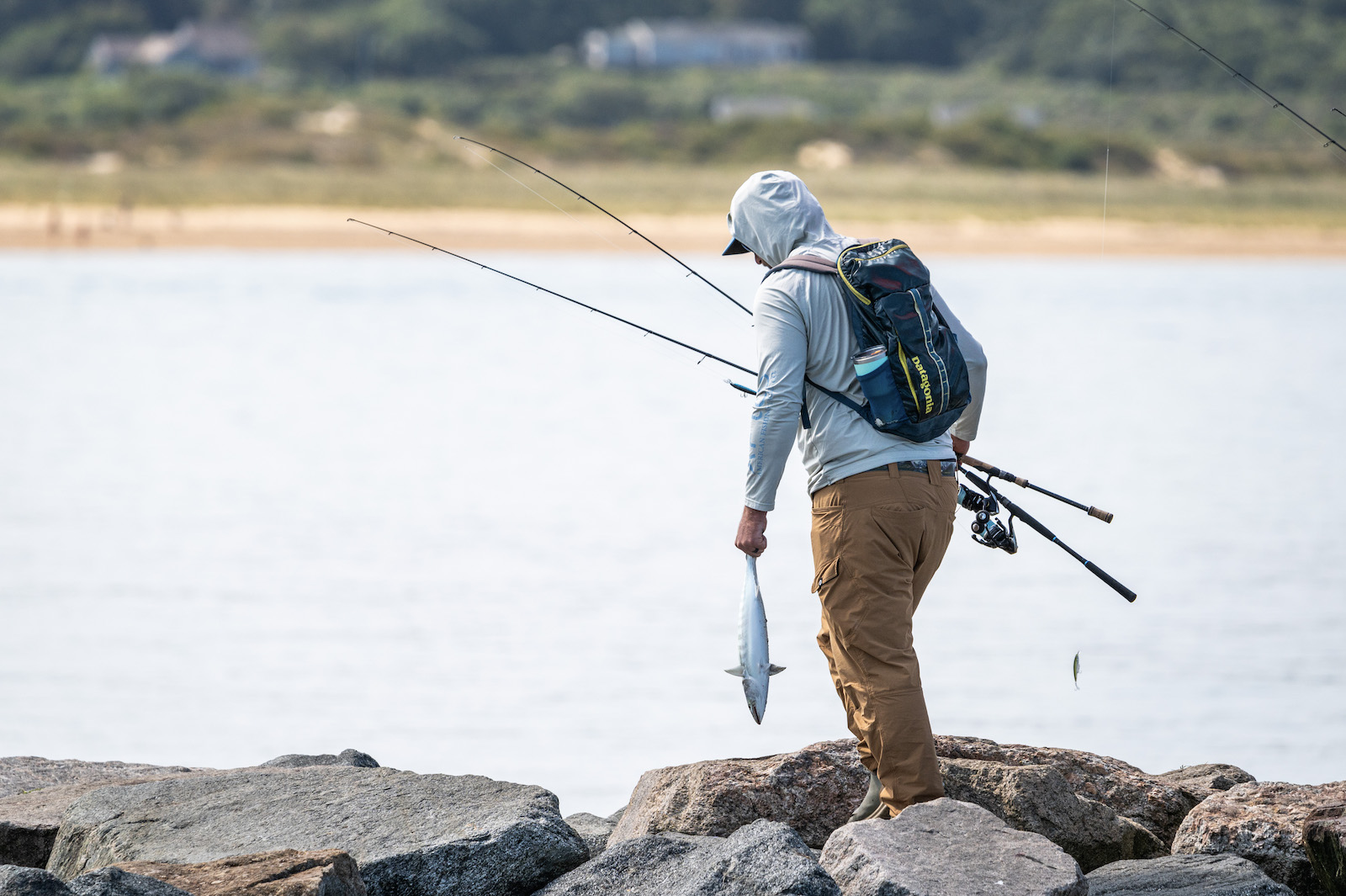
Pete Lynch walks away with a bonito.
Bonito are found throughout the western Atlantic Ocean, looking similar to tuna. False albacore is especially prized for its fighting ability, though its oily nature means it only makes it to the dinner tables of the brave.
Neither fish is prized commercially, but there have been spikes in catches in recent years. Massachusetts fishermen reel in about 35 per cent of the bonito catch on the east coast — more than any other single state. Young bonito are now being used as lobster bait, which raised concern among some in the fishing community, according to Mr. McKiernan.
Shelley Edmundson, the executive director of the Martha’s Vineyard Fishermen’s Preservation Trust and a member of the state advisory commission, voted in favor of the regulation change.
“I think it’s smart to be cautious and have a conservation-minded approach to managing the species, with the hope and plan for following up with more data,” she said at the meeting. “I think in lack of that data, taking this precautionary approach is essential.”
Others were not so sure, saying the commission was making decisions without any scientific backing.
“I can’t support this kind of preemptive motion,” said Tim Brady, a commission member from Plymouth. “There’s no real science behind this.”
Several Islanders and people who fish on the Vineyard weighed in via written comments to the commission. Most said some sort of action was needed to ensure the future of albies and bonito.
“We are already seeing the decimation of the striped bass population and I fear there will be nothing to fish for future generations if we do not adopt additional protections now,” Hamilton Clark, a seasonal Tisbury resident, wrote to the commission.
Jaime Boyle, a fishing guide on the Island, thanked the Division of Marine Fisheries for coming up with proactive steps, and said that these two species have become important for the charter industry.
“As a full-time fishing guide on Martha’s Vineyard, these fish now make up most of my season,” he wrote. “The recreational fishing pressure has grown immensely and I’m also witnessing a new commercial fishery for them.”
Not everyone was in favor of how the rules played out though. Peter Slikowski, the owner of Larry’s Tackle in Edgartown, supported some rules, but felt that the restrictions needed to be tailored to each fish.
Fishermen will now only be able to catch a combined five bonito and false albacore a day.
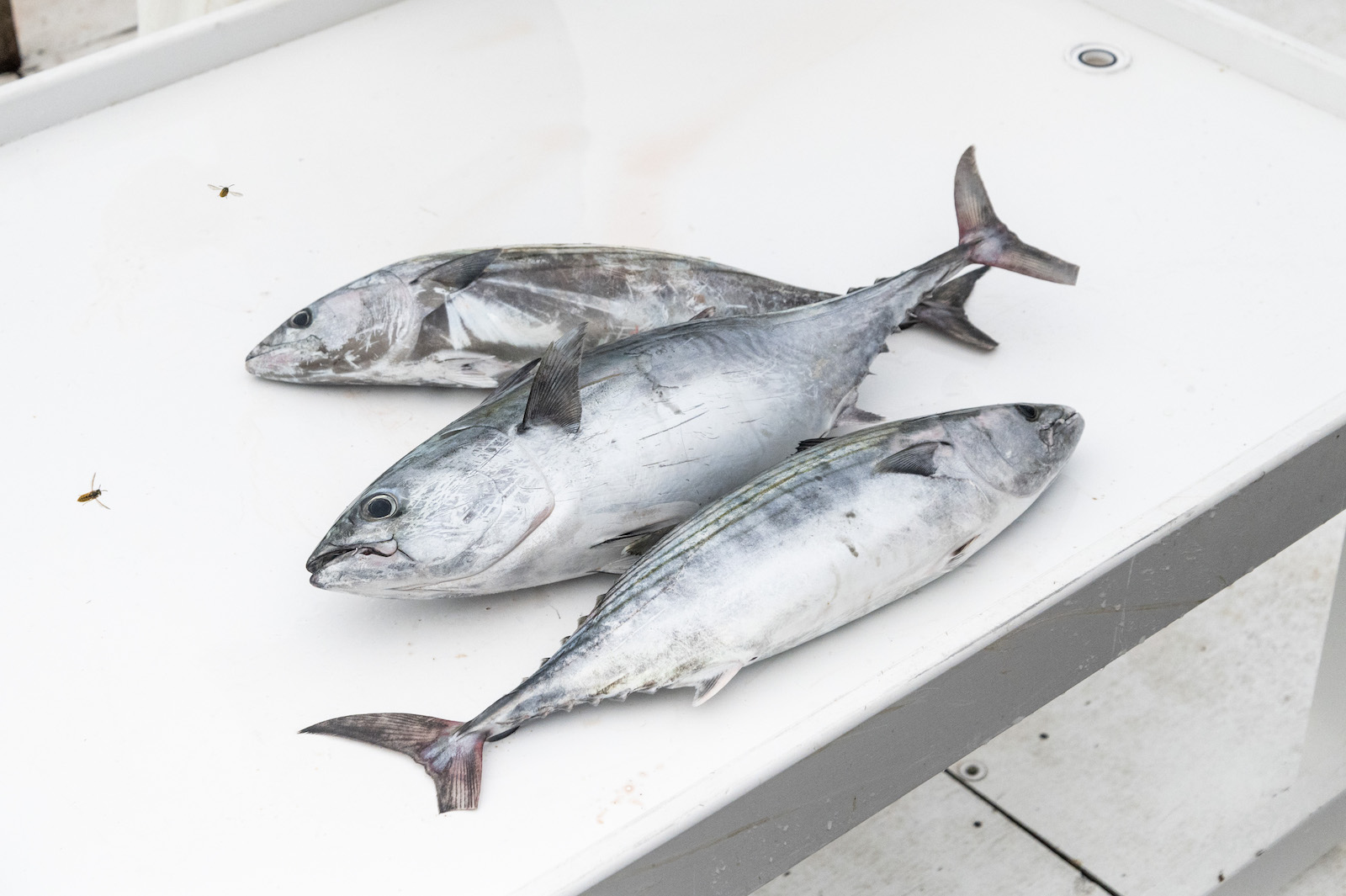
Fishermen will now only be able to catch a combined five bonito and false albacore a day.
“While both are targeted in the same inshore fishery, their biological differences, harvest practices, and uses justify separate regulations,” he wrote.
As these rules are rolled out, commissioners hoped this could help prod other states to also take action around preserving the bonito and false albacore stocks.
There have been efforts to enact the new Massachusetts rules across the eastern seaboard, though they haven’t gained much traction. Massachusetts previously floated catch limits on the fish to the Atlantic States Marine Fisheries Commission, a regional body that oversees fishing up and down the east coast. But there was little appetite to take the issue on, Mr. McKiernan said.
Commission chair Raymond Kane, of Chatham, asked Mr. McKiernan to tell other fishery leaders that Massachusetts wanted to see them follow suit, sooner rather than later.
“Because right now, personally I just see it being a disfavor to both recreational and commercial harvesters of Massachusetts when no other state has any regulations,” he said.
Comments
It seems more and more that
Ron McKee Martha's VineyardIt seems more and more that fishing in general is being targeted by the anti fishing crowd with little or no research being done except that at the computer rather than getting on the water to see what's really happening. The huge increase in the brown shark and seal population is responsible for the much lower on shore catch while the boat fishermen have been seeing better an better numbers landed and released. In the last 20 years I've only seen 2 people doing any sort of research . The input by the largest fishing group being ignored by the agencies. Unless it's from the EPO s that are chasing the black market sales of striped bass on the canal. Seems to me before you put more an more ant fishing rules in place that they get out from behind their computers and do some on the water research
I fish more than most as my reputation has shown. How about protecting the fishery instead of letting the anti fishermen crowd run the narrative.
I was at the meeting at the
Gary Davidson Sagamore BeachI was at the meeting at the MMA prompted by the bucket loads of juvenile bonito being decimated locally for no good reason. Vineyarders know more than most what the value of these fish are, economically and as a catchable table fish. Having huge kills happening for minimal gain hurts a huge fishery currently trying to rebound. If you don't give any of the fish we fish for a fighting chance, we will all be trying another hobby soon!
The limits seem reasonable to
R Scott Patterson EdgartownThe limits seem reasonable to me, worth it to try to protect the resource.
While this does not break the
Mike UpislandWhile this does not break the MV Derby model, this is another step in the inevitable demise of the MV Derby. As the recreational world goes more and more to a catch and release model, the derby seems outdated (like the OB Shark Tournament). The question is if the leadership of the derby sees this coming and is proactive in change or if they wait for the regulations to force change as they have in the past. Perhaps a catch and release tournament does not generate the same interest (and $s) but getting in front of this with technology as an aid is the obvious solution. The derby’s glory has already been diminished with the loss of the striped bass but the opportunity is to modernize the event and at the same time serve as a model of change for the island to be proud of.
Add new comment