

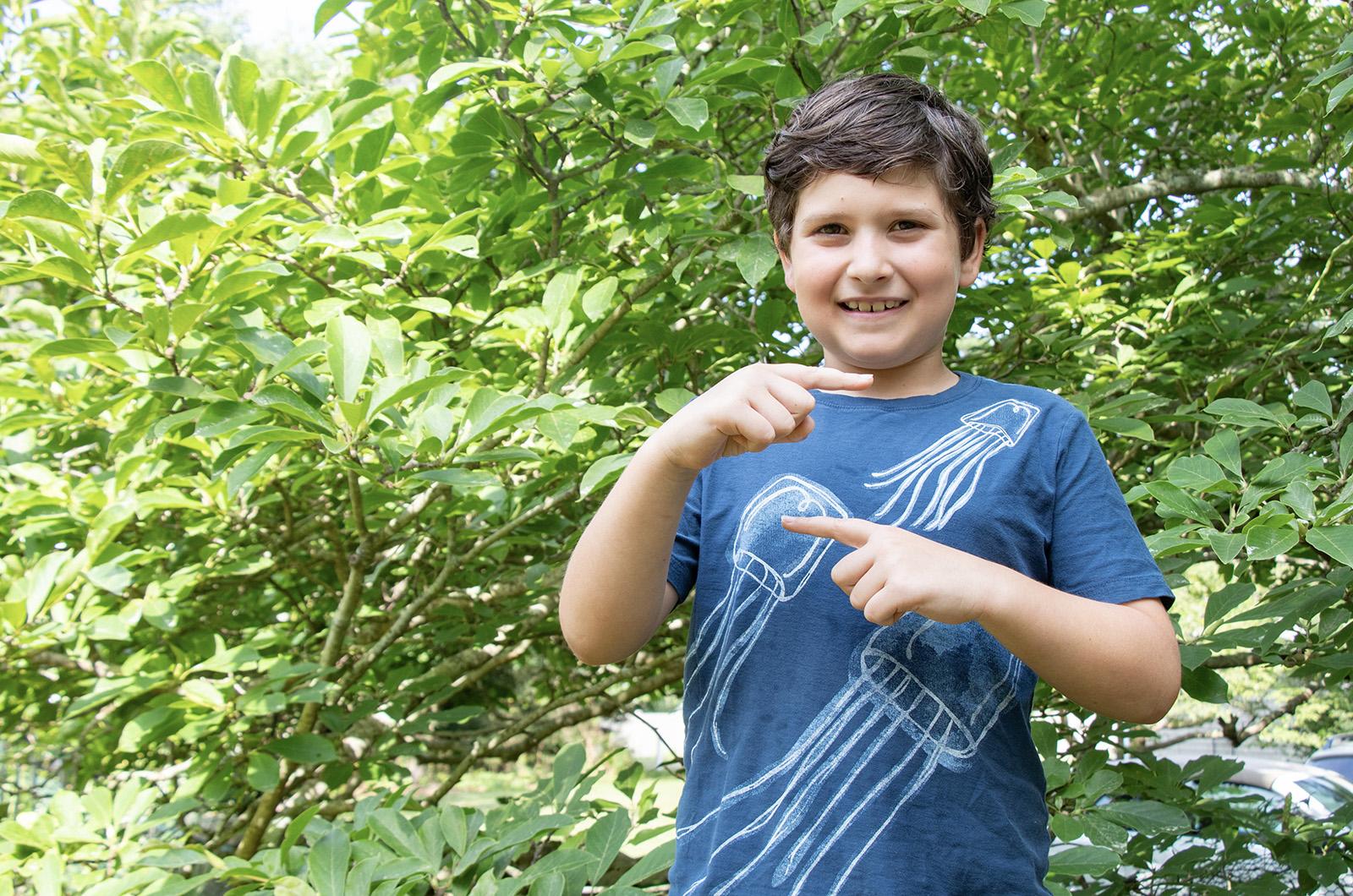
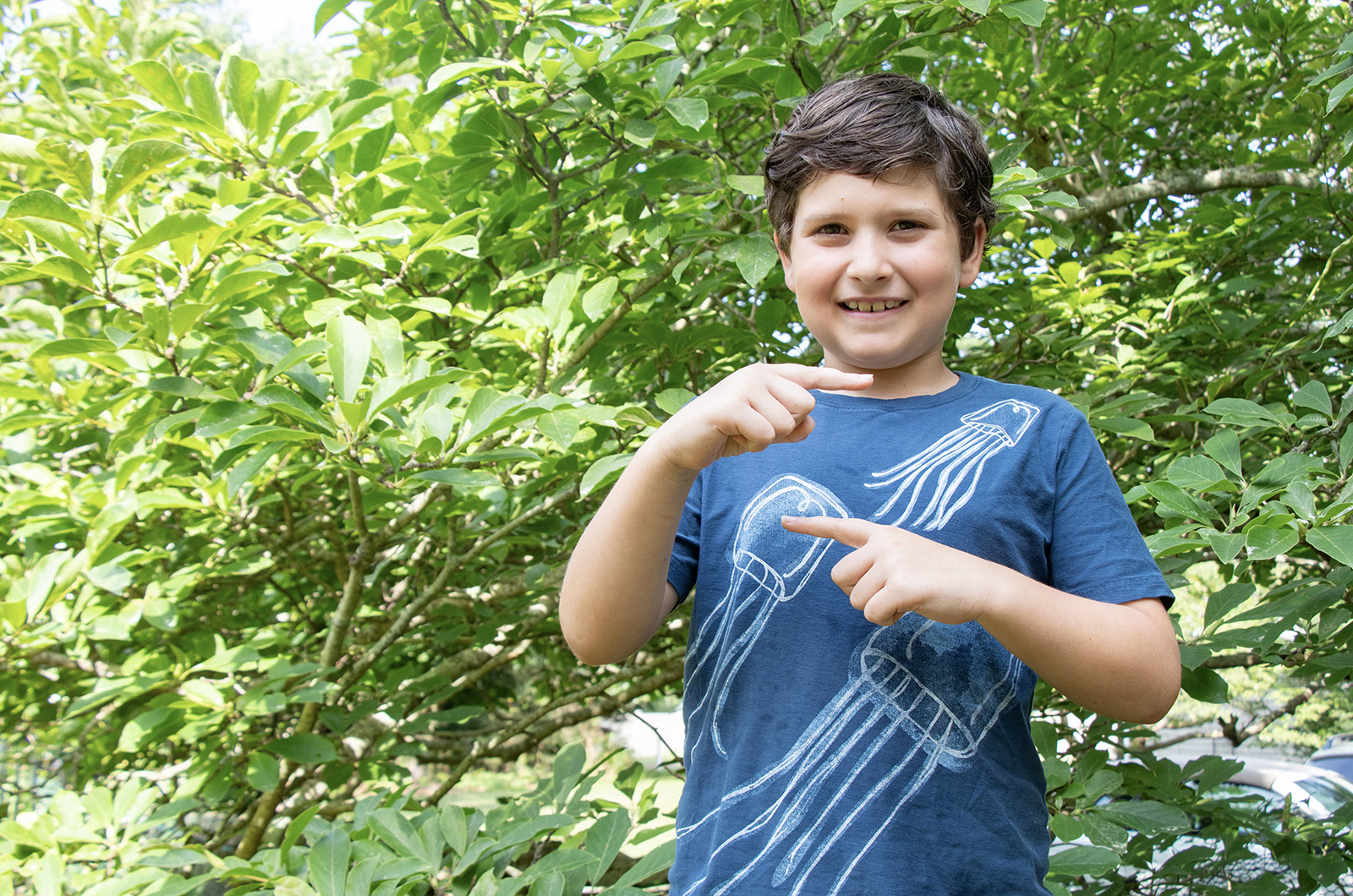
Pipefish, stripers, hermit crabs, minnows, even pufferfish: Bodhi Favreau, 8, of Easton, had seen all these before. But on Sunday at State Beach, he he discovered a rare and magical ocean denizen: Hippocampus erectus, a lined seahorse.
Pipefish, stripers, hermit crabs, minnows, even pufferfish: Bodhi Favreau, 8, of Easton, had seen all these before.
But when the young scientist went snorkeling in the shallows of State Beach last Sunday — for what must have been the 100th time, his grandmother said — he discovered a rare and magical ocean denizen: Hippocampus erectus, a lined seahorse.
“At first I thought it was a pipefish. Then I caught him and I thought he was dead. But then I realized he was alive and a seahorse,” Bodhi told the Gazette.
Bodhi names the seashorse Sea Pony, then returned it to its natural habitat.
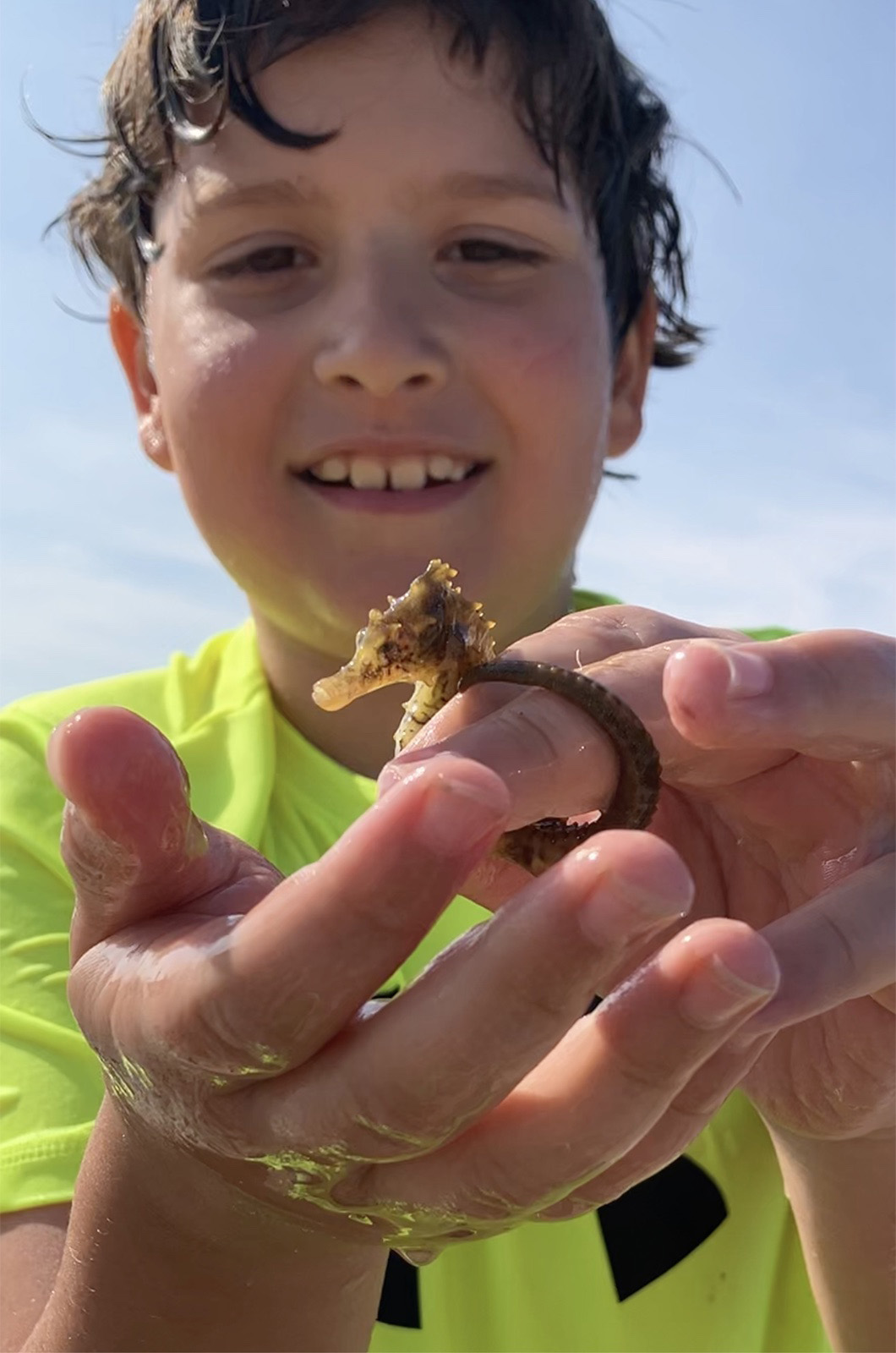
Bodhi names the seashorse Sea Pony, then returned it to its natural habitat.
Bodhi has been fascinated by ocean life “since he was a baby,” Karen Krowski, his grandmother, said.
Ms. Krowski lives on the Island and Bodhi visits regularly, spending every day in the water with his snorkel and net. On Sunday, he was exploring a sandbar along State Beach when he saw the seahorse in a stand of seaweed. He fished it out with his net and brought him on shore, where he named him Sea Pony.
Bodhi said he placed Sea Pony in a bucket with some water, sand, seaweed and a stick to grip on — seahorses use their tails to anchor themselves in place.
“He was swimming constantly, like really fast, he was just swimming around... He came up to the surface, he took his head and kept bobbing around,” Bodhi said. “It looked like he was stressed.”
After watching him for a few minutes and making a handful of observations, Bodhi returned Sea Pony to the sandbar.
The Martha’s Vineyard Atlas of Life, a digital repository of wildlife observations made on the Island, lists no recent encounters with a seahorse. A checklist of known species on the Island, maintained by the Atlas of Life staff, lists the seahorse as an “uncommon” Island fish.
The Island lies at the far northern end of the seahorse’s range, Suzan Bellincampi, director of the Felix Neck Wildlife Sanctuary, wrote last year in her All Outdoors column for the Gazette, when a dead seahorse washed ashore.
The Cape and Islands serve as the northern bound for a number of marine Atlantic species, with waters north of Cape Cod Bay significantly colder than those to the south.
Bodhi said he hopes to become marine biologist when he grows up, and use the most advanced scientific tools to complete his studies, such as the Woods Hole Oceanographic Institution’s Alvin probe. Currently, his gear consists of one mask, one snorkel, two nets and four buckets, he said.
“I’d like to find new species, and I’d like to study rare types of sea horses, and I’d like to study the bottom of the ocean, because only 1 per cent [has been] discovered about it,” he said.
Asked what inspires him to become a marine biologist, Bodhi answered: “It’s just basically really cool.”
Comments
Way to go, Bodhi!
Dan Cottage City OystersWay to go, Bodhi!
We have sea horses that live in our oyster cages. Some of the Edgartown oyster farmers have found them in their cages too.
We also have a rare Atlantic octopus on the oyster farm right now!
Keep discovering.
This is so cool, Bodhi! You
Catherine Widdop, Second Grade Teacher Easton, MAThis is so cool, Bodhi! You continue to amaze me and make me proud!
We love all the creatures you
Jim Favreau (Grampy) Northborough MAWe love all the creatures you capture for all of us Bods !
They are so special
Congrats dear boy the son of
Teresa MarlboroCongrats dear boy the son of two lovely and darling heelers of every human and a animals they touch. We love you all. Thanks God they are in our world
How very COOL is that?!
Aunt Marilyn Cape CodHow very COOL is that?!
I've spent a lot of beach time over the years in a lot of places looking for any and all (safe) sea creatures and have some great, unusual shells. Just fascinating that you found this little guy! Congratulations, Bodhi, you rock! ❤️
Add new comment