



When the new year arrived so did a set of costly septic regulations in Tisbury, with 1,500 home systems immediately subject to new rules from the town board of health.
When the new year arrived so did a set of costly septic regulations in Tisbury, with 1,500 home systems immediately subject to new rules from the town board of health.
As of Jan. 1, every time a house is sold in the Tashmoo or Lagoon Pond watersheds the septic system must be replaced with an enhanced, nitrogen-removing septic system. Systems that need to be repaired or replaced also fall under the new stipulations.
Replacing an existing system with an enhanced one can cost upwards of $50,000, not including the necessary upkeep and monitoring.
The new regulations in Tisbury are at the vanguard of a new wave of local planning meant to address degrading water quality in Island estuaries, an issue primarily caused by nitrogen pollution from on-site septic systems. Oak Bluffs is in the process of implementing a town wastewater plan, which includes an enhanced septic system program along with sewer expansion, while the Martha’s Vineyard Commission is developing a plan for the up-Island towns, which lack centralized sewers. Edgartown is also undergoing a wastewater planning process.
Tisbury, though, through the board of health, has been the first to implement new regulations meant to curb nitrogen pollution.

Doug Cooper, Island environmental engineer

Doug Cooper, Island environmental engineer
But as Island towns and regional authorities begin to act on the issue, local planners and professionals are grappling with the reality of implementing such regulations — and whether the Island is moving in the right direction.
“It all takes money and time and effort,” said Reid Silva, owner of civil engineering firm Vineyard Land Surveying, who has worked with septic for 20 years. “It’s very easy to create a regulation that requires something, but how you actually implement it and manage it is the piece that they haven’t figured out.”
The issue came to a head in 2023, when the state department of environmental protection proposed the first revision to their septic regulations in nearly 30 years. Towns under those regulations would either have to develop a plan to reduce nitrogen in their watersheds or be required to upgrade thousands of septic systems. Martha’s Vineyard, along with the South Coast and Cape Cod, was initially slated to be a part of those regulations, but the Island was exempted by the state after an extensive public comment period.
Still, the issue has remained a prominent one on-Island. Wastewater planning in all six Island towns is being undertaken with the same guidelines that would have been required under the new state septic regulations, part of the reason the state pulled the Vineyard out of its new plan.
For local planners, one central question has been how to balance two potential solutions to the wastewater issue: the expansion of central sewers or the promotion of private, enhanced septic systems.
Historically, Island planners have been skeptical of increasing sewer capacity, which can remove up to 97 per cent of nitrogen from wastewater, out of fears that increased capacity might encourage development. But traditional septic systems only remove about 20 per cent of nitrogen, so when development accelerated anyway, water quality deteriorated.

Mike Alberice, interim Tisbury wastewater supervisor

Mike Alberice, interim Tisbury wastewater supervisor
The trade-off is far from new.
“One of the most important issues facing the Island is that of an adequate sewer system,” wrote the Gazette in a 1967 editorial. “The problem can’t be dodged or ignored . . . . Otherwise a crisis may easily arise that will require quick action without sufficient preparation.”
In the early 2000s, the first enhanced systems began to appear on the scene, able to remove approximately 50 per cent of the nitrogen. More recently, momentum has shifted to the locally-developed KleanTu enhanced systems, which claims to remove 92 per cent of nitrogen, though the company has yet to receive final certification by MassDEP.
In Tisbury’s new nitrogen regulations, enhanced systems must remove at least 75 per cent of nitrogen waste in order to qualify.
“All I can say is, they’re the hot new ride,” said Doug Cooper, an Island environmental engineer involved in Edgartown wastewater planning, of the new, enhanced technology. Despite a career often focused on minimizing municipal sewer systems, Mr. Cooper said he is still skeptical about the ability of enhanced septic systems to do the job alone.
“Sewers are probably the more efficient way of removing nitrogen from a particular drainage basin,” he said.
Though enhanced systems have been pitched as a way to clean water without expanding sewers, the implementation of new regulations in Tisbury has highlighted a critical trade-off: it puts the responsibility of payment solely on the individual.
In a letter to the Tisbury board of health in November, the Cape Cod and Islands Association of Realtors asked the board to reconsider the requirement to upgrade systems upon a property’s sale, claiming it would exacerbate the Island’s housing crisis.
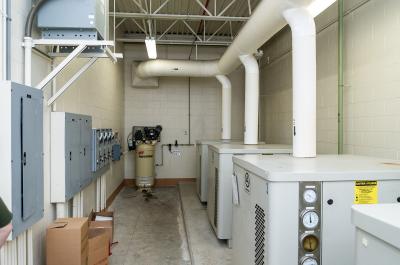
Tisbury wastewater plant.
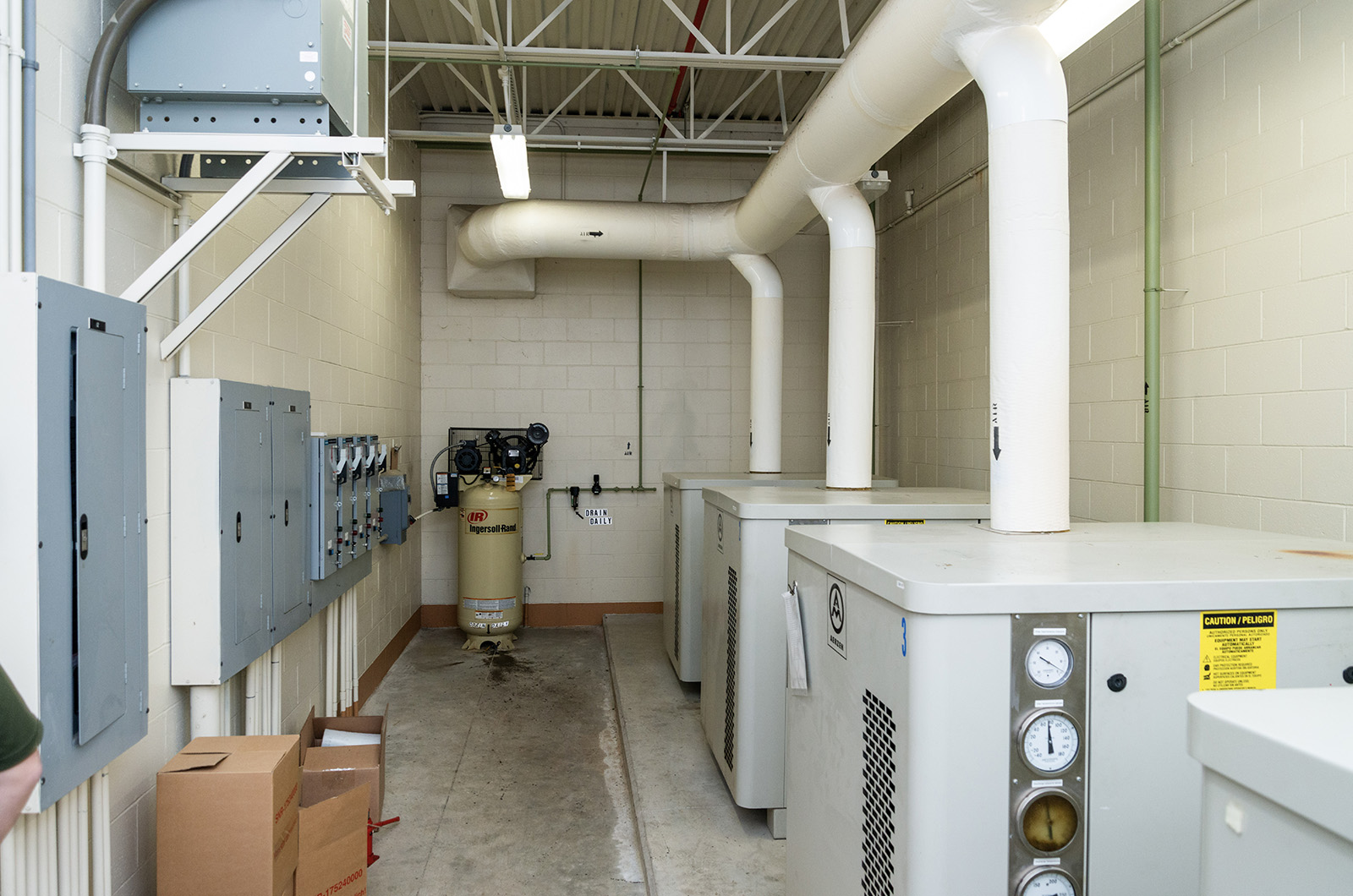
Tisbury wastewater plant.
“We all know the Vineyard housing market and Tisbury’s in particular has seen prices rising quickly over the last few years, but one of the pockets where there has been more affordability is in these watersheds being targeted,” they wrote. “This action quite simply makes the more attainable properties in Tisbury more unaffordable.”
A bill passed by Gov. Maura Healey’s administration last year tripled the tax credit for upgrading septic systems to $18,000, however that credit only applies to failed systems, leaving property sales out of the program. Available septic grants from Dukes County, the realtor’s association wrote, are unlikely to cover the full costs of implementation.
This tension between sewering and septic in historically-affordable neighborhoods also applies to Edgartown, said environmental engineer Chris Alley. In the Arbutus Park and Ocean Heights neighborhoods near Sengekontacket, for instance, enhanced systems have been required on most properties since 2007.
“There’s kind of a philosophical side of this,” he said. “Is cleaning Sengekontacket the responsibility, morally and financially, of the residents of Ocean Heights and Arbutus Park, or is it the responsibility of the town? If it’s the responsibility of the town, then you would lean toward everyone pitching in and putting in a sewer.”
According to Edgartown wastewater supervisor Bill Burke, the department is planning to incorporate that area into the municipal sewer, aiming to put a $3.1 million article on the town warrant this year to push forward those efforts. But actual installation of that sewer infrastructure remains years in the future.
In the meantime, said Mr. Alley, some homeowners in the area might find themselves caught in the middle.
“You put one of these really expensive septic systems in and then in three years the town decides to sewer your roads, it tells you to tie into the sewer. You probably haven’t even paid off the loan you needed to put into the septic system,” he said.
In Tisbury, interim town wastewater supervisor Mike Alberice said part of the solution could be the establishment of the town as a Responsible Management Entity (RME), a possibility first proposed by his predecessor Jared Meader.
Under such a strategy, the town wastewater department could take over the installation and management of new, enhanced septic systems, distributing costs through payments akin to a sewer betterment.
The RME would also allow the department to take a more active approach in managing the systems, which are now monitored by private contractors hired by the homeowner.
“It’s like you have 500 little wastewater plants. And if you have, you know, 20 different people who are maintaining them, you sort of get this patchwork,” he said. “It could go well, but I could see a lot of things falling through the cracks.”
Going forward, Mr. Alberice said, cooperation between the wastewater and health departments will be important for implementing these solutions.
But whether privately or publicly managed, the proliferation of enhanced septic systems could create a major burden for monitoring
and maintenance for an already-limited workforce.
“It’s creating an industry that really hasn’t gotten there,” Mr. Silva said. “There’s a reality behind environmental protection, but there’s also reality behind the economics and the physical capacity to implement and manage these things.”
Comments
The only reason we don't have
here we go again mvyThe only reason we don't have sewering is because the local towns use it to limit the number of bedrooms on a building lot using the gallons per bedroom title V regulations. There is a way to keep the charm of the island without overbuilding as a result of a logical sewer system. Expecting a 50k expenditure as a requirement at the time of the sale, along with land bank fees will destroy the real estate market here. Islanders who are looking to cash out and move south will no longer be able to sell to local families, just making the affordable housing situation worse. My home on the island (THANKFULLY not in Tisbury) is not subject to these regulations, but I'd be more than willing to contribute my share since we all have the single source aquifier. The cost of a sewer plants initial construction should be shared equally by all taxpayers, and the homes hooked up can be charged an annual user fee.
So there is the land bank fee
Abby Normal The RockSo there is the land bank fee, and the new housing bank, and this? About $100k on a $1 million dollar house. That does not include the sales commission of $40k to $60k.
How is it legal to tell a homeowner that has a functioning Title 5 system it has to be replaced?
Tisbury voted money for pipes in the ground over a decade ago for the B2 district. Yet, that is not done.
This seems like a huge overreach and hope it will be challenged and struck down in court.
why isn't the well water
Michael edgartownwhy isn't the well water showing nitrogen? you are being singled out, and people who aren't near the water are breathing a sigh of relief, that only you have the $50,000 expense and not them........something is wrong here. cape cod is being told this also.....
It would be best if the
Doug Inman TisburyIt would be best if the Lagoon Pond Association took up a ban of fertilizers on their lawns. The fertilizers are detrimental to the health of the ponds.
I for one am glad these new
Alison George TisburyI for one am glad these new regulations are in place and I hope other towns adopt them too. These septic systems are failing to do their job of protecting the environment and should be replaced as with any other failed septic system. It’s no different than buying a house with a failed roof. It may be expensive to replace but you know what you are getting into up front. If we don’t protect our ponds now it will be too late.
These new septic requirements
Tim Greer TisburyThese new septic requirements are totally meant to enrich the pockets of the septic engineer and the individual that is designing and selling these new overbuilt unessasary systems. The Vineyard Gazette should investigate a little , this is a public tax payer shakedown and the people behind it need to be criminaly charged . It's that bad
That’s a pretty bold
Downislander EdgartownThat’s a pretty bold accusation that the enhanced systems are “totally meant to enrich the pockets of the septic engineer and the individual that is designing and selling …….”. What proof do you have of this? As a “septic engineer and individual designing these systems” I can assure you that I don’t see one red cent from the sale and installation of these systems. So please get your facts in order before making such public slanderous statements.
Chris Alley is not just an
Ken M Edgartown &FloridaChris Alley is not just an environmental engineer, he is obviously a very deep thinker. When he waxes philosophical we should all listen.
If I read this correctly, the
Gary McGivney TisburyIf I read this correctly, the state exempted the island from these regulations, but the town has decided to implement them anyway?
I have no problem with requiring a new capture system upon failure of the old, but i have a big one with the requirement being upon sale or purchase. That's just wrong in so many ways.
I hope one of those 1500 affected people is a lawyer who's willing to file a class action suit on behalf of all of us to eliminate that clause.
I'll contribute.
Yes. We need a class action
Two bedroom rancher VINEYARD HAVENYes. We need a class action law suit. My low end two bedroom rundown ranch will take a big hit upon sale. It's egregious abuse of power and must be stopped!
Can anyone in Tisbury please
Jude Ahern WellfleetCan anyone in Tisbury please tell us in Wellfleet how those "enhanced" I/A systems using woodchips is working out? We're being told the woodchips won't need to be replaced for over twenty years but none have been in the ground that long. Also, one person as an RME is not going to be able to manage all the different types of I/A systems for hundreds of clients (Wellfleet has 13 different systems and about 225 already in the ground) and this person will not work weekends or holidays when an alarm goes off. The State grant only pays for this position for two years then it'll be up to the taxpayers to fund this position. Maintenance for these I/A systems is currently 4 times a year costing approximately $ 250 each due to County requirements. Scott Horsley, also Tisbury's consultant, is committing Wellfleet to put 100 of these "enhanced" I/A woodchip systems in and is telling us that it'll only require testing once a year for an average cost of $ 750/year. Can anyone who has one of these woodchip systems please call me? Thank you! (917) 488-1513
People who call for more
Ron M EdgartownPeople who call for more extensive sewer line systems forget that in several towns there are hundreds of small lots that are grandfathered against zoning rules but are currently unbuildable because they cannot qualify for a septic system. However, most of these lots would become building lots if they could connect to a sewer line.
Add new comment