


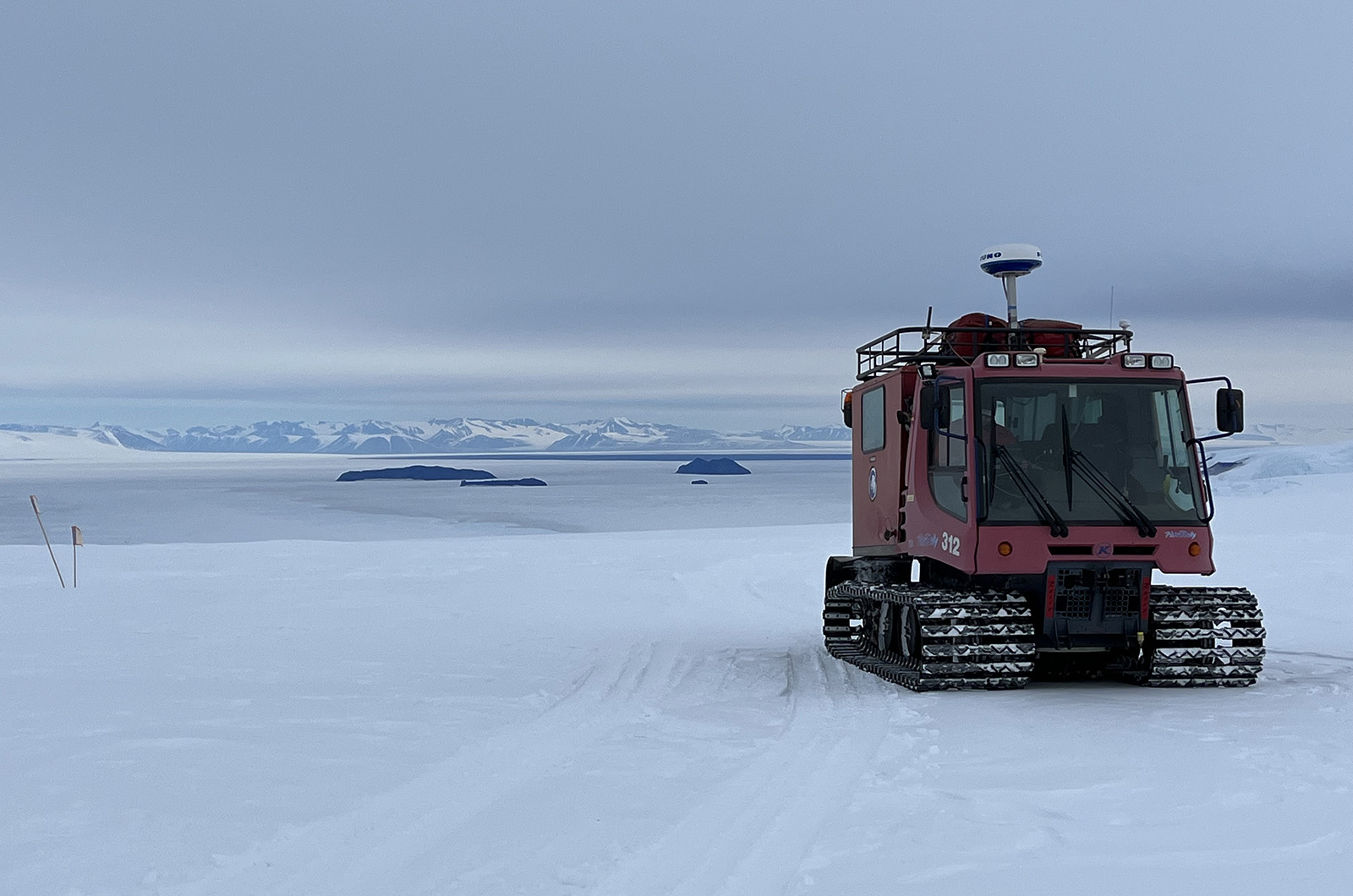
I have arrived — again.
I have arrived — again.
It is my ninth deployment to Antarctica spanning 17 years. Somehow that number doesn’t seem right — it’s too big — but it’s true. I have become somewhat of a veteran, what we refer to as an OAE, or Old Antarctic Explorer, in contrast to the new folks known as FNGs (“F-ing New Guys”).
In the last 17 years, I’ve certainly gotten older. I have less hair than I used to and at least a quarter of it is gray. Unlike some folks who have not missed a season in those 17 years, I have come and gone, when the experience and adventure has fitted in within my other pursuits.
Just a few months ago, like every summer, I was living at my family’s seasonal home in Vineyard Haven, soaking up the sea, the sounds, the birds, the smells, feeling my bare feet on grass and embracing as much sun on my face and body as I could before deployment.
When I think back to that time, sitting on the porch looking out at the Vineyard Sound, I sometimes wonder what I’m doing here on the frozen continent. On the Vineyard I could still be walking on the beach and watching boats go by or the leaves turning color.
Instead, I am looking for my clear-lens goggles just so I can walk comfortably to work. Most winter goggles have tinted lenses, but when I arrived in late August there was still more darkness than light in Antarctica. They issue us clear-lens goggles, knowing in a whiteout in the dark we will want all the visibility we can get.
I first came to McMurdo Station as a general assistant in October of 2006. Having always wanted to be an astronaut, it felt like I’d maybe come as close as possible to landing on the moon. I remember getting off the military C-17 after a five-hour flight from Christchurch, New Zealand. The passenger door opened and in rushed the cold and bright sunlight; by mid-October the sun stops setting until mid-February.
I remember walking down the few steps and entering into a different world. I had never experienced cold like that before; I could feel it deep in my nostrils with every breath.
But there I was, after many years of dreaming of making it to “The Ice,” I had arrived.
Benjamin Urmston first came to McMurdo Station in 2006.
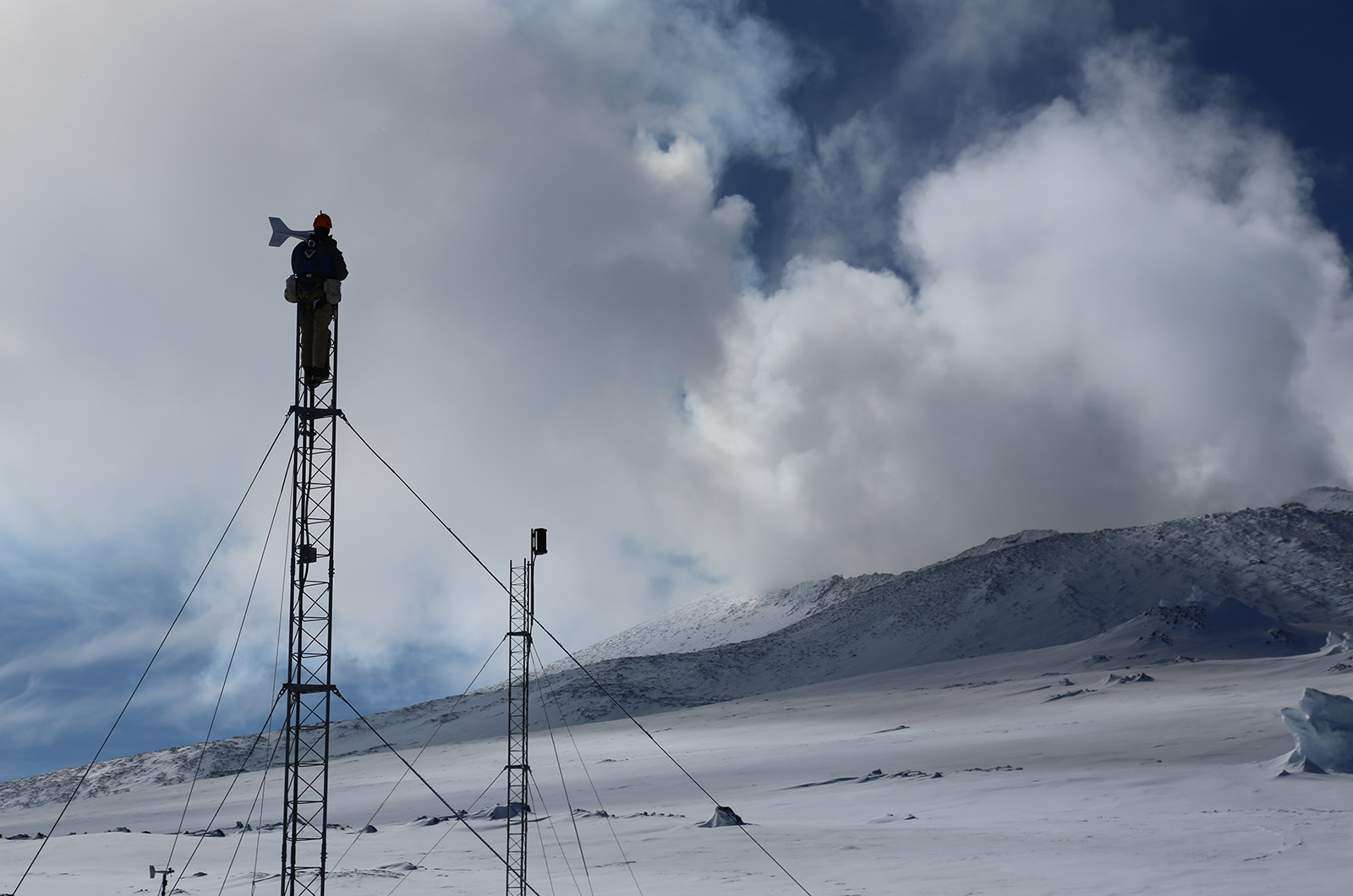
Benjamin Urmston first came to McMurdo Station in 2006.
McMurdo Station is the United States’ biggest of three Antarctic research stations. At its peak, there are about 1,000 people here whose sole purpose is to support or carry out scientific studies. Atmospheric, biologic, geologic, astrophysical and chemical studies are among the many different scientific research programs here. The station was first established by the Navy in 1956 as part of Operation Deep Freeze and is now run by the United States Antarctic Program (USAP), a branch of the National Science Foundation. It supports an eclectic group of dedicated scientists, contract support workers and full-time USAP workers.
My first jobs, when I was just starting out here, were as a general assistant, an antenna rigger, a renewable energy specialist and an electronics technician on one of the U.S. Antarctic program ships.
Currently, I am a field training supervisor and my department is responsible for teaching the training courses to scientists and support workers who will venture beyond the safety and security of the station. We also function as the primary search and rescue team for this part of the continent.
My arrival at this time of year is known as Winfly, or Winter Fly-in. During the winter, there were about 150 “winter-overs” here. With a few Winfly flights, the population has swelled to 300. Some of the winter-overs have retreated away from the crowds and now eat in the low-light back-of-galley. They are not quite excited to see us, and even more annoyed when we take their “freshies” — coveted fresh produce such as apples, oranges, bananas, kiwis, lettuce that they have not seen since the last flight which was in May.
Ten years ago there was a wooden painted sign that said, “Don’t be a banana hog! Take only one!”
I wonder if that sign is now in some banana hog’s dorm room.
Naturally, and I think justifiably, they feel that they deserve them more than those who just came from summer in the northern hemisphere or elsewhere. When October hits, there will be an onslaught of aircraft arrivals bringing even more people — scientists and support workers in what is known as Mainbody. The station population can balloon to over 1,000 hearty souls, ranging in age from early 20s to at least 70s. It begins to feel like college then.
We work nine hours a day, six days a week. Sundays are glorious. My priorities during my off time are sleeping, exercising, practicing my guitar and reading. For the moment, socialization takes place in the galley when I eat. I know I’ll get more social as my friends return in the coming months.
I will be here for six months this time, longer than the usual four or five months, so I must play the long game. But I am happy to be here. It is still an adventure. The pace is blistering but people work hard and play hard. I hope to find a band to play in and that we can earn a slot at Icestock, the 3 p.m. to midnight outdoor live music event held each New Year’s Eve.
There is also indoor soccer every Friday night.
But it is also lonely. And yet I have had some of the most memorable experiences of my life here. Antarctica is a wild place and they say it gets in your blood. Maybe that’s why stepping off the plane in August in -35 Celsius temperatures didn’t feel that bad.
I have made many sacrifices to be here and it has not always been easy. Before I left the Vineyard, when I took a final swim, I made sure to dunk my head under one last time to clean off any residue of that life. I wanted to come out clean, fresh and salted, as if emerging from the water for the first time.
Being in Antarctica, close to the bottom of the world, in some ways feels like a long underwater dunk. The world always looks a bit different when I return, and I am always slightly changed. But each visit reminds me that we live on the most incredible planet we know of and I refuse to let my time on Earth pass me by.
Benjamin Urmston lives in Antarctica and Vineyard Haven.
Comments
Very exciting story and life
rob the roofer new jerseyVery exciting story and life . I was happy with the derby in September but now I’ll set my bar a little higher. I was able to grab a golden ring at the flying horses this year for a free ride.
Fantastic. Very inspiring!
Maggie TowlesFantastic. Very inspiring!
A wonderful read…thank you
Islander EdgartownA wonderful read…thank you for sharing it. But it does seem odd to read about Antarctica and not even touch on clinate change.
At McMurdo Station it's hard
Ben Urmston McMurdo StationAt McMurdo Station it's hard to see any change. Frighteningly though, the Antarctic ice levels are at a drastic historic low this year. There is one area known as the Dry Valleys and the lake levels there are all rising because the glaciers are melting. They've had to move all the science camps within the last 10 years, some of them they've even had to move twice. Many scientists are here to study climate change because things that happen within the ice sheets and ice shelves can have global impacts. We live on a fragile world!
Ben,
Betty Roerts ConnecticutBen,
I enjoyed reading your piece.Thank you for sharing and please write more.
Betty
Great read, Ben! Inspiring!
David McNamara Delray Beach, FLGreat read, Ben! Inspiring!
Ben! I didn’t know you were
George Nyfeler AntarcticaBen! I didn’t know you were a Vineyarder! I was the survey crew chief for Dean R. Swift Land Surveying in Vineyard Haven from ‘87 to ‘91. And an avid windsurfer there thru winters - once sailing with Nevin Sayer (just the two of us) halfway to Woods Hole in April to toy with the Islander ferry and ‘hop big chop’. The wind speed, air temp and water temp were all the same number on that sunny day: 38.
I fly off-ice day after tomorrow, ending my 4th McMurdo deployment. At least two more will happen on my current subcontract providing surveying support from Nyfeler Survey. I’ll try to catch you in the Galley before I leave.
Great article! I was at those NASA antennas in your photo earlier today.
Benjamin! As always a great
Jodi Bulvanoski ConnecticutBenjamin! As always a great read into your exciting life! Good luck to you my friend!
Ben: Thanks for your well
Ned Lawson Lincoln, VTBen: Thanks for your well-written piece. It gave me a real sense of your life in the south.
How often I contemplate your
Chris Rokous Camden, MEHow often I contemplate your life of purpose and adventure with fascination and envy! Stay safe and warm! Hoping to catch you on the island next summer or, perhaps, in the midcoast.
Very cool! I am a Merchant
JD Naron Vineyard HavenVery cool! I am a Merchant Mariner and have wanted to work a hitch at the Antarctic research station for a while (possibly in the diesel power plant). I'm jealous!
Add new comment