

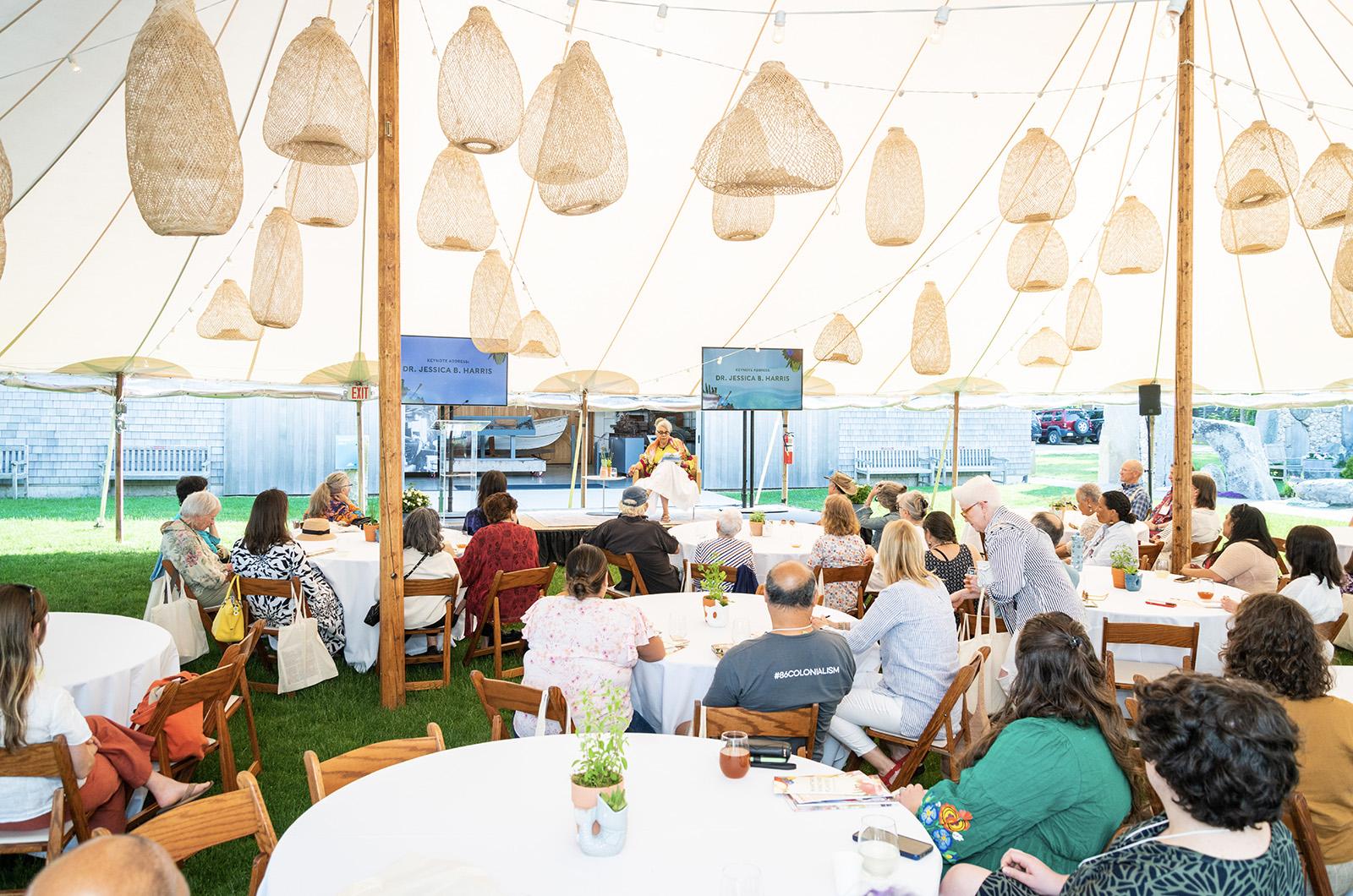
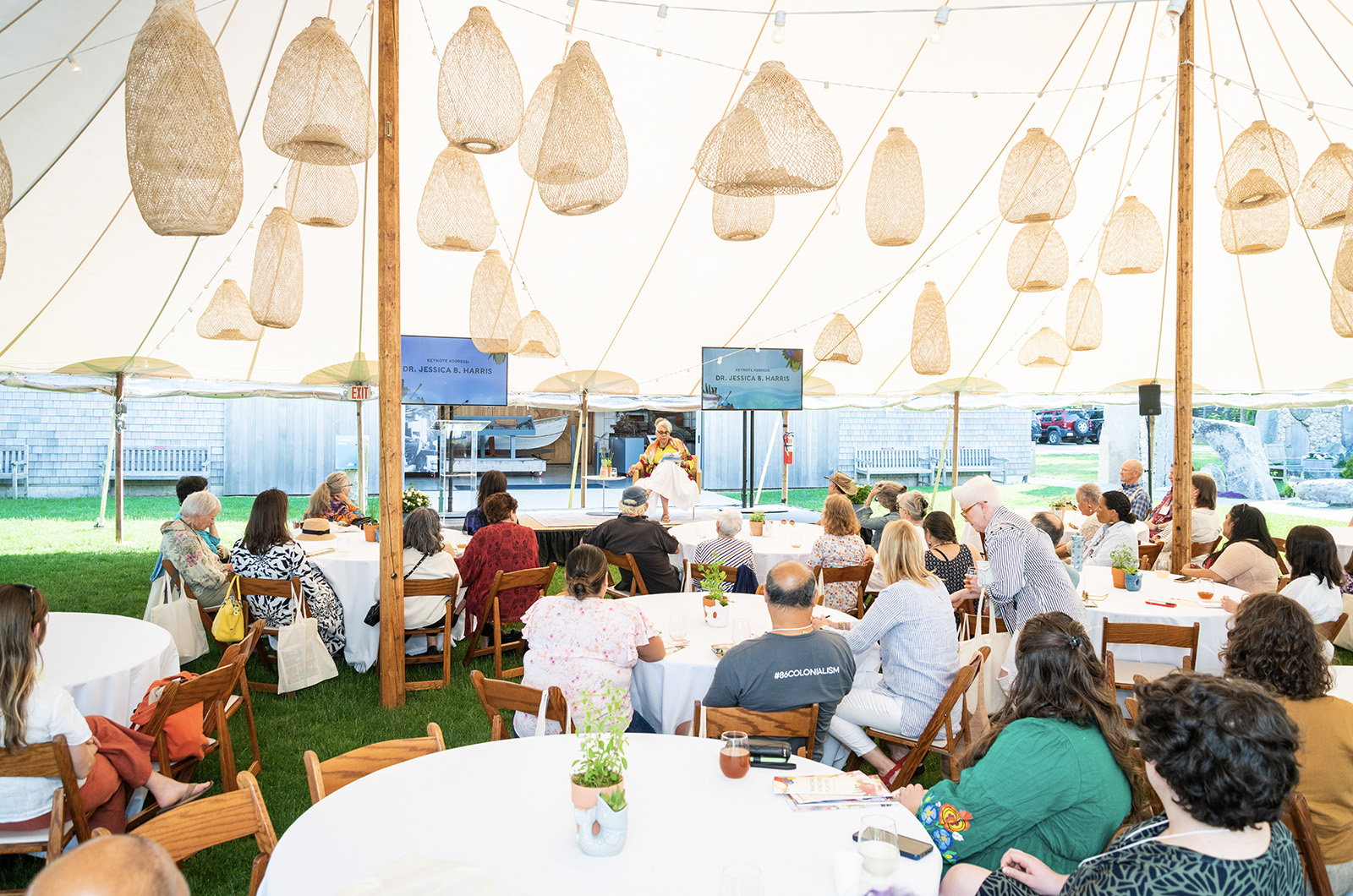
This past weekend, the museum hosted Martha’s Vineyard Flavors: A Food History Symposium, filled with workshops and panels that highlighted the Island’s culinary community throughout time.
Food on Martha’s Vineyard has always run the gamut from polished dining scenes to fresh-caught, beer-battered bites from the sea.
This past weekend, the Martha’s Vineyard Museum attempted to cover that spectrum with Martha’s Vineyard Flavors: A Food History Symposium. The weekend of workshops and panels highlighted the Island’s culinary community, beginning with opening remarks from acclaimed scholar and Oak Bluffs summer resident Dr. Jessica B. Harris and ending with a presentation from the Island Grown Initiative on the future of the Island’s food system.
While brainstorming the inaugural symposium, museum executive director Heather Seger said that food emerged as a theme that could unite the Island’s diverse communities.
“Food is so universal,” she said. “It’s something everyone can connect to. It’s something that can bring in lots of types of people.”
Food with a view on the museum lawn.
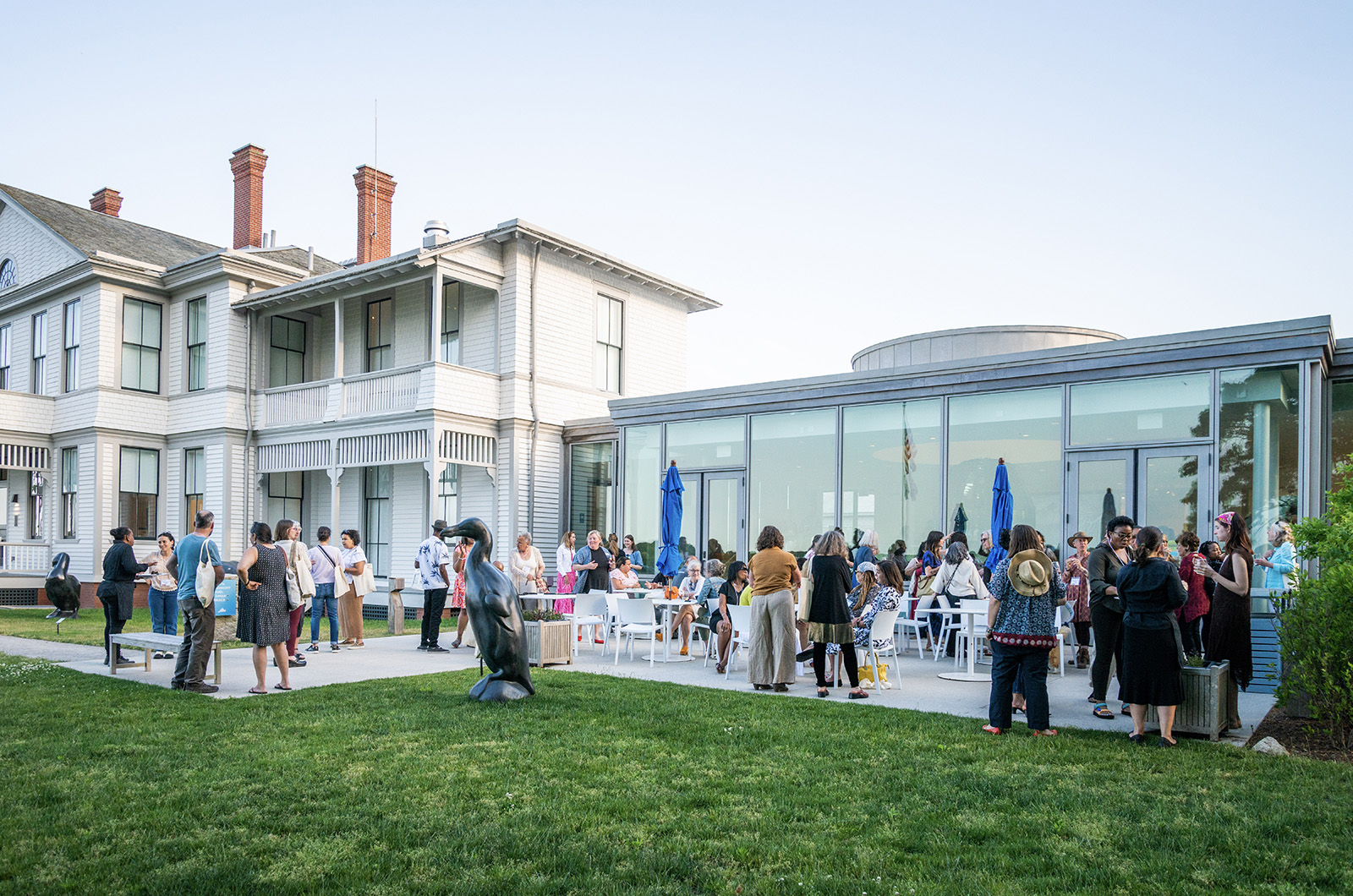
Food with a view on the museum lawn.
Once the theme had been chosen, the next step was obvious, Ms. Seger said. “Jessica Harris was our first call.”
As a lifelong Vineyard summer resident and the winner of a James Beard Lifetime Achievement Award, Ms. Harris was more than well-suited to keynote the symposium Friday evening. Although she is perhaps best known as the author of High on the Hog: A Culinary Journey from Africa to America, which became a Netflix series of the same name, Ms. Harris’s 2007 cookbook, The Martha’s Vineyard Table, solidified her Island fame, becoming a Bible of sorts for devout Vineyard eaters.
At the reception Friday in the museum’s Bodman Courtyard, Ms. Harris shared several excerpts from that cookbook, which covers Island food “from the high-brow to the down n’ dirty.”
She mourned beloved bygone institutions such as Darling’s Old Popcorn Store, whose melt-in-your-mouth molasses puffs she still craves decades after its closure. She recalled the old Bittersweet restaurant in West Tisbury and its peppery greens. When she shouted out Lola’s, the legendary southern seafood restaurant that shut its doors in 2018, members of the audience let out audible sighs of grief.
The list of eateries marked Ms. Harris’ tenure on the Island, a 66-year history measured by the fork and spoonful.

Rebecca Haag, executive director of Island Grown Initiative.
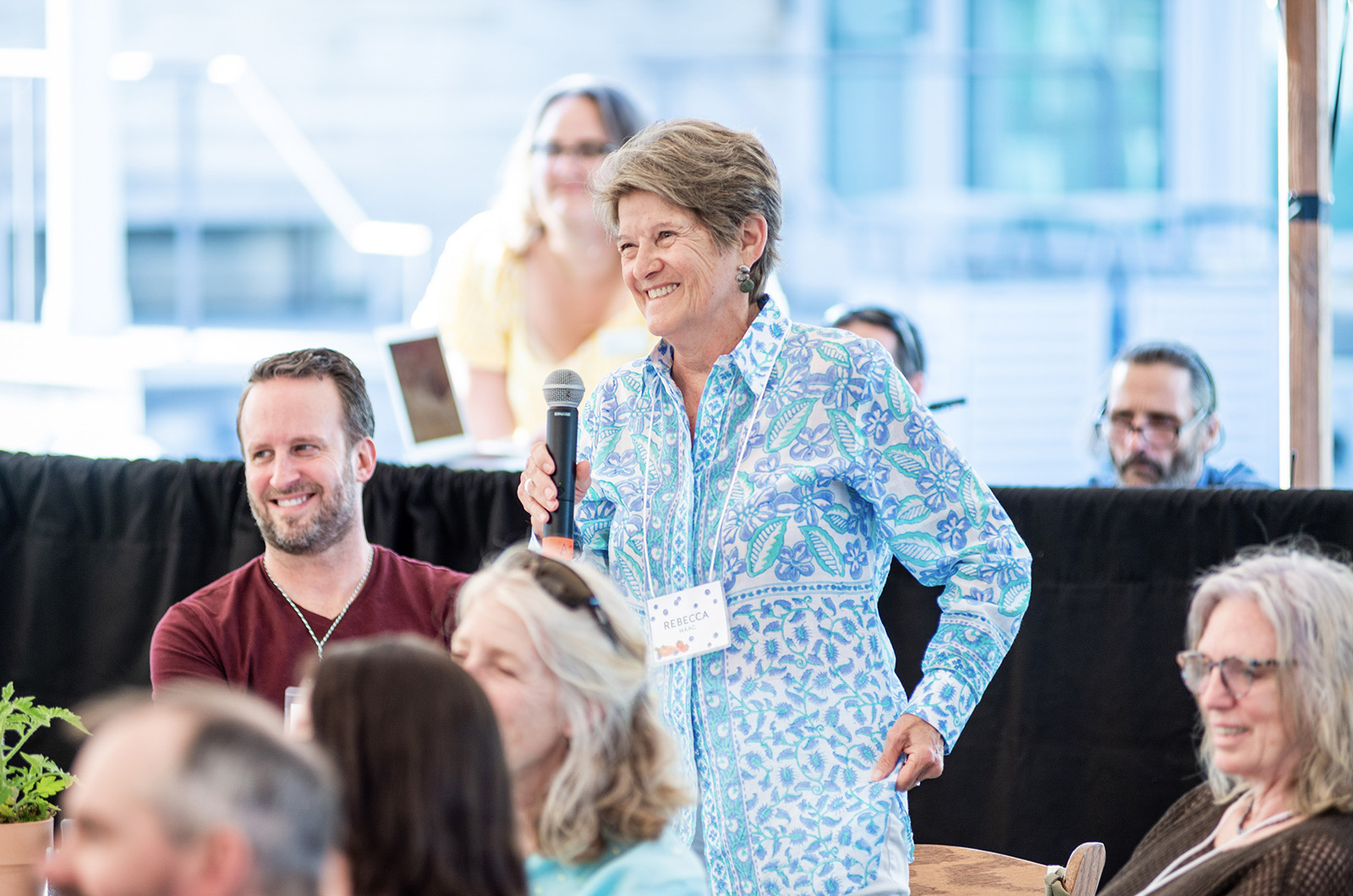
Rebecca Haag, executive director of Island Grown Initiative.
“I have a roving fork and a hearty appetite,” she said.
Although she admitted to “taking a trip down the nostalgia trail,” Ms. Harris never lamented the Island’s tendency towards change. In fact, she saw it as one of its strengths, allowing it to absorb new populations and cultures, from the African American summer community to the Brazilian Portuguese community.
“Trying to capture the Vineyard is like trying to pick up water,” she said.
And yet, with its three days of programming, MV Flavors tried to do just that. Saturday kicked off with a panel discussion featuring members of the Wampanoag Tribe of Gay Head (Aquinnah) on indigenous foodways, followed by a conversation with food writer Sandy Oliver on saltwater farms. On Sunday, attendees enjoyed brunch with Island chef and food educator Jenny DeVivo.
Many of the weekend’s panels and workshops revolved around the relationship between food and nature. Juli Vanderhoop, one of the panel’s speakers and owner of Orange Peel Bakery, grew up foraging in Aquinnah during her family’s walks in the forest.
“As the last child of my family...when we walked all over Aquinnah I found myself as a five- or six-year-old dragging behind them,” she said. “I’d drink from the streams. The smells would rise around me and help me find the deepest part [of the water.] I lagged behind and found the berries, the sassafras, to nourish me to bring me home.”
As an adult, Ms. Vanderhoop said that the foodways she discovered as a child still inform her approach to food, community and the land. Tribal members continue to host foraging walks to connect residents with the wild edibles around them, she said.
“Food connects you not only to your land but to your ancestors,” she said. “It allows you to have hope.”
As property values continue to skyrocket on the Island, Ms. Vanderhoop warned that those connections have come under threat. Just this past week, the restaurant her family had run for generations, the Aquinnah Shop Restaurant, went on sale for $3.5 million.
“It takes the history out of the land when it’s manicured to death,” she said. “We need to return to so much.”
Ms. Seger noted that the symposium’s sponsor, Slough Farm, had provided scholarships to many of the guests who otherwise would not have been able to attend the event, and looked forward to similar opportunities in the future.
“The museum is really striving to place ourselves in the center of the community,” she said.
Comments
I attended the Sunday
Laurie Howick Oak BluffsI attended the Sunday sessions. The brunch was delicious and the lineup of speakers, all of whom were women, was most informative and inspirational. Great work is being done on this island to educate future generations, feed all who are in need, preserve traditional methods of growing and harvesting the bounty around us, and promote thoughtfulness in all aspects of food production, preparation, distribution and waste/refuse systems. I came away encouraged and excited by such hopeful information. Each of us needs to take our own role in supporting food security, resource preservation and responsible consumption to preserve the beautiful place we all treasure. Kudos to MVM for a meaningful informative weekend.
I was a panelist on Saturday
Marnely Murray Edgartown, MAI was a panelist on Saturday and also attend the rest of the day, and the event was well done and organized, truly a great experience for all that attended and participated!
Add new comment