


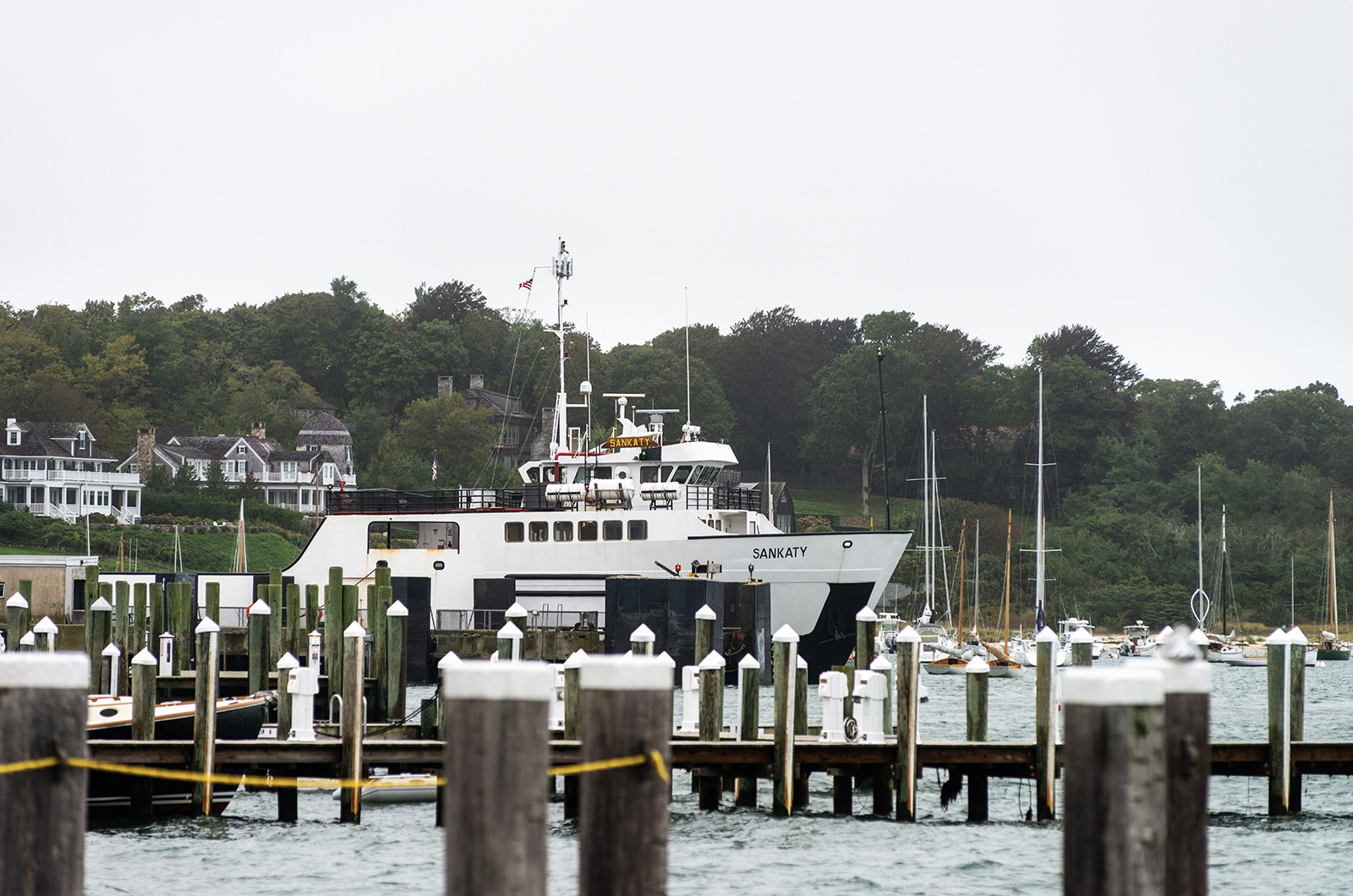
As the Steamship Authority prepares to add a third Lode Star class offshore service vessel (OSV) to its fleet, boat line officials are now considering a fourth sister ship from the same Louisiana seller.
As the Steamship Authority prepares to add a third Lode Star class offshore service vessel (OSV) to its fleet, boat line officials are now considering a fourth sister ship from the same Louisiana seller.
The SSA bought its first two OSVs, renamed Aquinnah and Monomoy, from Hornbeck Offshore Services of Covington, La. earlier this year. The agreement included an option to buy up to two more vessels of the same class.
With the upcoming purchase of the M/V North Star, which is expected to close before the end of the month, only one Lode Star remains available from Hornbeck, director of marine operations Mark Amundsen told the boat line board of governors and port council at their annual joint meeting Tuesday morning.
“As far as identical sisters, this is the last one,” Mr. Amundsen said.
The SSA’s option to buy the fourth OSV remains open until March, general manager Robert Davis said.
Meanwhile, once the North Star sale is final, the SSA will give it a new name and issue a request for bids from shipyards to convert it for freight use. Bids to convert the Aquinnah and Monomoy are due in January, said Mr. Davis, who told the board it’s possible each vessel will go to a different shipyard, depending on the companies’ capacities.
An initial pool of 27 shipyards that requested the bid package has dwindled to about eight serious contenders, Mr. Amundsen said. Conversion is expected to take six to seven months and cost about $8 million for each vessel, roughly the same amount as the first two boats’ purchase prices.
Nantucket port council member Nathaniel Lowell urged the board to act on its option to buy the last Lode Star, saying the SSA fleet is plagued by inconsistencies between vessels of different sizes and configurations.
“I’m looking forward to having four boats that don’t have any special problems,” Mr. Lowell said. “If we don’t get this fourth boat, it won’t be the end of the world, but we’ll be discussing it until we’re in our 80s,” he added.
The Hornbeck OSVs are less than 15 years old, but saw service in the Gulf of Mexico for only about five years before they were laid up, Mr. Davis told the SSA board earlier this year. While the vessels are being converted and reactivated, the SSA’s Gay Head, Katama and Sankaty will continue to carry freight between the Islands and mainland along with the Governor, which is due for a $1 million overhaul in March and April.
Mr. Davis said the boat line will have the Gay Head, Katama and Sankaty surveyed for their scrap value, but indicated it was too soon to say just when they may be leaving the fleet.
“As we move along with the conversion and reactivation of the OSVs, we’ll be reaching a point where we will be able to make a determination as to when we may be looking to officially declare those as surplus and available for sale,” he said.
Also Tuesday, the board of governors approved a $230,000 contract with Raftelis Financial Consultants of Cincinnati to develop the SSA’s first strategic plan. Although a strategic plan was among the top recommendations from HMS, the firm that conducted the comprehensive review of SSA operations in 2018, boat line governor Robert Jones of Barnstable argued against it on Tuesday.
“I think we’re at the top of our game and I don’t know how much better we can get [with a] strategic plan,” Mr. Jones said.
But John Sainsbury, who led the 2018 HMS study and has been consulting with the SSA as it executes the recommendations, said Raftelis will do more than simply produce a plan for the boat to follow over the next few years. The contract’s longer-term goal is to instill a strategic planning culture at the Steamship Authority itself, Mr. Sainsbury said.
“Unlike some organizations that have a mandate to long-term strategic plans every 20 or so years, where... there’s really no hands-on effort from the staff, this is very different,” he said. “The objective of this procurement was to identify an experienced consulting group that could come in and help get the ball rolling.” he said.
To that end, Raftelis will work closely with SSA management, Mr. Sainsbury said.
Port council member John Cahill of Tisbury suggested waiting on the Raftelis contract until the boatline has hired a chief operating officer, a process that Mr. Davis said last month has reached the interview stage.
But Falmouth governor Peter Jeffrey was ready to move ahead with strategic planning.
“We don’t have a unified message the legislature can look at when we ask for more bonding,” Mr. Jeffrey said. “We’ve waited too long.”
Comments
Why not buy new boats?? And
Ted EdgartownWhy not buy new boats?? And scale down all the wasteful spending in Woods hole? We could buy a fleet of new boats with all the wasteful spending there.
The buying new boats question
John Cape CodThe buying new boats question has been answered numerous times in previous articles comments. So once again, all present freight boats were purchased / retrofitted the same way, which was the most efficient cost-effective way to do so. All these boats will be the same in operation / parts with the crew training on only one newer type of vessel to learn. The only question is does the SSA really need 4 freight boats? There are only so many slips available, and any excess vessels probably would end up being stored in Fairhaven off season or when not in use.
Assuming these new freight
Thomas Hodgson WTAssuming these new freight boats are sound and reliable, having three or four of them is a GREAT move! At last the SSA is not going to be trying to reinvent the wheel with each new boat purchase.
The article also mentions bonding. SSA bonds have always been "plums" for favored and connected big-dollar firms and investors. How about the SSA issue savings-bond type paper in denominations small enough for local people to afford. They could be first offered only to people who live in the towns who are legally responsible for SSA deficits, should they ever happen. If such a bonds issue were to not sell out, it could then be made available to residents of other Massachusetts communities. Doesn't it make sense to keep at "home" the money the SSA pays in interest?
Add new comment