

I want to offer both a scientific and personal perspective on the recent unpermitted cutting of 15 miles of new single-track trails through rare species habitat in the state forest.
As a wildlife biologist and longtime Vineyard resident, I want to offer both a scientific and personal perspective on the recent unpermitted cutting of 15 miles of new single-track trails through rare species habitat in the Manuel Correllus State Forest.
The state forest is home to the highest density of rare species anywhere in the commonwealth of Massachusetts, and 90 per cent is designated as priority habitat under the Massachusetts Endangered Species Act. Over 20 species of rare moths and several bird species whose populations are declining across the Northeast United States find refuge in the large tracts of pitch pine and scrub oak, grasslands and heathlands of our state forest. In addition, a dozen or more rare plants thrive along the sandplain habitat of the fire lanes.
The pitch pine-scrub oak barrens, a globally rare habitat, may seem uninteresting to some, but they host strikingly beautiful species adapted to the harsh environment they call home. While walking one of the fire lanes recently, I saw several buck moths — day-flying moths with vivid orange markings contrasting their white and black wings. The caterpillars of these moths, and others, survive and thrive eating scrub oak leaves while experiencing extreme daily temperature fluctuations in the frost bottoms they occupy.
In May and June, the state forest offers visitors the opportunity to experience the wonder of a prairie warbler, adorned in bold yellow and black streaked plumage, belting out his song that spirals up towards infinity. On a nocturnal visit in late spring, you can reliably hear whippoorwills or woodcocks calling from the darkness. These ground-nesting birds nest successfully in our state forest because it has large tracts of intact habitat where they can nest undisturbed by people and far from edges where predators hunt. They are our natural heritage and something we should protect for future generations.
The proliferation of unpermitted trails since 2018 puts the refuge of these plants and animals at risk. While trails allow us to spend time in nature, this benefit comes at a price to wildlife. Each new trail creates a conduit that brings a variety of threats to what was once an impenetrable scrub oak thicket or shrubland or forest. Invasive plant seeds are transported on shoes, bike tires and animal fur. The people, dogs and bikes using the trail disturb resident wildlife multiple times each day, while skunks, raccoons and cats hunt along trails at night, depredating nests or killing adult birds.
On a typical day, 30 per cent of dogs are off leash chasing wildlife or flushing birds as they explore areas adjacent to the trails, and many leave feces that attracts skunks and raccoons. There is also the potential for leaf blowing as part of trail maintenance that would expose bare soil, increase erosion risks and stop some insects from crossing to the other side of the trail. All these are unintended consequences, but it is important to understand that the impacts of a two-foot-wide trail can extend 100 feet or more into the surrounding habitat.
Keeping large tracts of unfragmented habitat is similar to having savings for unforeseen expenses or to pass on to your children. Large areas of habitat act as source populations for many wildlife species and are important for maintaining wildlife and plant populations into the future. American Trails’ first rule of trail planning is to avoid large intact areas of habitat, and another is to avoid high density of trails to reduce fragmentation. These rules were ignored by those who cut these new trails in the state forest. The trails did not follow Department of Conservation and Recreation (DCR) regulations for trail planning, and no permits were obtained from the Natural Heritage and Endangered Species Program.
No one with understanding of the effects of habitat fragmentation was involved as several of the new trails fragmented large tracts of intact habitat, which include Derailleur, Fantasy, Gateway and Reverie. Others added high-density trails designed primarily for bike riding, such as Zip Tie, Twisty, and Sidewinder. The state forest had 22 miles of existing trails, yet 15 miles of new single track were cut with zero public input.
The state forest is not owned by DCR. It is managed by DCR and owned by the public who deserve transparency about its stewardship and any partnership agreements. These unpermitted trails should be closed on principle because they were cut in violation of state laws and DCR regulations. If proper permitting and a public process had occurred, BiodiversityWorks would have most assuredly been there to speak for the buck moths, prairie warblers and whippoorwills. And speak as well for the humans who care about biodiversity, wilderness — and for our state forest that is the Island’s best chance to protect those values for future generations.
Luanne Johnson is the director/wildlife biologist for BiodiversityWorks, an Island nonprifit based in Vineyard Haven.
Comments
Thank you. Folks need to
Vasha Brunelle Vineyard HavenThank you. Folks need to know this. I watch with dismay as bittersweet works it's way down wooded trails and knapweed down meadow trails. That's only the most obvious, and so much more invasivness and destruction becomes apparent once one starts to pay attention. By then it's often too late.
I really appreciate this
Prudy Burt West TisburyI really appreciate this perspective from someone willing to share their wealth of knowledge and personal experience of this incredible natural resource.
It would have been extremely informative to include maps of existing DCR approved trails as well as a map of all new trails in the Gazette's 10/22/20 article on this issue. Without these, it is impossible to understand the magnitude of this un-permitted activity; future articles about the state forest should include such maps.
Thank you for an intelligent
Sally Apy EdgartownThank you for an intelligent and well informed response
A conservation organization
The Lorax West TisburyA conservation organization funded an operation to clear ~25 miles of trail on some of the most imperiled habitat in the region without checking to see if permits were obtained? Such organizations are often the last stop to protect rare habitat, and they are rightfully held to a high standard to do so. They set an example for the rest of the community. State MESA regulations were ignored. Why weren’t permits sought? Even if permits had been issued, shouldn’t such work be put out for bid publicly through the state bidding system? Why was there not an opportunity for the public to provide input? Perhaps there’s a good reason. We all like trails, but there are laws and a process to ensure due diligence is carried out to protect such dwindling special areas. Let’s hope that the right thing is done, and the habitat is mitigated in a way that leaves it better than before.
I’ve walked down these trails
Chris Mara EdgartownI’ve walked down these trails. They’re not really made for walking but for mountain biking. They twist back on themselves to the point where the same trail practically crosses itself. If exploring the State Forest is your plan these trails make it so much harder to do that. Now it turns out they were laid out without planning? It doesn’t surprise me.
Thank you for such a thorough
Elizabeth Hogan BrewsterThank you for such a thorough, well informed, and well written commentary. This written piece should be disseminated throughout the state, and yes, throughout the country. Can it be shared with the Cape Cod Times? Boston Globe?Widespread education on this topic is of critical importance throughout our country. Much appreciation goes to the author for taking the time and effort to share this information.
As always, Luanne brings both
Nancy Rose Steinbock EdgartownAs always, Luanne brings both her considerable expertise and aesthetic sense to educate the community in what is just and necessary to preserve our habitats and ultimately, our climate. As an island resident, I am appreciative of being able to look with a keener eye at environmental intrusions. We must preserve our own fragile setting in the Atlantic, as part of the larger fight against decimation of forest and coastal areas.
I think the lack of permits
islgrlI think the lack of permits is unfortunate, but the trails are wonderful. I am hoping that at least some of the trails are allowed to remain and not all closed "on principle". I disagree with the comment that they are only for mountain bikes. I love walking the winding trails that double back, they are lovely in the hot summer days when the fire lanes are baking in the sun. It is not fair to characterize people who want to get out into the forest and use it to walk or bike as people who don't care about the habitat. It should not an "us versus them" situation. Access to the State Forest is important for all (people, moths, birds...), and I believe that a compromise can be reached that allows for that access while respecting the habitat that is out there.
Indeed! Is not compromise
Tom Carson Tulsa/ W. TisIndeed! Is not compromise the purpose of a permitting process! ?And, hopefully, to ensure that nature has a voice at the table. Yes, by all means, let’s be principled.
Who cuts these trails? They
Adelaide Kent New YorkWho cuts these trails? They should be fined for the cost of restoring the trail, and sentenced to an educational program on the damage their selfishness caused.
For all Ms. Johnson’s outrage
Nelson Sigelman Vineyard HavenFor all Ms. Johnson’s outrage, the new trails in the 5,000-acre woodland were not created in the dead of night. Former Division of Conservation Resources (DCR) state forest superintendent Chris Bruno accepted an offer by the Sheriff’s Meadow Foundation (SMF). This work went on for many months. SMF may be faulted for incorrectly assuming that DCR talks to Natural Heritage but the notion that these trails are a slippery slope to habitat fragmentation is overblown. Volunteers who brought their own equipment and SMF staff worked many long hours in tick-infested scrub oak to cut new trails that will add to the public’s ability to enjoy this public resource and not detract from the wilderness. Ms. Johnson’s call to close the trails “on principle” would only serve to underscore the principle that “no good deed goes unpunished.”
It would be laudable if SMF
Bill McCarthy EdgartownIt would be laudable if SMF volunteers had helped only with the upkeep of existing trails. But it seems that while performing “trail maintenance,” representatives of Sheriff's Meadow gained the ear of the recently departed forest superintendent and were allowed to impose their private vision--of a sports park for mountain bikes--on public land.
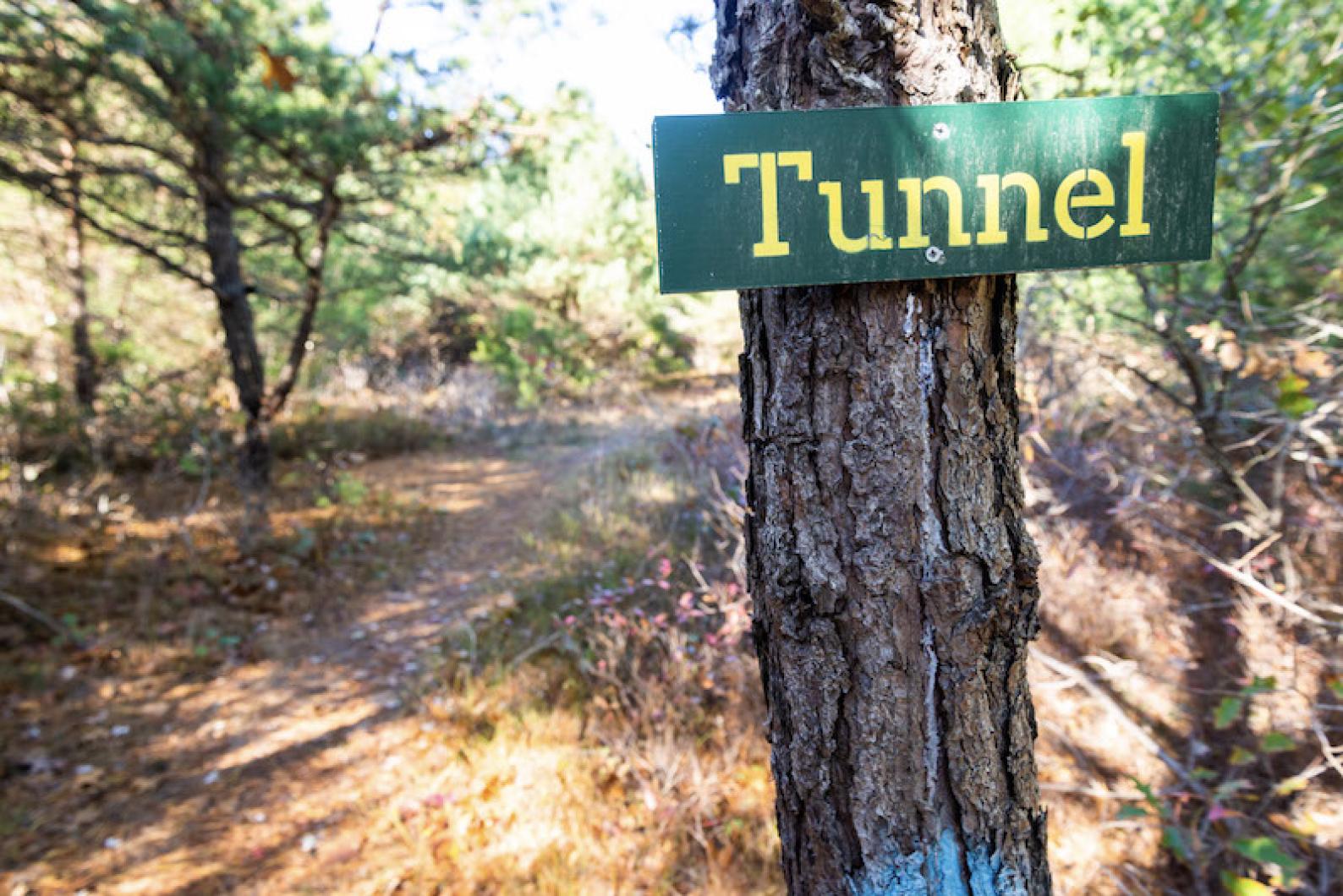
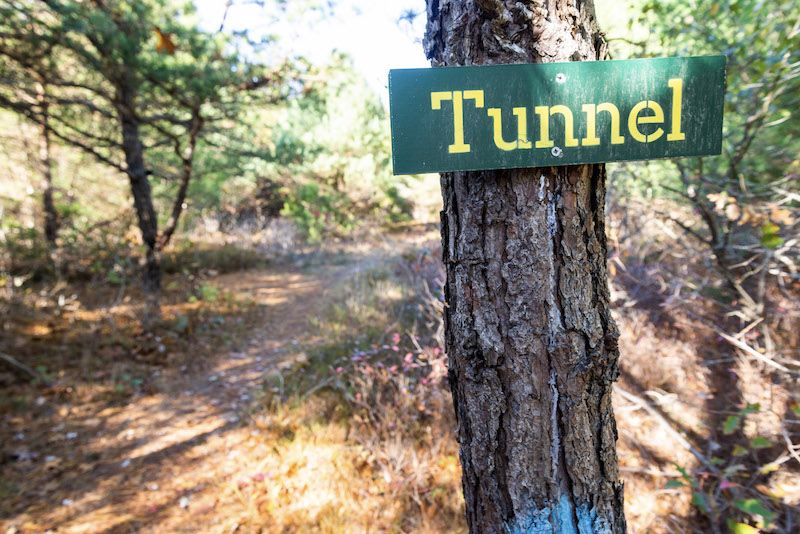
And if this were not accomplished in the “dead of night,” as you say, then I’d have to ask who else, beyond Mr. Bruno and SMF, knew the extent or purpose of all these new trails that have been carved out of the forest? And of course, the establishment of a veritable theme park for mountain bikes--which is what the eastern end of the forest has become (replete with Disney-inspired signage for the trails that have been cut: ”Tunnel,” “Twisty,” “Log Jam,” “Explorer,"to name just a few)--in no way detracts from its “wilderness.”
And doesn't this skirting of regulations speak to a rush to complete these trails and to present them as a “fait accompli”? I have my own principle to apply to what has happened here: “It is easier to ask forgiveness than to seek permission.”
Thank you so much for your
Bill McCarthy EdgartownThank you so much for your lucid explanation of the ways that these newly cut trails damage
the forest ecosystem.
It’s hard to imagine the scale upon which these cuts have carved up the forest. When I began stumbling upon and walking these trails last year, I could only wonder where “Bambi and his family” would find refuge from the tread of tires (most of the new paths I encountered were designed for bike use only) and feet. This was my cartoonish way of describing the extensive disruptions to flora and fauna that I perceived and that you, as a wildlife biologist, have communicated so well in your article.
The forest already had plenty of trails for hikers and bikers and horses to use and share. I hope the mitigation that’s been proposed will undo all the damage that has been done and restore those precincts to the wild state that Thoreau found such a “tonic for civilization.”
Bill,
Katama Resident EdgartownBill,
How is riding a bike through the forest anymore intrusive or a degradation to “Thoreau’s tonic” than a hunter walking through uncut paths?
thank you for your thoughtful
GY west tisbury and NYthank you for your thoughtful piece. This kind of intrusion has to be stopped and corrected. Why do we need bike trails through this forest? Why do we need more walking trails? Bikes and people can use the fire lanes. There is plenty of room for both on island. We are destroying our local habitat. I hope something can be done to stop this.
Add new comment