

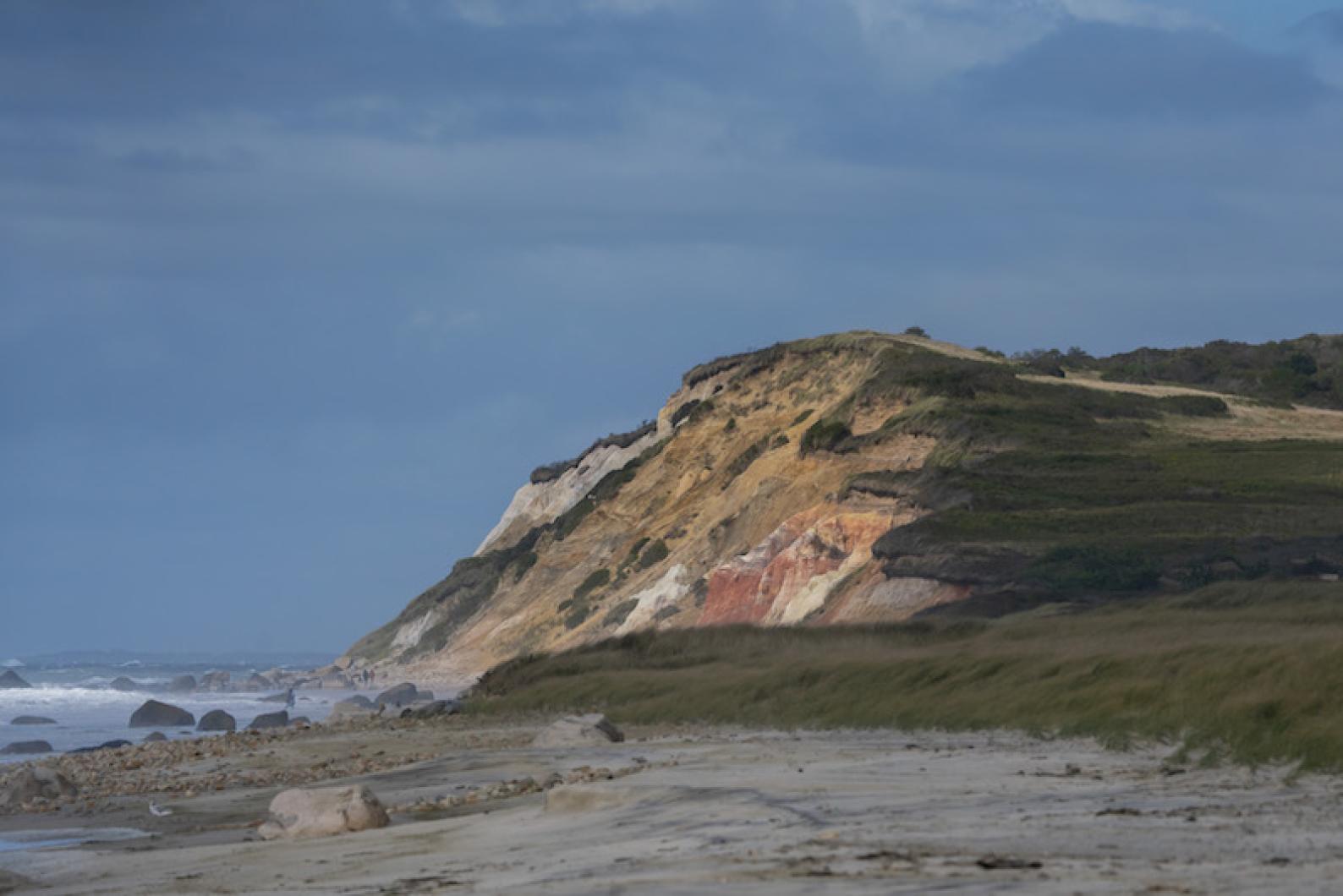
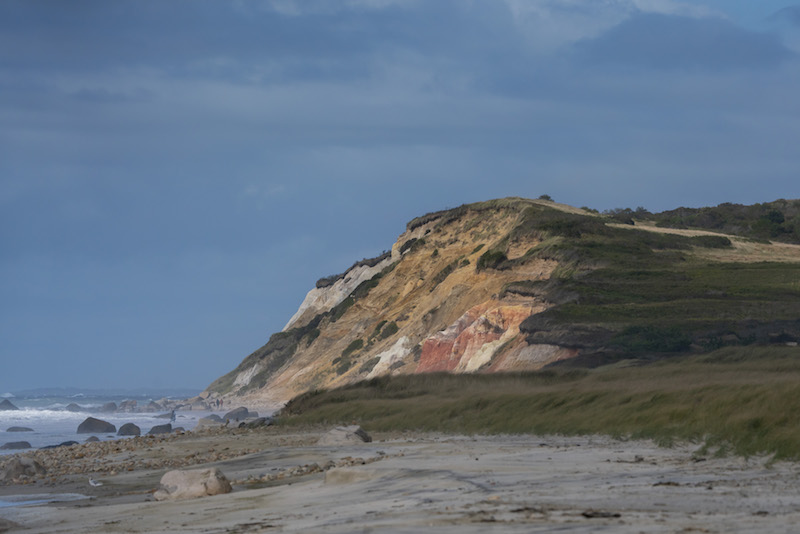
Climate change is already affecting Martha’s Vineyard.
In the middle of the 14th century, a deadly plague reached the Italian peninsula. In less than three years, city-states such as Bologna lost over half their population. The societal response was astonishing: there was a rebirth in empirical science, art, literature, and philosophy. They built a better world. In the midst of our own pandemic, we often speak of the new normal. Will that new normal be a better normal? We can make it so.
Our current challenge, though, is not just dealing with the Covid-19 pandemic. Nature and physics have not taken a time out — the climate crisis is proceeding apace, as the climate change-driven events in our country and the world this year demonstrate. Climate change is already affecting Martha’s Vineyard, with noticeably hotter summers, warmer winters, serious droughts, increased danger from wildfires, and the looming specter of sea level rise.
Similarities between pandemics and climate change as society-wide challenges are frequently noted, but there are key differences. The arrival of a pandemic is unpredictable and usually has a short-term (but horrific) impact. Much more is known about the arrival and timeline of climate change after 50 years of intense geophysical research. Unchecked, the impacts of climate change will occur over a much longer period, and in aggregate will be much more severe for human health, the global economy and political stability, and the planet’s ecosystems.
We are all nervously awaiting the arrival of a Covid vaccine. Fortunately, a vaccine of sorts for halting the progress of climate change already exists: drastically curtailing the combustion of fossil fuels. In 2019, the Island energy committees put forward a nonbinding warrant article establishing targets for our island community to reduce fossil fuel use over the next two decades. Originally, these warrant articles (100 per cent renewable Martha’s Vineyard) were intended to be voted on at the spring 2020 annual town meetings. The immediacy of the pandemic resulted in delayed and streamlined town meetings, and the committees decided to postpone the 100 per cent renewable effort.
Since then, work on developing a strategic plan for achieving our aspirational goals has continued under the auspices of the Martha’s Vineyard Commission Climate Action Task Force and the town energy committees. We have developed an energy and greenhouse gas emission baseline for the Island as well as a predictive model that will allow us to understand the long-term impacts of various proposed pathways to meeting the warrant article’s aspirational goals.
The high-level strategy is simple: electrify transportation and building heating over the next two decades, and accelerate the decarbonization of our electricity supply. We recognize of course that actually executing this strategy is complex. The technology to do so exists today — no miraculous inventions are needed. Electric vehicles of all types and price points are emerging at an accelerating rate. Cold climate heat pumps are available and affordable for newly-built residential, commercial and municipal buildings as well as versions for renovated structures.
Beyond technology, though, is our strong belief that market forces will result in their adoption. The good news is that electric vehicles are ideally suited to Island needs, use less energy, and result in cost savings for the consumer. The same is true for heat pump systems. Incentive programs such as those offered by the Cape Light Compact and Mass Save add to the economic benefits.
In addition to lower costs for consumers, this initiative will provide other benefits. New, high-quality jobs for Islanders in the energy sector will result. Our local economy will benefit in our key industries, especially construction, energy-related services and tourism. We will be acting to preserve and defend our fragile coastal ecosystem. And along the way, we have the opportunity to make our energy infrastructure more resilient and the Island more self-reliant.
Some may ask why we should undertake to make Martha’s Vineyard 100 per cent renewable when we are such a small community (even at the height of summer) and climate change is a global challenge. The answer is rooted in the fundamental belief that success in collective action problems like this one requires leadership at all levels — global, national, and local. Given the lack of leadership at the national level in our country, and the focus on the Covid-19 pandemic and the concomitant economic issues at the international, national and state level, grassroots action is of paramount importance.
The 100 per cent renewable Martha’s Vineyard nonbinding article will appear on town meeting warrants across the Island this fall and in spring 2021. It sets aspirational targets that can be achieved through regional, town and community action. We can, and will, make our new normal a better normal and thus contribute to the post-pandemic better world. The choice is ours to make.
Rob Hannemann is chairman of the Chilmark energy committee and a member of the Martha’s Vineyard Commission climate action task force.
Comments
Does "100 Percent Renewable
JAH GosnoldDoes "100 Percent Renewable Island" also mean that the Island will stop exporting it's garbage to the mainland?
A 0%NOX furnace, that uses by
mike SomewhereA 0%NOX furnace, that uses by product heat to drive steam turbines to create or supplement electric production comes to mind for the shipped garbage. The byproduct would be cleaned down to a point that there would be no atmospheric pollution by filtering. Use the by product material waste (similar to steel furnace slag) for construction purposes, back fill, Concrete block manufacturing, aggregate. Also,every house could use solar and wind to generate electric power for that house, excess power to be shared by neighbors all connected to the existing electric grid we already have. Self sufficiency is a right and should not be a dream. Planning Boards have to embrace this if we are going to move forward.
Loved Mike Womewhere's
Pop, from Milford CT 45 year summer visitor Milford, CT%Loved Mike Womewhere's thinking... Keep it going and growing for my 3 grandchildren. Turn 34 foot SeaRays into 40ft Windpowered fun boats. Willing to pay for 1/2 (put smile face here...) Pop
One easy change in the
Frank McDermott EdgartownOne easy change in the renewable island direction would be for the MVC to require all new homes beginning next year to to have one roof south facing, without any protrusions, and capable of having solar panels, now or in the future. California is moving in this direction, and doing so immediately here would be a simple step that could happen while we are preparing for more significant changes.
I want to second the idea
Beebo Turman CaliforniaI want to second the idea that Frank McDermott put forth. All homes should be prepared to have roofs that can have solar panels, either sooner or later. It is the wave of the future.
Glad to see this!
Thatcher Ulrich Oak BluffsGlad to see this!
Worth pointing out that Vineyard Wind should contribute a huge amount of carbon-free electricity onto the local grid.
Add new comment