

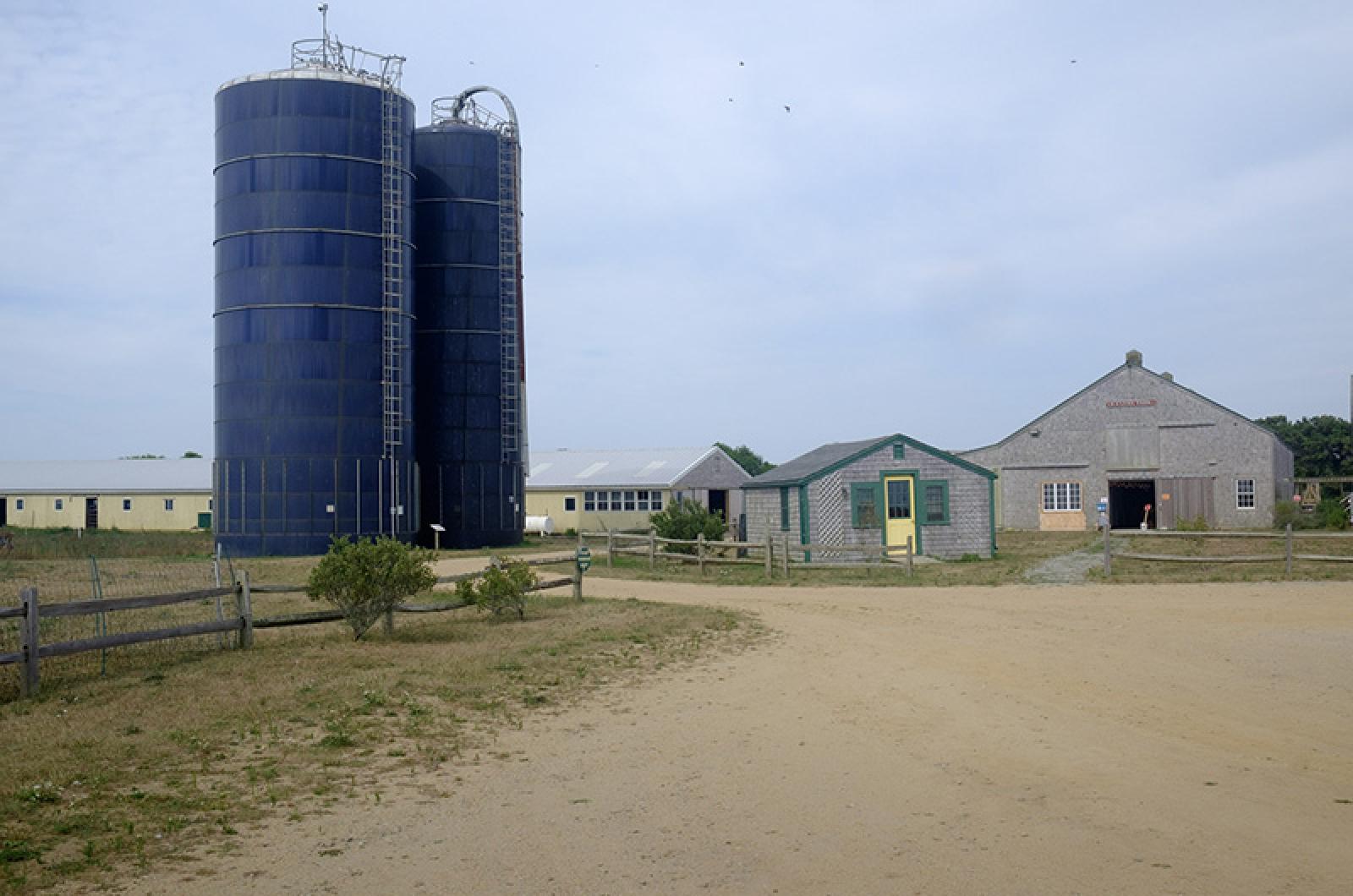
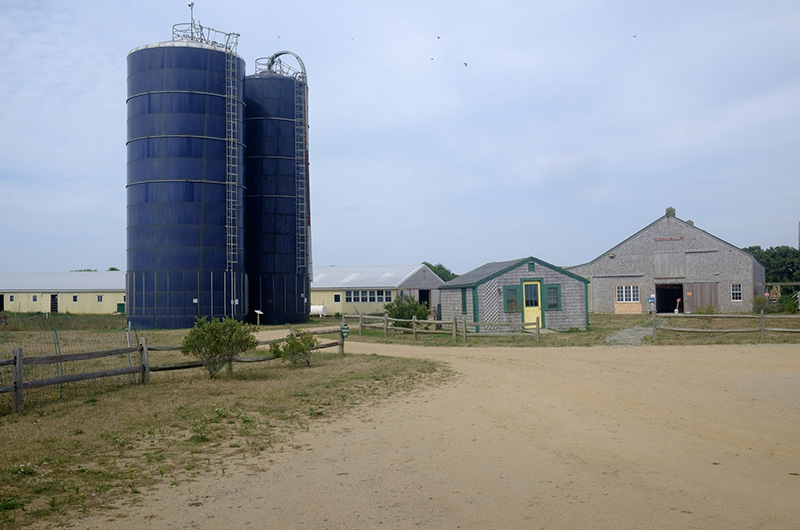
Edgartown wanted Katama Farm to be a working farm. The Trustees have been unable to meet that definition.
The breakup between the town of Edgartown and the Trustees of Reservations at Katama Farm is a sad and painful moment in the long history of the farm. But with so many problems that have been allowed to drag on for too long and irreconcilable differences on both sides, it’s time for a clean slate.
In 1979, with the 182-acre farm facing the threat of being lost to development, the town went to extraordinary lengths to protect it permanently, along with a large swath of the globally rare Katama plains. Historically used for dairy farming and with rich sandy loam so distinctive it had its own name (Katama loam), the farm was set aside expressly for active agricultural use.
But while the concept of a working farm seemed an easily achievable goal in 1979, in reality Katama Farm has been the story of one financial failure after another, going back to the earliest days of Seaside Dairy in the 1980s.
For its part, the conservation commission bears a large burden of responsibility for not taking a more active role in addressing glaring issues that have occurred on its long watch as landlord.
The Farm Institute moved onto the premises in 2003 as a nonprofit teaching farm. Though it built a robust agricultural operation along with educational programs for children, it struggled financially.
Four years ago the Trustees stepped in to take over the Farm Institute’s lease with the town, which laid out very specific definitions for what it required in a working farm. Leaders of the Trustees signed on, sounding all the right notes.
Instead the marriage with the town soured. The Trustees, whose work on the Vineyard is primarily in land conservation and ecology, appeared to shift away from active agriculture and toward other activities.
The town bristled. The Trustees defended their practices and goals in lofty terms about balancing agriculture and conservation. Meanwhile, the cow herd dwindled. Fields went unattended. The rent went unpaid. A herd of goats that was temporarily housed at the farm before being taken to Long Point Wildlife Refuge for grazing became sick with tetanus. There was no manager on the premises.
In the end it was simply a mismatch. Edgartown wanted Katama Farm to be a working farm. The Trustees have been unable to meet that definition.
In this latest unraveling with the Trustees, there are no winners. A respected land trust with a deep legacy of conservation, the Trustees have their own long history on the Vineyard — at Cape Pogue Wildlife Refuge, Wasque Reservation, Menemsha Hills and Long Point Wildlife Refuge. Their properties are stunning and well managed and they hold an important place in the Island’s rich panoply of conservation lands. It’s possible that Trustees could play a future role at Katama Farm in educational programming alongside a working farm operation.
With the renaissance in agriculture now occurring on the Vineyard, it is not impossible to imagine the town of Edgartown finally achieving its long-sought goal of a true farming operation on Katama Farm. But how to best craft a modern, financially viable management plan for the beautiful and venerable property? That is the pressing question.
Today there are many talented and committed Island farmers who would eagerly help the town think through creative ways to keep this rare parcel in active agricultural use. Before the town puts out a new request for proposals, Katama Farm is overdue for a critical self-examination.
Comments
Perhaps this critical self
Nelson Sigelman Vineyard HavenPerhaps this critical self-examination could include a look at the wisdom of covering a large swath of "Katama loam" with a solar array set off by a chain-link fence.
I am a huge fan of the
Carl Oak BluffsI am a huge fan of the Trustees and how they manage their properties, but I don't see how they got this so wrong. Instead of operating a working farm, they built a demonstration kitchen and hosted sleepover camps?
The Trustees are out of their league with this one, and although I don't know who will run the farm next, it's clear that they aren't the right ones.
PS - further proof is in their Social Media posting that shows that the still don't understand what they did wrong.
The Conservation Commission
West TisburyThe Conservation Commission has failed Edgartown and the island as a whole by not holding their discussions in public and by presenting a process to seek their goal of
exclusively commercial agriculture at Katama Farm. What good is served by throwing out TFI/Trustees by mid-September with no plan going forward? Who will manage the buildings, the crops, and the animals after that date? Taking this step during a time of pandemic was certainly a clever way to reduce dissent - none of the school children who will lose out were able to be represented in the discussion. But, this rash move, however well intended, will come home to roost.
I find it hard to believe
Jess EdgartownI find it hard to believe that Edgartown doesn’t have somebody handpicked waiting in the wings to take over the farm.
For the most part, I think
Rich Vineyard HavenFor the most part, I think the Trustees play a significant, and helpful, role in preserving the natural and open spaces throughout the Commonwealth. And there is certainly a business side to being a “Trustee”, I have been a contributor to the Trustees in the past, but my knowledge of, and the approach of, the organization has soured my sense of just how committed they are to delivering what they promise. If you sign a lease with the town, then you are obligated to the lease. But, I believe, the Trustees were looking at a trophy, for which the cost of earning required no effort. Like a development office, you raise monies with promises that may, or may not, be delivered at some time in the future, for little more than the cost of a phone call. That is not maintenance or caretaking, that is financial development. I am sure the Trustees can remit all past financial obligations.
Please also note the address of the Trustees home office. I might suggest a location more in keeping with conservation and nature.
The Trustees simply are not
Susan Bremen, MaineThe Trustees simply are not farmers. Take a look at www.mainefarmlandtrust.org
Could a co-op of young
Mike SomewhereCould a co-op of young farmers be given the opportunity to bid on proposed farming.
Could a self sustaining model farm be imagined
Add new comment