

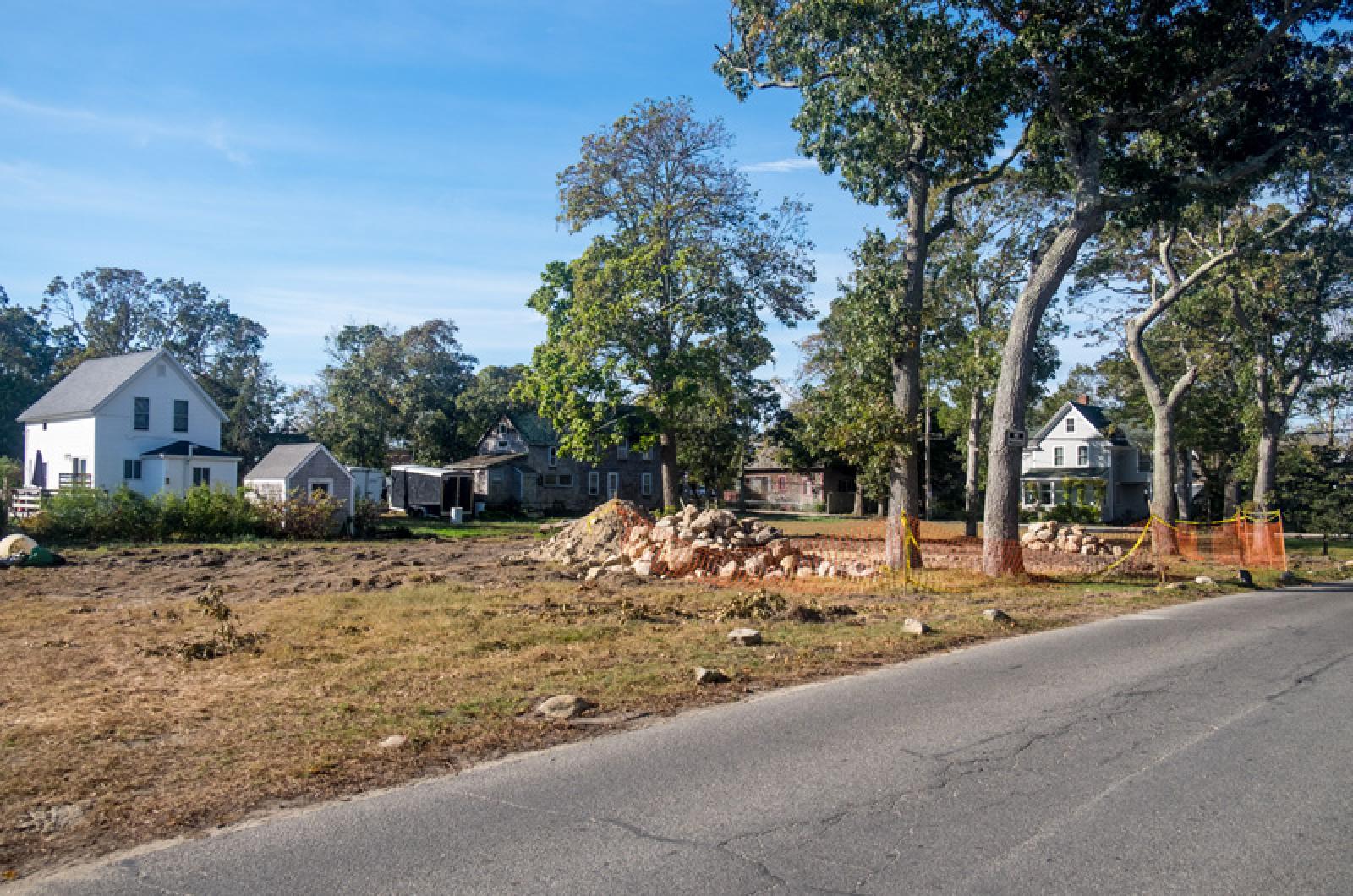
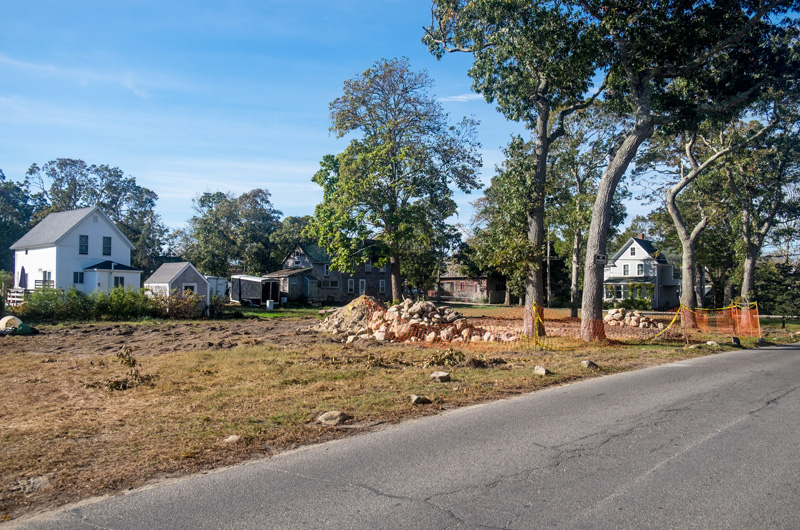
<p>The Bradley Memorial, the first African American church on the Vineyard, was demolished last week.
The Bradley Memorial, the first African American church on the Vineyard, was demolished last week. The building on Masonic avenue loomed over the surrounding houses, a physical reminder that every community holds a million stories and all of them make up a tapestry of human experience.
When I walked through the house a few years ago and stood in the room that had served so many as a church, I felt those million voices talking to me. The building was once used for citizenship classes and English language lessons for Cape Verdean and Azorean immigrants drawn to the Vineyard by the challenges of the whaling trade. It was used for church services conducted by the Rev. Oscar Denniston whose son Dean remembered Sunday services lasting six or seven hours.
If houses have memories, then this house recalled the loneliness and ambition of new immigrants who spoke Portuguese but who mastered English and thrived. It knew the hymns and the lessons from the gospels taught by Reverend Denniston, and it absorbed the triumphs and challenges faced by one of the first year-round African American families on the Vineyard — the Dennistons.
Oscar Denniston came to Martha’s Vineyard from Jamaica in 1900 at the request of the Rev. Madison Edwards. At the time, Reverend Edwards was minister of the Seamen’s Bethel in Vineyard Haven. Oscar Denniston became a leader of the community of color here on the Vineyard, then numbering around 175 people. He served as pastor of the Bradley Memorial Church until 1946, and at one point ran for the school committee in Oak Bluffs. He was referred to by William Monroe Trotter in the Boston Guardian in 1933 as the “well beloved pastor of the Bradley Memorial Church.” The late Milton Jeffers recalled that Oscar Denniston was “a very nice man, very tall and a wonderful preacher.” Photographs of the church and its congregation show that church attendance was taken seriously with each girl wearing a white dress and hair ribbons and each boy wearing a suit and tie. It’s interesting to think of how much of the history of the Oak Bluffs community was contained in the very walls of this building.
History is all our stories, and this house stood sentry on Masonic avenue giving context to all we know about what happened there. How many of those solemn children in the photographs of the Reverend Denniston’s congregation filled the house and the garden with the sounds of play during their short break from services? How many of those new immigrants brought their books to learn their rights and obligations as citizens and stared in hard concentration at the intricacies of the English language? Without the house, where do the stories fit?
Recently there has been much attention paid nationally to who is memorialized and the power of memory. One person’s heroic statue is another person’s daily reminder of fear and oppression, and so where do we go from there? How do we decide what deserves to be remembered and preserved and what does not? The Bradley Memorial was ultimately abandoned and stood in a decaying, lonely state for the past several years, but was it worth saving?
Yes it was. In losing the Bradley, we lose a vital link with the history of the 20th century, on the national stage and here on the Island. What is gone cannot be replaced and the comforting presence of this historic building, speaking as it did to ambition and love for community, will be greatly missed by all who know history and value its stories.
Elaine Cawley Weintraub lives in West Tisbury.
Comments
Very, Very VERY sad. God
Martha MageeVery, Very VERY sad. God bless my wonderful, dear friend Dean K. Denniston Sr. and the Rev. Oscar Denniston family legacy.
In Mark Lovewell's photo, the
Rob Burnside Kingston, PAIn Mark Lovewell's photo, the trees (one praying, one rejoicing, others observing) still speak to passers-by. If this grove can be preserved, and a monument incorporating the foundation stones created then all is not lost.
Thankyou for this tribute
Amy Goldson OB /TCIThankyou for this tribute MsWein-traub. Why was it allowed to be demolished in the Copeland district? When I passed by there this summer, it appeared to be under renovation and I was delighted with the thought that someone was going to make it a home . This is very sad.
I'm sorry, how sad. May the
Margaret Kennedy FloridaI'm sorry, how sad. May the memories live forever. God bless all.
Sad his historic site is now
Jamie Curtis ChilmarkSad his historic site is now gone. It should have been made a National Historic structure. It has an important place in history. Bravo to the MV Museum for a well-documented exhibition in the summer of 2015 to spotlight this cultural hub on MVY. But sad the building is gone, it’s always important for future generations to be able to see and experience history through the historic spaces they inhabited. Thankfully we have the MV Museum to have their backs.
Well said Elaine. OB would be
skip OBWell said Elaine. OB would be wise to enter the Cottage City Historic District/Copeland District/Gold Coast onto the National Historic Register--like the Campgrounds, Flying Horses and Union Chapel. Bu, well, you know...
That's IS why we have museums
Amy Oak BluffsThat's IS why we have museums, to preserve our history. This property sat empty and neglected for a very long time. As a native of Oak Bluffs and one who hates to see change , it WAS time for it to go. While the foundation was crumbling no one wanted to pay to move it , no one wanted to pay to restore it , no one came to save it ! wood was salvaged, doors recycled and process was followed for demolition! its all a part of history.
There were many plans
Sara Oak BluffsThere were many plans fomented to save this structure, but in the end there was no money to do the necessary work simply to make the structure habitable, let alone take on its renovation. Better the building was finally razed than left to fall down on its own. Everyone had wonderful ideas about what "someone" should do with the property, but no money was forthcoming to support these ideas. The building became a possibly dangerous eyesore. The owner has agreed, I understand, to place a plaque on any replacement structure, memorializing this space as hallowed by its history. I also understand that the local NAACP was content with this resolution. I agree with Amy's well thought out comment.
Yup. On all counts
skip OBYup. On all counts
Oscar Denniston was my
Deanne Denniston Clark MAOscar Denniston was my grandfather.
He died before I was born.
I am grateful to learn so much from Elaine Weintraub's article.
Add new comment