


Since the founding of Sheriff’s Meadow in 1958, Martha’s Vineyard has become a world leader in conservation, with a several nonprofits working together to preserve the natural environment.
On a clear morning this week, a pair of osprey circled above the pond at Cedar Tree Neck Sanctuary, while a group of cormorants splashed loudly in the water below. On the other side of a barrier beach, waves crashed onto an empty shore where glacial erratics formed a kind of zen garden hidden by a steep bluff.

Woodsy trails at Cedar Tree Neck are perfect for all ages.
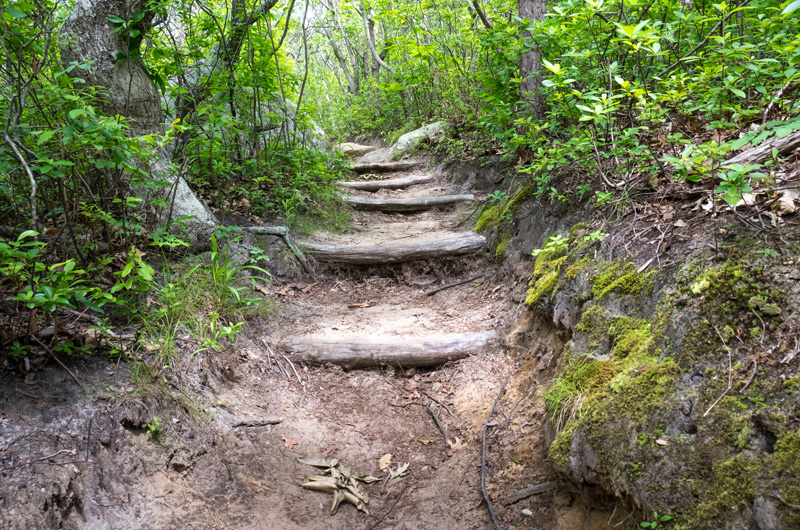
Woodsy trails at Cedar Tree Neck are perfect for all ages.
Fifty years after its creation, the north shore sanctuary in West Tisbury remains one of the largest and most loved natural landscapes on the Island. Its vast acreage encompasses barrier beach, broad green bluffs, high hillsides, meadows and bogs. A 10-minute drive from the nearest main road makes it something of a hidden gem on the Island.
“It established a footprint on which we have built for the past 50 years,” said Adam Moore, executive director of the Sheriff’s Meadow Foundation, a vanguard of the Vineyard conservation movement since the 1950s. The foundation has become the leading landholder on the Island, with 1,941 acres in conservation from Aquinnah to Chappaquiddick.

Adam Moore, executive director of Sheriff's Meadow Foundation.
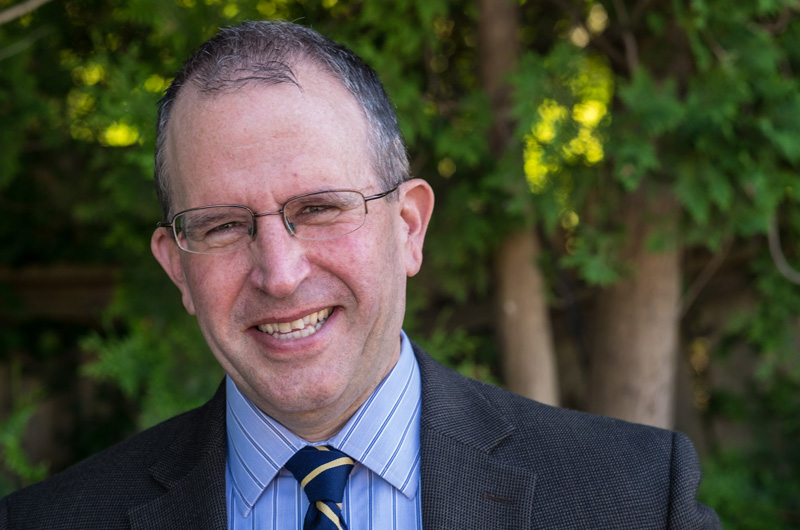
Adam Moore, executive director of Sheriff's Meadow Foundation.
Henry Beetle Hough, the former longtime publisher and editor of the Gazette, had led a public campaign in 1967 to raise money to purchase the land from the Daggett family and transfer it to the Sheriff’s Meadow Foundation, which he had founded in 1959. At the time, he billed the purchase as the among most significant conservation efforts on the Island to date. “The alternative is ‘development,’ which continuing blindly, may leave too little of the traditional and beloved Vineyard,” Mr. Hough wrote in a 1967 editorial.
Shortly after the purchase, he contributed another 70 acres of family land that abutted the original property. Over the years, additional land holdings and conservation restrictions have expanded the sanctuary to include about 400 acres.
Since the founding of Sheriff’s Meadow in 1958, Martha’s Vineyard has become a world leader in conservation, with a several nonprofits working together with towns, landowners and others to preserve the Island’s natural environment. More than 20,000 acres, or about 40 per cent of the Island, is now conserved in one form or another.
Cow power over development keeps Katama Farm in the green.
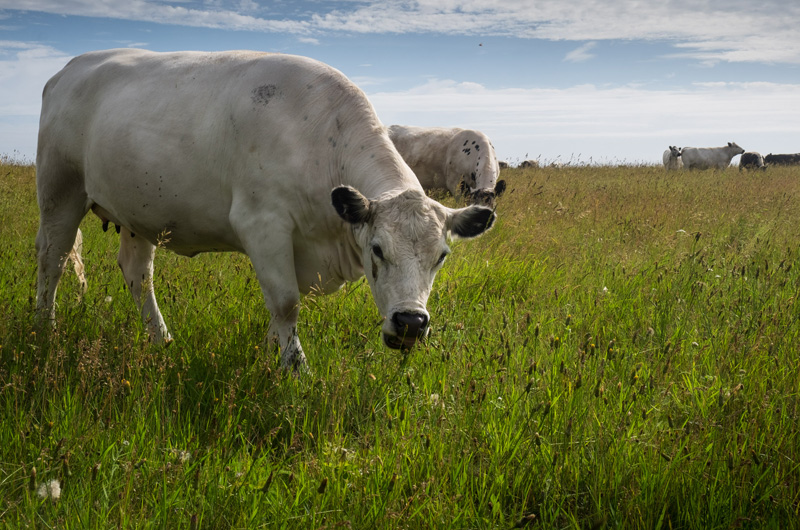
Cow power over development keeps Katama Farm in the green.
“There is strength in diversity,” said Brendan O’Neill, executive director of the Vineyard Conservation Society, another early pioneer in the conservation movement. “And the diversity of organizations working in this environmental sector on Martha’s Vineyard is really something to celebrate.” As with Sheriff’s Meadow, VCS holds large tracts of land on the Island. But it also serves as an environmental advocate, working to stem the effects of development and educate the public about the value of conservation.
Along with Cedar Tree Neck’s 50th anniversary, this year also marks the 20th anniversary of the Martha’s Vineyard Conservation Partnership, which involves several key groups working to save land and collaborate on conservation initiatives.

Chris Kennedy, Island superintendent of The Trustees of Reservations.
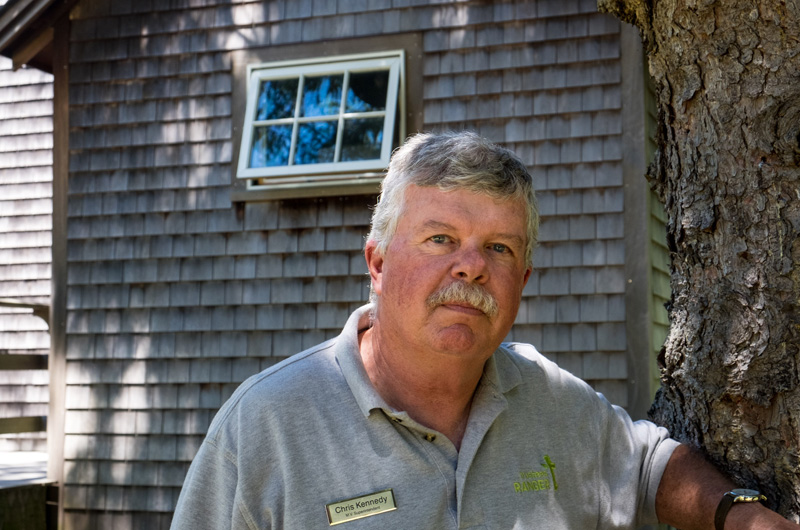
Chris Kennedy, Island superintendent of The Trustees of Reservations.
“Some of us do a better job in one particular area than another,” said Chris Kennedy, Island superintendent for The Trustees of Reservations, which owns about 1,340 acres across the Island, including large stretches of shoreline. “There are a lot of rivalries,” he said of the Island in general. “But when it comes to land conservation there really isn’t. We work pretty much hand-in-hand together.”
Tom Chase, the Island conservation director for The Nature Conservancy, who helped set up the partnership along with former Sheriff’s Meadow director Dick Johnson in the 1990s, said it helped formalize a collaboration that had existed for years. He noted that the Wakeman Center in Vineyard Haven had already served as an Island headquarters for the Sheriff’s Meadow Foundation, VCS and other groups.

Plantings at Joseph Sylvia Sate Beach help keep erosion at bay.
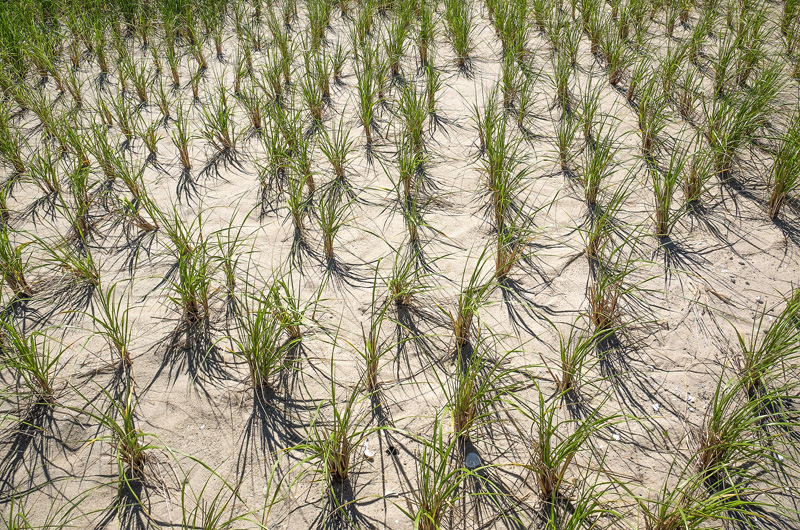
Plantings at Joseph Sylvia Sate Beach help keep erosion at bay.
One longstanding goal of the partnership has been to acquire properties to connect existing lands and improve habitat and recreation. A long-running project to protect rare heathlands off Moshup Trail in Aquinnah involving numerous conservation groups including VCS, Sheriff’s Meadow, the land bank and the state, is an example. And a recent donation of 30 acres by the Hough family has allowed for a new trail at Cedar Tree Neck.
But as land becomes more scarce, priorities have shifted from acquisition to the protection of existing properties. Smaller acquisitions continue today, but mostly by Sheriff’s Meadow and the publicly-funded Martha’s Vineyard Land Bank. “Most of the other organizations, including my own, do very little land protection these days,” said Mr. Chase. “So the amount of land going under development is vastly outpacing the amount of land going into conservation.”

Tom Chase, Island conservation director for The Nature Conservancy.
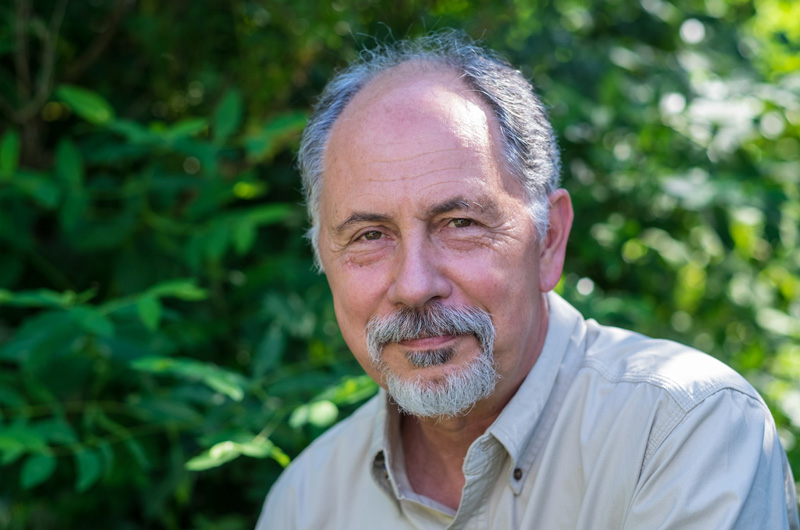
Tom Chase, Island conservation director for The Nature Conservancy.
Mr. O’Neill pointed out that even in the last few months, public land that was long thought to be protected in perpetuity by the state has been put on the table for potential development. “There are a number of concerns about shoring up the gains that have already been made,” he said.
Looking ahead, some Island groups are turning their attention to the effects climate change and sea level rise. Mr. Moore noted the value of conservation lands along the shore and low-lying areas, since they provide a buffer for developed areas farther inland. He also noted the arrival pests like the southern pine beetle, which have moved north as their habitat expands.

Daggett's Pond is scenic highlight at Cedar Tree Neck.
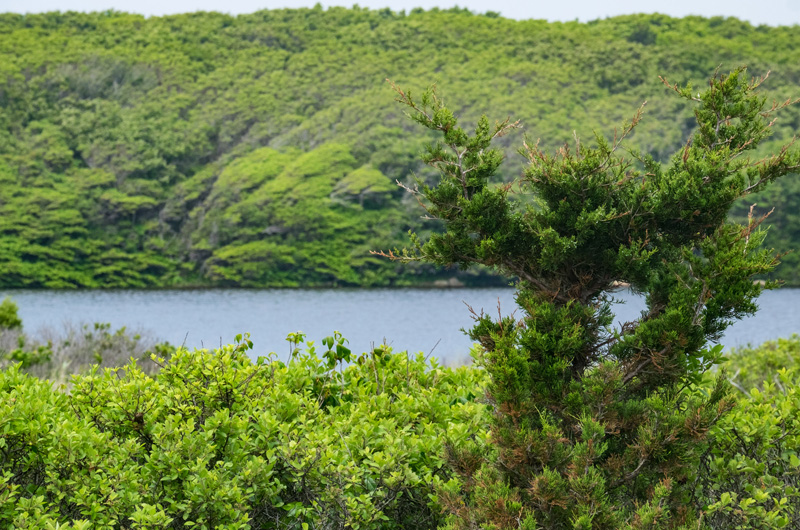
Daggett's Pond is scenic highlight at Cedar Tree Neck.
As the largest holder of private shoreline in the state, The Trustees of Reservations has also been preparing for rising seas. “Over the next few years, coastal issues and challenges will certainly be one of the primary, if not the primary management concern of the organization,” Mr. Kennedy said, noting the potential effects of climate change on shoreline habitat and recreation.
In recent years, The Nature Conservancy has shifted its focus from land deals and ecological restoration to more global issues such as climate change and sustainable fishing. Mr. Chase said that change might not benefit the Island in terms of land protection, but could provide new opportunities in terms of responding to rising seas.

Brendan O'Neill, executive director, Vineyard Conservation Society.
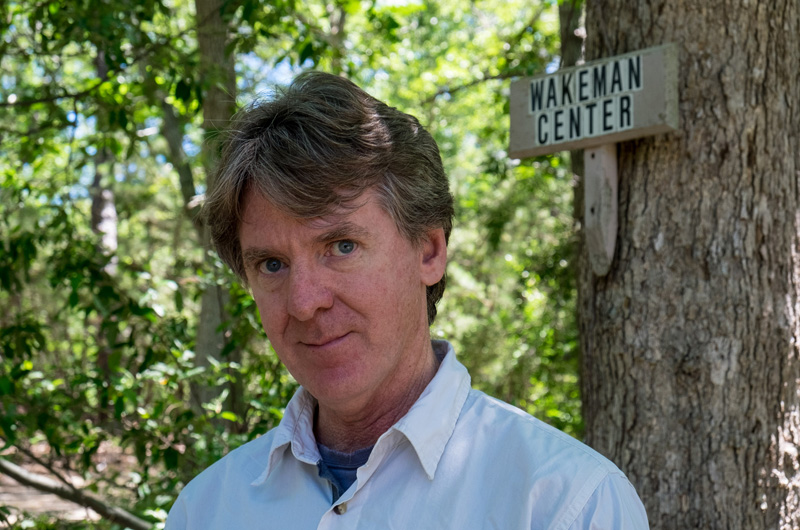
Brendan O'Neill, executive director, Vineyard Conservation Society.
“We have such a diversity of communities with different exposures to climate change, such as erosion and storm surge — and a diversity of wealth classes, a diversity of ethnic groups,” he said. “That makes this a good pilot community for studying climate change impacts and adaptation.”
Mr. O’Neill said several thousands of acres could still be developed on the Island, but he was optimistic that conservation of new lands would also continue.
He ticked off a few of the key challenges moving forward: “A lot of land protection yet to be done. An immense amount of pressure from growth and development because of the notoriety of the place.” But he also noted the wealth of conservation groups on the Island, and the ability of many residents to help keep them afloat with donations. “I think that combination has led us to a pretty good place on Martha’s Vineyard,” he said.
Comments
Thank you all that donated
Mit Gold EdgartownThank you all that donated and continue the legacy of conservation on this great island!
I applaud the efforts of
John Williams West TisburyI applaud the efforts of these organizations to acquire and protect precious land that makes the Vineyard to special place it is. You do not have to look hard to see cases of overdevelopment wherever there is shoreline. Beyond these organizations there are large numbers of individuals (from all walks of life) that are dedicated to preservation of our lovely island. Thanks to all of them.
This is an excellent article
Tess Bramhall West TisburyThis is an excellent article about four of the five organizations which make up the Martha's Vineyard Conservation Partnership which l helped found in 1997. It should be noted that the 5th member is the Martha's Vineyard Land Bank and it plays a large and vital role in conserving and protecting the island along with the Vineyard Conservation Society, Sheriffs Meadow Foundation,The Trustees of Reservations and The Nature Conservancy. Martha's Vineyard is extraordinarily lucky to have such dedicated and talented leadership.
Right on Tess -- thanks for
Ginny WTRight on Tess -- thanks for all that you (and others) have done for our island. Without the conserved properties we would be totally overwhelmed. And our natural resources (including the very water we drink) would be hopelessly degraded.
These groups perform an
BS OBThese groups perform an admirable job but we must also confess they are a big part of the affordable housing problem.
Actually the conservation
Ginny WTActually the conservation groups are not a big part of the affordable housing problem. There are many causes but the main reason is that the popularity of the island and the tourist economy are the root causes. Second home rentals have made home ownership a very good investment for a lot of people who do not live here (thinking that they may retire here "some Day" is not helpful). Follow the money and see how our economy is so off kilter. Many island families are struggling to make 12 months of income (where the cost of living is up to 60% higher than "in America" in 3 months. It can't be done unless you take jobs without benefits which are landscaping, construction, second home rental prep, or similar. All that money is taken away...most of it never ever passes through an island bank or helps to create a sustainable, year round, green economy with benefited jobs. Think about it. The conservation groups are year round employers; your average second home owner with a summer rental property is not.
No, conservation
Kate TisburyNo, conservation organizations are not a part of the affordable housing problem. #
They are part of the solution.
This blame-it-on-conservation is exactly the meme whereby the AH community appears to be setting itself in competition with the conservation community---for funds and, most important, for land to develop. #
AH advocates demand that their mission and agenda be recognized by the conservation organizations, but they do no in return acknowledge the importance and mission of the conservation orgs. #
Affordable housing advocates hungrily eye conservation lands, ignoring or downplaying as irrelevant the decades of commitment and resources that have preserved these assets for the public, the decades that went into the crafting of the Land Bank legislation. #
Creating enough affordable housing is a challenge in just about every town of the Commonwealth and probably every state in the Union. # Including in those towns that do not have the proactive conservation ethic of Martha's Vineyard. #
Preserved lands are there for the whole public to enjoy
and to help preserve a HEALTHY and inspiring environment for all, rich and poor. #
The beneficiaries of affordable housing initiatives are a subset of the the public. #
The donor base of the Island Housing Trust is, I believe, far larger than that of, say, the Vineyard Conservation Society. #
I urge affordable housing advocates to encourage their donors to support the Island's conservation organizations and to become members of those that are membership organizations.
That is one of the biggest favors they can do for their constituency to preserve the qualities of the Island that brought them here in the first place, or make them want to stay.
Add new comment