


<p>Picking up on efforts that began more than 40 years ago, Edgartown voters will decide next week whether to more than double the size of their historic district, which includes about 250 homes in the heart of the village.</p>
Picking up on efforts that began more than 40 years ago, Edgartown voters will decide next week whether to more than double the size of their historic district, which includes about 250 homes in the heart of the village.

Traditional look on North Water street.
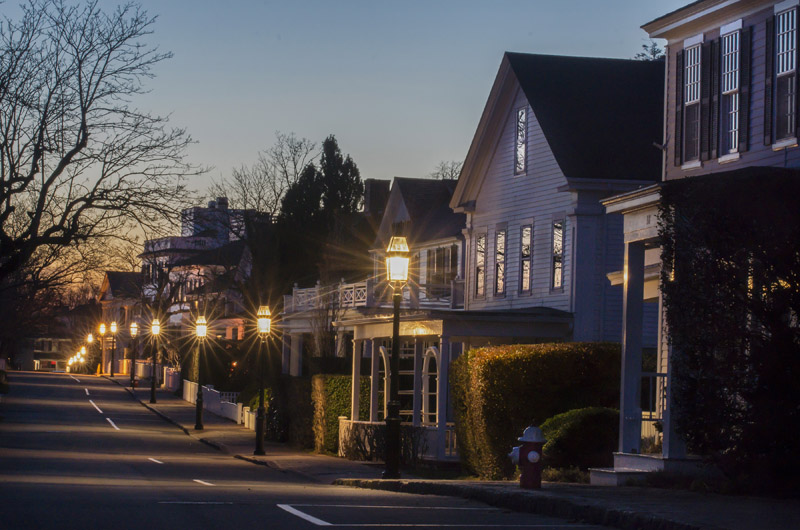
Traditional look on North Water street.
The annual town meeting begins at 7 p.m. Tuesday in the Old Whaling Church on Main street. A two-thirds majority vote is required to establish the new boundaries.
Much has changed in Edgartown since the 1980s when voters first established the historic district. Several longtime residents agreed this week that local oversight has helped retain the town’s unique character, while others have resisted the additional layer of review the expansion would bring.
A small group of Edgartown residents began planning for the district in 1972, but it took more than a decade and three failed attempts at town meeting before voters finally approved a much truncated version in 1987. Many of the same concerns remain today, although decades of experience have also demonstrated the benefits of having the district.
“It’s just amazing how many old houses are preserved in Edgartown,” said Dudley Cannada, a Washington D.C-based architect who has a house on North Water street. He noted the especially large inventory of historic houses in town, which span about 300 years of architectural history, from the colonial through early modern periods, including the town’s prosperity as a whaling port in the 1800s. He counted Edgartown as among the most important historic communities in the country, along with Nantucket, which established its own district in 1955.

Voters will be asked next week to more than double the size of the historic district.
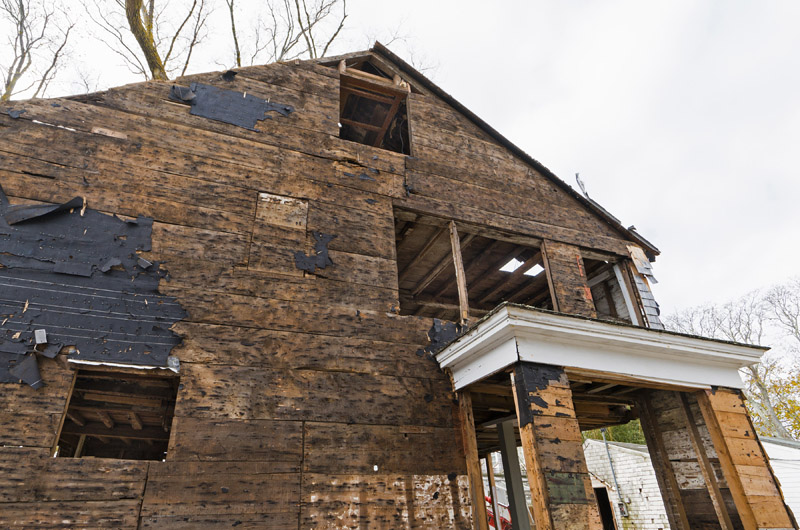
Voters will be asked next week to more than double the size of the historic district.
Beginning in 1654, the Edgartown village grew in a rough crescent, expanding northward from the harbor. The originally proposed district traced the first 250 years of growth, following Pease’s Point Way to the north and the waterfront to the south. In 1984, the whole area was listed on the National Registry of Historic Places, providing some tax incentives for commercial properties, but little protection for historic homes.
Expanding the district will help manage a growing number of renovations and demolitions outside the current boundaries, according to a report by district commissioners last year. The current boundaries have not changed in 29 years and include only about half the historic village.
The intent was similar in 1985, when the historic John Nevin House on North Water street was demolished to make way for Nevin Square, rekindling efforts to establish a district. A study committee at the time proposed a much smaller area than before — confined to about a dozen blocks around Main street and extending east and west along the harbor. Some residents had pushed for a larger district, but committee members assured them it could be expanded in the future. The article passed by a landslide 251-14 vote at the 1987 annual town meeting.
According to the report last year, concerns over the lack of inclusion have persisted. The newly proposed boundaries include nearly all of the historic village, plus about 50 properties north of Pease’s Point Way that were added at the request of residents in those areas. Altogether, the new area would add about 340 properties to the district.
Not every house in the area is historic, however.
“That was always the dilemma,” said Carole Berger, a longtime member of the historic district commission who helped define the proposed boundaries. “A street would have significant houses on it and some that were less so. But you always try to remember the ambiance of the historic house.”

Capt. Warren House undergoes a facelift.
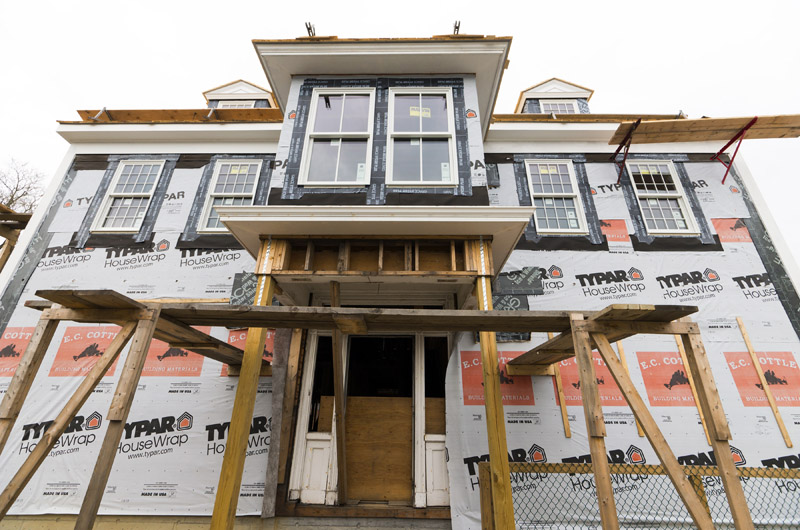
Capt. Warren House undergoes a facelift.
As with the other three districts on the Island — in West Tisbury, Vineyard Haven and Oak Bluffs — reviews focus on renovations, repairs and new construction, with preservation or replacement favored over demolition. The aim is to preserve the original house as visible from a public way (including the harbor) and to retain the character of the village.
The commission typically grants certificates of appropriateness, or of non-applicability, before a project can be approved by the town building inspector. A project may also qualify for a certificate of hardship, although Mrs. Berger has never seen that happen in Edgartown.
“The ones who don’t want to preserve their property — and we have some glaring examples very close by — it’s not exactly a hardship,” she said. “They find reasons to delay and reasons not to do it.” But the commission has no authority to force renovations, and may level only up to a $500 fine for noncompliance.
Throughout the Edgartown village, new and old buildings stand side by side, creating something of a lived-in museum. In some cases the difference is obvious, although architects have for the most part worked to carefully blend modern and historic styles.
Island builder Patrick Ahearn is perhaps more responsible than anyone for creating a synthesis of old and new in the village, where he has worked on more than 150 projects over the years.
“I design houses the same way, whether it’s in or outside the district,” Mr. Ahearn said this week, arguing in favor of the expansion. Mr. Ahearn’s own house, a traditional two-story Cape on Davis Lane that he built 13 years ago, would be within the new boundaries, but he didn’t believe it would make a difference.
“If I tell people to walk down Davis Lane and look for the two new houses, they can’t find them,” he said. “I take that as a very high compliment.”
But he added that a number of new buildings outside the district have greatly altered the character and scale of the village. In general, he believed the historic district commission could help keep things in line with the village character. Some homeowners have been adamantly opposed to the expansion. Michael Horvitz, a longtime seasonal resident who built an 8,000-square-foot house on Starbuck’s Neck in the 1990s, doesn’t believe he should now have to comply with the historical regulations.
“There is no possible way that there is anything historic about the house that I’m living in,” he said, arguing that other houses in the neighborhood have been so thoroughly rebuilt that it was hard to call them historic. Nevertheless, he believed the neighborhood has retained its character despite being outside the district. (The entire road, along with the Edgartown Lighthouse would be included in the new district.)
“The zoning process worked perfectly well,” he said. “So the question of why you need this extra level of review for things that have nothing to do with history, unless you are trying to create a Williamsburg or something, it’s completely unnecessary.”

Old gives way to new in downtown Edgartown.
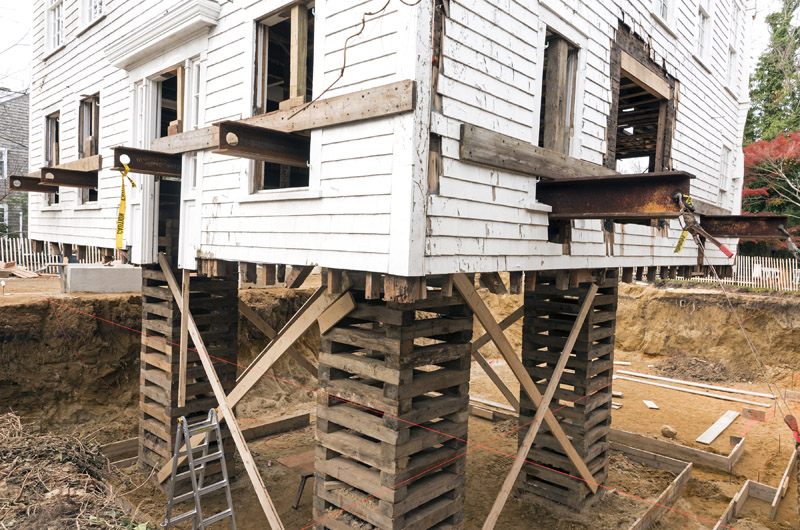
Old gives way to new in downtown Edgartown.
Mr. Ahearn also had reservations, but they focused more on the review process itself. He noted the commission’s lack of differentiation between commercial and residential properties, arguing for stricter review in areas with more pedestrians. But in general, he supported the commission’s work, and believed most of his clients did, too. “The problem is, most of my clients don’t vote in Edgartown,” he said.
A survey mailed out to 290 residents in the proposed expansion area revealed strong support for the new boundaries, echoing support in the 1980s. But the vast majority of homes in the village are seasonally occupied, so the decision on Tuesday will fall largely to residents outside the district. Mr. Ahearn expected town residents who oppose increased regulation in general to vote against the proposal as a matter of principle.
“What I hear in the street is that this is an uphill battle,” he said.
Mr. Cannada said residents in historic districts often fear a drop in property value and an inability to alter their houses. But he said neither scenario has played out over the 60 years or so since historic districts have been around.
“Edgartown in particular has an extremely reasonable commission,” he said, “and they allow sensitive additions, sometimes quite large. The main goal is that you don’t overwhelm the historic house.”
He noted national studies showing that property values in historic districts either remain stable or increase faster than in similar areas without such protection. “Edgartown is probably a perfect example of that because our historic district is some of the most expensive real estate on the Island,” he said.
The commission itself views the expansion “as having a direct economic benefit to the businesses and citizens of Edgartown,” according to the study report.

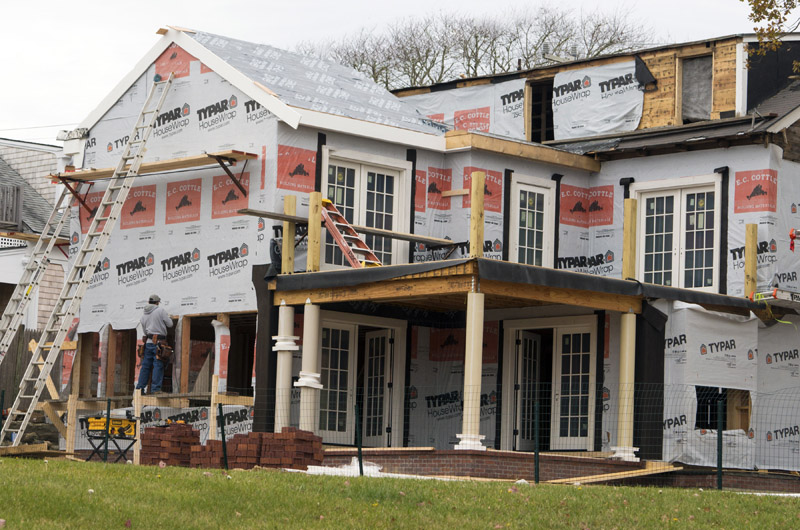
Much has changed in Edgartown since the 1980s when voters first established the historic district.
Much has changed in Edgartown since the 1980s when voters first established the historic district.
Advocates for the district in the 1980s sought to make it clear their goal was not to prevent change but to make sure it happens with the village character in mind. And the district bylaw does not forbid any specific building materials, although the commission today still does not allow the installation of vinyl siding.
Mr. Ahearn believed the review process in Edgartown was more reasonable than in some well-known historic areas, where even small changes can become an ordeal. “It’s not a museum,” he said of the Edgartown district. “We have a working town.”
Building inspector Leonard Jason Jr. recalled the efforts to establish a district in the 1980s, when he first came to work at town hall. “Back then, as it was in the seventies, I think people were always a little hesitant to have somebody tell them what they could do with their own property,” he said. But he too supports the expansion.
“I think it’s been helpful for the town, to be honest with you,” he said of the historic district. “I realize it’s been difficult for some, but if you look at the overall picture, it’s still a nice looking town.”
Video by Sophia Tewa: Edgartown Weighs Expansion to Its Historic District
Comments
Calling what has been done to
molly EdgartownCalling what has been done to the Captain Warren House a "facelift" is quite an understatement. It seems to me that if you hire the "correct" architects you can build just about anything you want to build. I'm voting NO to the expansion.
It's funny how folks that
Christina EdgartownIt's funny how folks that stand to gain the most are in favor of expansion. Follow the money.The larger the district results in the need to hire more perferred architects, landscape architects, and their associates. Make an educated vote. Ask someone that has been through the process. Members of the HDC regularly need to recuse themselves. What a joke, the fox is watching the hen house. Please set up a panel and interview folks that have applied for permits. Unfortunately, this will never happen because the powers that be don't want to expose the truth of the nepoticism that exists.
Wish they would start doing
BE Vineyard HavenWish they would start doing more of this in VH. Except for William Street....it seems that anything and everything is allowed.
Funny watching the video of
Bob EdgartownFunny watching the video of the lady with the house on main street, I could not help but laugh at the ugly air condition unit hanging out her window. Which clearly is visible from the sidewalk. This while she talks about keeping things they way they were. It must be do as I say and not as I do!!! If she wants to put things back how they were she should start with her house.
I agree with you. Window AC
deshandra brown mvI agree with you. Window AC units hanging out are 'tacky'. They shouldn't be facing the street. Allow them in the rear of the house. Same with skylights in the roof. Nothing 'historic' about either/or.
Yah, bet she has electricity
BFYah, bet she has electricity too! Damned hypocrite.
Maybe Bob, you would come over in July and August and be her own personal boy with a fan.
I'd actually prefer not to
Sara Piazza EdgartownI'd actually prefer not to have the a/c in that window but it's the only window that will fit a unit large enough to service my upstairs. I'd really rather not have a/c at all, but my upstairs is an inferno in the summer with its low ceilings, and windows that are too small to provide adequate ventilation. Besides, the noise from the trucks and buses and cars roaring up and down Main Street is like living next to Logan Airport (not at all what it was like growing up in this house), so I can't leave the windows open anyway. Cheers, and have a pleasant Sunday.
Everyone has a reason for
Mike EdgartownEveryone has a reason for doing something . It doesn't feel right when someone tells you how to live your live, or tells you what to do with your property .you have ugly Ac units hanging from the Windows , the Simpsons house is falling apart . You made my point better than I could .
This is so typical , do as I say not as I do .
Perhaps we can all recognize
Lorraine EdgartownPerhaps we can all recognize that returning to the way things were would mean dirt streets, no street lamps, wood fires in each house, candles for lighting, small businesses run out of houses throughout Edgartown, horses and the by product of horses on the dirt streets,etc. I have photographs of earlier Edgartown, the street in front of my house is a partial grassy, dirt lane. The people of Edgartown will vote on what they want to do which is the way to do things.
Window AC's are not so bad in
Ellen West TisburyWindow AC's are not so bad in terms of preservation for the next generation, when one might want to AC the whole house. They are like the old TV antennas--they can be removed, like furniture, and the house is intact. Far worse is replacement windows with a single sheet of glazing with glue-on muntins. the old windows with the panes that sparkle from the old glass and the slightly different angles of the individual antique panes keep the wall's rich sculpture and that "bright eyes" look. A generation down the line, when your children want to take away the zombie windows from the "bad old days" (the 2000-teens), the richer original windows will not be there---ever. These are the things to think about.
Expansion is sensible and
Friend of HistoryExpansion is sensible and important. This expansion will provide protection to buildings located within the National Registry’s boundaries plus several significant areas which contain fine examples of all eras of the Town’s architectural development from Cape Cod styles to Greek Revivals.
The preservation of historic properties has a direct economic benefit to the business and all citizens of Edgartown. This expansion has been thoughtfully considered by people who have worked hard to preserve history. Please consider the value of the beauty of our historic homes and gardens. Once a historic home is lost, it is lost forever. Lets provide this lovely village as a place of history and beauty for our grandchildren
Add new comment