

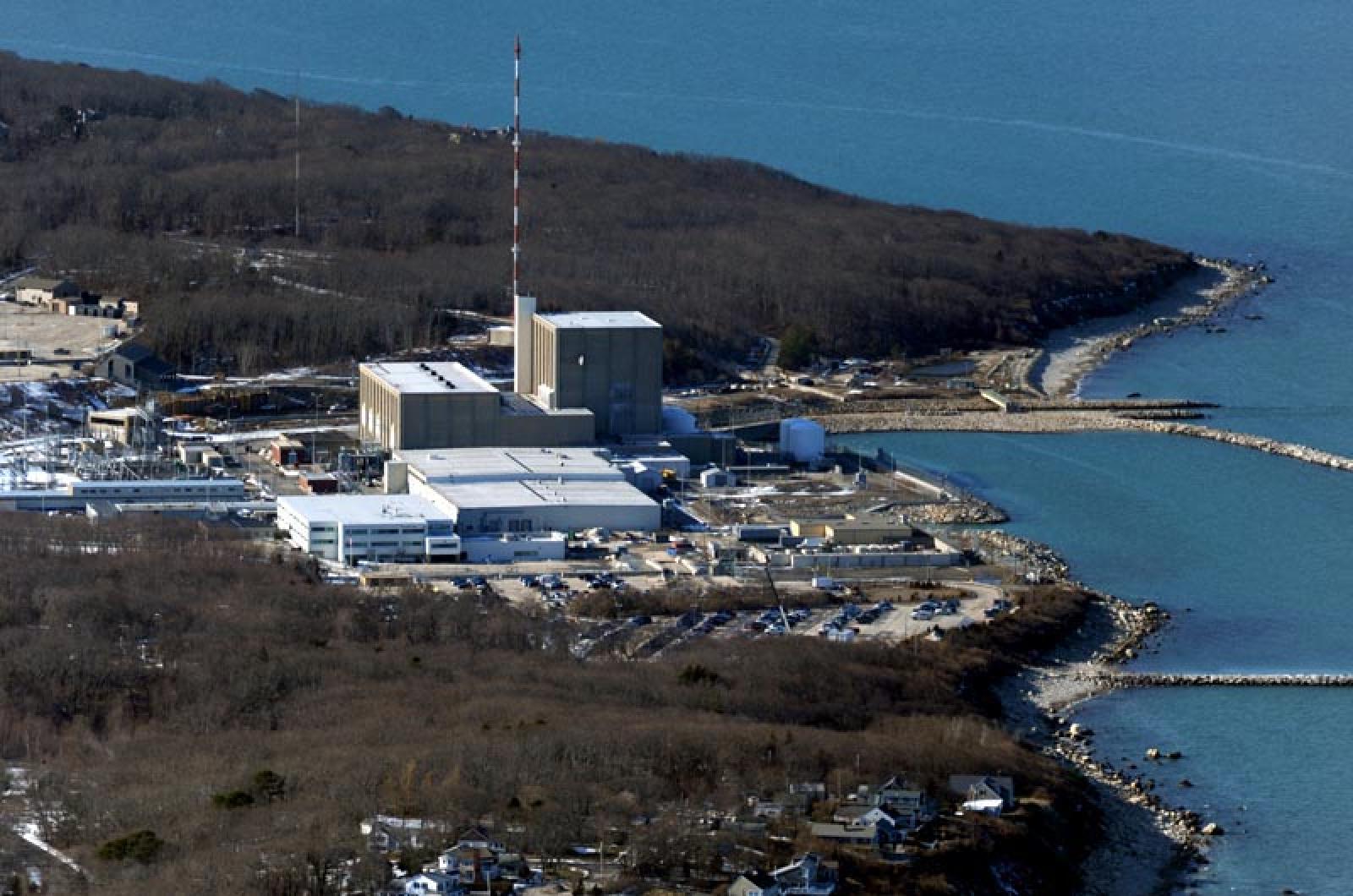
Praises to the Vineyard Gazette for again recognizing that the Pilgrim Nuclear Power Station is a local issue about which Islanders deserve to be well informed.
Praises to the Vineyard Gazette for again recognizing that the Pilgrim Nuclear Power Station is a local issue about which Islanders deserve to be well informed. Headlines in the paper’s Oct. 16 edition proclaimed “Pilgrim Nuclear Plant to Shut Down.” Relicensed to produce electricity until 2032, Entergy, the Louisiana-based corporate owner, stated the reason was purely economics. Sen. Edward Markey, commenting on the shutdown, remarked: “While nuclear energy was once advertised as being too cheap to meter, it is increasingly clear that it is actually too expensive to matter.”
A year after the 2011 catastrophic triple meltdown at Japan’s Fukushima plant with a GE reactor similar in design to Pilgrim’s, following the 1979 partial meltdown at Three Mile Island in Pennsylvania, and the 1986 lethal explosion in Russia at Chernobyl, the Economist magazine published a special report: nuclear energy . . . the dream that failed. Now living on the Vineyard, just 35 miles downwind of Pilgrim, we must work to insure that dream does not become our nightmare. If you believe that the past informs the present then the closing planned no later than 2019 and subsequent decommissioning will be characterized by mismanagement, serious safety and security violations, lack of realistic evacuation plans, and cost cutting by the utility endangering health and the environment.
The Nuclear Regulatory Commission (NRC) rates Pilgrim as one of the three least safe nuclear power plants in the United States. Scientists at Cape Cod Bay Watch estimate the plant’s once through cooling system removes up to 510 million gallons of seawater a day from Cape Cod Bay in an archaic system that the NRC would not license today. Massive numbers of finfish, eggs, shellfish and invertebrates are trapped daily in the intake screens where they die. The ocean water, having absorbed heat from the reactor, is discharged back into Cape Cod Bay where it forms a thermal plume. With the federal radioactive waste depository in Yucca Mountain, Nev., no longer funded, the thousands of highly radioactive spent fuel rods will continue to be stored in the Manomet section of Plymouth on site at Pilgrim. New NRC regulations post-Fukushima require nuclear plants to provide ways to mitigate a “beyond design basis external event.” A tidelands system of moorings and pump suction lines to provide a source of water to cool the reactor in a nuclear emergency is debatable whether it would work under storm conditions.
In full-page advertisements in newspapers such as the Boston Globe the nuclear industry promotes nuclear power as a major source of carbon-free electricity.
This is like saying poison ivy is a beautiful plant without telling the rest of the story. Pilgrim, like all nuclear plants, is heavily dependent on fossil fuels from the mining and processing of uranium, construction of the facilities, back up diesel emergency generators, transportation of fuel rods to Plymouth and of low level waste out of state for disposal.
All six Island towns voted in a 2014 referendum to close Pilgrim. Now is the time to continue to make our voices heard by being knowledgeable as Pilgrim is shut down. It is optimistic to think Pilgrim has been refueled for the last time as Entergy has left open the possibility of another refueling in 2017. The already overcrowded spent fuel pools could release radiation during an accident if water drains from the pool causing spent fuel rods to overheat and the cladding to rupture. Older spent fuel should be moved to safer and more secure dry steel and concrete casks.
Public hearings should be held on Island to inform us about decommissioning plans, timetables and evacuation plans, which as we learned from Fukushima should be expanded to 50 miles. As this process unfolds, Martha’s Vineyard residents are well advised to walk into your town board of health and request potassium iodide pills for your family. These block the thyroid gland from absorbing radiation. Issues related to acquiring radiation monitors as some mainland towns have done can be found on the Pilgrim Watch web site. Our needs as an Island are unique and it is critical to understand what it would mean to “shelter in place,” given that both Cape Cod bridges would be closed to expedite the evacuation of those within a 10-mile radius of the plant. More information is available through Cape Downwinders.
Pilgrim’s closure requires technical expertise, a large financial commitment by Entergy to ensure that safety and security concerns are adequately addressed now and in the future, and that the plant’s existence cannot threaten our land, water, and way of life.
Christina Miller lives in Edgartown.
Comments
This superb commentary
Harvey Wasserman Bexley, OhioThis superb commentary underscores the need to shut Pilgrim as soon as possible. All efforts must be aimed at preventing Entergy from refueling, and forcing them to shut before this terrible reactor ruins the entire region.
The Vineyard has a unique opportunity in the meantime to go 100% green with major advances in solar, wind, bio-fuels and increased efficiency, including LED lighting. Many communities in the US and around the world have already made the leap with great success. The Vineyard's time is now!!!
A fresh perspective on why we
Russell Lowes Tucson, AZA fresh perspective on why we need to shut 'em down. Nuclear energy produces over 10 times the greenhouse gas produced by energy efficiency, wind and solar. It does so, as you point out in the mining process and other steps of the fuel cycle.
Equally important, it is so expensive that it dominates the capital market for a utility, preventing it from creating or saving far more kilowatt-hours through investments in energy efficiency, solar, wind, energy storage and energy management.
To replace Pilgrim with wind
LeonardTo replace Pilgrim with wind will require how many trubines?
How much steel will have to be make to erect them?
Yes, there are carbon wastes associated with nuclear construction, fuel cycle and decommissioning, but there is just as much if not more, to erect thousands of wind turbines.
In the very unlikely event
BS Oak BluffsIn the very unlikely event there was a catastrophe at Pilgrim it's effects would reach about 10 miles out from the plant. It would have no impact on the island. There will be a significant impact when it closes on the working poor in this state who will have to pay increasing electrical rates not to mention the jobs lost in Plymouth and the hardship imposed on working people of Plymouth when their tax rates skyrocket. I lived within 5 miles of Pilgrim for 7 years and never felt unsafe. I was lucky enough to tour the control room and meet with their staff and was amazed at the security measures in place. If you haven't taken the time to take this most basic of steps to educate yourself on the plant then you really don't know what you are talking about.
Unless you can guarantee that
Davis. There is no second chance when one of the numerous plants in US loses power loss due to tornado, EMP devise, earthquake, terrorist attack or incompetence. Browns Ferry in Alabama came very close to server issue due to incompetence. Also, tornado came dangerously close to same plant several years ago. This is just ONE plant. You don't know what you are talking about. Give 100% guarantee that none of the above will happen or CLOSE ALL OF THEM DOWN. YOU CANNOT. NO ONE CAN. Therefore all should be closed and NOW!
Add new comment