


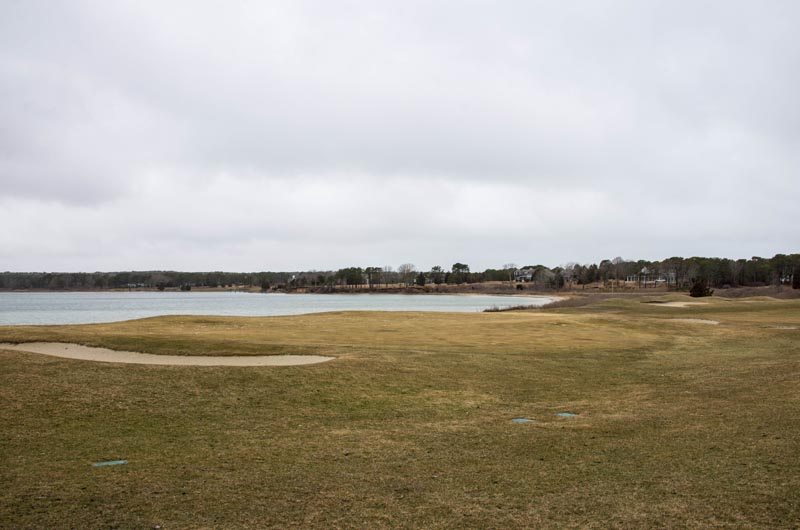
Landscapers on the Vineyard are adjusting to new regulations that limit the use of lawn fertilizer, which have been in effect since January. This year, fertilizer can’t be applied until April 15, according to the regulations, which also establish a licensing process for fertilizer users.
It’s shaping up to be an unusual spring for the landscapers of Martha’s Vineyard. For one thing, persistent snow cover has forced a late start.
“Normally I would have been out for the last couple of weeks,” said Tisbury landscaper Tristan Israel. “We would all be out working and getting things ready for spring.”
Landscapers are also adjusting to new regulations that limit the use of lawn fertilizer, which have been effective since January. This year, fertilizer can’t be applied until April 15, according to the regulations, which establish a licensure process for fertilizer users.
The rules, which are enforceable Island-wide, were created to curb the amount of nitrogen and phosphorus leaching into the Vineyard’s ponds and coastal waters. When present in excess amounts, as it is in several Vineyard watersheds, nitrogen can become a pollutant, triggering dense plant growth through a process called eutrophication.
Among other guidelines, the new regulations prohibit the application of fertilizer during rainstorms and near storm drainage systems, and limit the amount of fertilizer allowed per application and per season.
“The idea is to set a limit and to reduce unnecessary and inappropriate use of fertilizer,” said Edgartown health agent Matt Poole, who led the effort to create regulations. “Though only a small percentage of the total local nitrogen in the environment comes from fertilizer, it is a low hanging fruit to some extent, unlike hundreds of millions of dollars in sewering.”
In order to get licensed, property owners and landscape professionals must enroll in a fertilizer education course and pass an exam. It costs $100 for the three-year license, which is valid in each town, and $85 for the course and exam. A class meets this Saturday from 10 a.m. to 4 p.m. at the regional high school, and as of Wednesday, 90 people had signed up.
Matthew Crowther, who oversees 50 acres of turf at Mink Meadows Golf Club in Vineyard Haven, is one of them. Last year, when regulations were being finalized, Mr. Crowther sat in on the process as a representative for the golf clubs. When he was asked to participate, he took the opportunity to educate people about the environmental practices of golf courses.
“You either get on the bus and try to steer it in any way you can to protect your livelihood or you get run over by it,” he said.
In fact, he says, the golf courses on Martha’s Vineyard are already applying fertilizer below the limit set in the regulations. Lawn care budgets have been cut over the past decade, Mr. Crowther said, so golf clubs are already working hard not to waste fertilizer. That’s why he says the regulations won’t present a major encumbrance for his golf club.
“It’s just learning what the rules are and tweaking your program,” he said.
Tweaking his program will mean fertilizing more often with smaller quantities, which will cost him more in labor, he said. Landscapers interviewed this week said basically the same thing. The new rules might take some adjusting, but overall, they weren’t a big deal.
Landscaper Mark Crossland, who is now in his 40th year of business, said he’s already in compliance. Even at Ocean Park, an often lush stretch of green in downtown Oak Bluffs, he uses organic fertilizer.
“That’s just good maintenance,” he said by phone this week. “It’s not healthy for the turf to over-fertilize.”
He’s sending his two sons and daughter to the class on Saturday, though they already hold organic applicator licenses with the state.
“I think it’s a very good thing for the Island,” he said. “It will help to keep the ponds clean.”
Landscaper John F. Hoff said the Island is already ahead of the curve in its use of organic fertilizer.
“I think that these regulations, and the general awareness they will encourage, is going to be a positive step for the future of the Island,” he said. “I would also like the water to be safe for the children, the animals and the plants.”
The town boards of health issue licenses and have the authority to enforce them. Mr. Israel, who is also a selectman in Tisbury, said he hadn’t heard a lot of negative feedback about the regulations, though some complained about the fees involved.
“I grumble about that too, but it’s the right thing to do,” he said.
Comments
Please keep us updated on
Landscaper away this weekend! VHPlease keep us updated on another date for the licensing course. Called Tisbury Board of Health and was told this would be the only class offered and the only way to get the license was to take the class. If they expect everyone to be compliant there will have to be more than one class.
Island is already ahead of
flounder bob chilmarkIsland is already ahead of the curve in its use of organic fertilizer and so is mr.JON FRAGOSA, they are the Exclusive Certified Dealer Applicator of BeeSafe Organic Land Care products on Martha's Vineyard.also, it's a great idea......
So are they saying that as a
Paulli D EdgartownSo are they saying that as a home owner, I have to pay a $100 for a license to put fertilizer on my lawn? Really?!?!?
Homeowners are not required
Matt Poole Edgartown Board of HealthHomeowners are not required to obtain a license or attend the course if they're applying fertilizer on their own property. Homeowners are required to meet the requirements of the regulation. The entire regulation can be found at www.mvboh.org.
I am writing this as a holder
Steve Anagnos Oak BluffsI am writing this as a holder of two certificates in Turfgrass Management from UMass and a Commercial Turfgrass Certification from the state of Massachusetts. If you look at the UMass publication “Lawn & Landscape Turf BMPs” you will see that I am also credited as a project assistant in the creation of this comprehensive guideline. ..The very guideline that our regulations were supposed to be consistent with. I say supposed to because there are several areas where they clearly are not. But, by putting it through the board of health, they were able to skirt around that legal requirement....smart, yes. Deceptive...maybe.
So, now I have to ask... How is it that at the exact same time that the Martha’s Vineyard landscape community is being forced into a corner with our hands tied, unable to make professional, science-based management decisions because of the new fertilizer regulations, (The MVC got sold a bill of goods by the Board of Health with that one.) the Wastewater commission has filed for state approval of newly developed “Sub-Par” leaching fields! Say...WHAT? So, let me get this right...the little guy (Fertilizer run-off can be accountable for no more than 5-10% of the nitrate entering our ponds,) gets beaten with a stick while the major contributor (septic is accountable for 85% or more of the nitrate entering our ponds) gets a “get out of jail free” card?? Does anyone else see the gross irony & inconsistency here?
Some of those who are responsible for the regulations will stick their chests out in pride with their “accomplishment”, while the people knowledgable in the science of turfgrass management (which includes strong weight towards environmental concerns...by the way,) scoff at how inconsistent the regs are with our knowledge and thinking. What did they really accomplish? A warm fuzzy feeling? The bragging rights to say “Look we’re doing something about this.”?? They have not, and will not, achieve any reduction in the nitrate levels in the ponds with this regulation. In fact, what may very well happen is that the degradation in turfgrass quality surrounding our ponds will lead to an increase in soil erosion, pesticide run-off & you guessed it...nitrate run-off & leaching. An excellent job well done...Hats off!
But, lets move on to the bigger picture, shall we? Leaching from septic. This IS the real problem. What can we do about it? How about focusing restrictions on this major contributor to our problem, and NOT relaxing standards and filing for variances. In this day & age, with all our concerns...who’s decision was it to construct “Sub-par” leeching fields in the first place? And who approved the construction?? And why, suddenly, has the wastewater commission changed it’s tune from “We will wait for state approval of our request for a variance.” to now, just two weeks later; outright approval of the bowling alley’s ability to tie into the sewer system. And all of this only 10 months after the MVC approval of their project which was based, in large part, on their promise of a zero nitrate output from their fancy, state-of-the art septic treatment system?
So what fuels this pathetic inconsistency? Yup, like everything else...money. Do you think the fact that there is $250,000 on the table in this one particular hand of poker has anything to do with it? If we are truly concerned about the health of our ponds, let’s start moving things in the right direction by refusing to allow this post-facto change to the promise that the developers of this project made to the island, and the MVC; a zero nitrate output. Then, petition the state to dis-allow the use of the leeching fields until they are re-designed and re-constructed to meet current standards and output levels. I think that would be a good start. And, then, let’s take another look at these fertilizer regulations and make the changes necessary to bring them into consistency with the UMass guidelines ...which it was legally required to do in the first place.
Steve Anagnos
Lawn Care Pros, LLC
Add new comment