

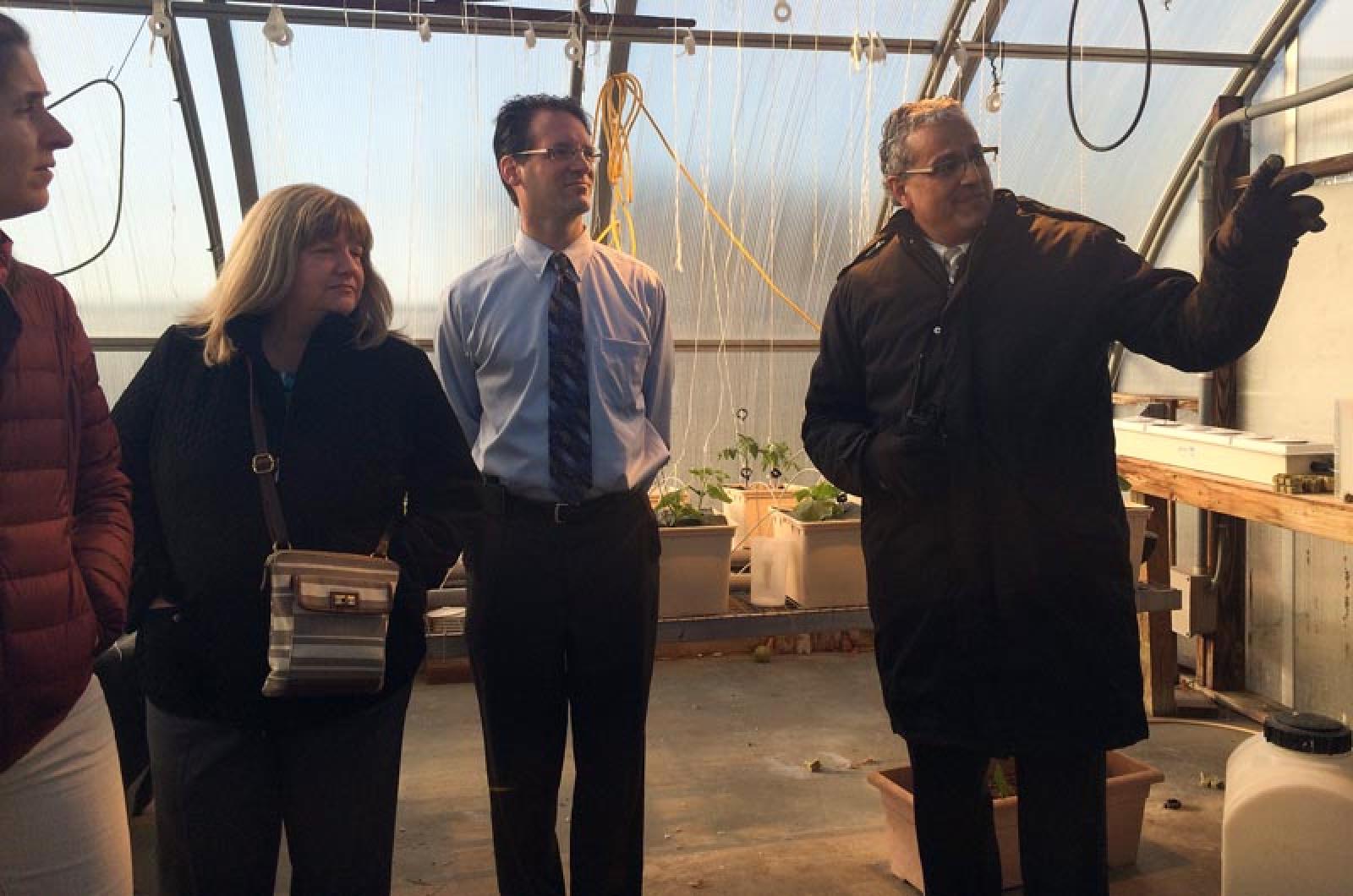
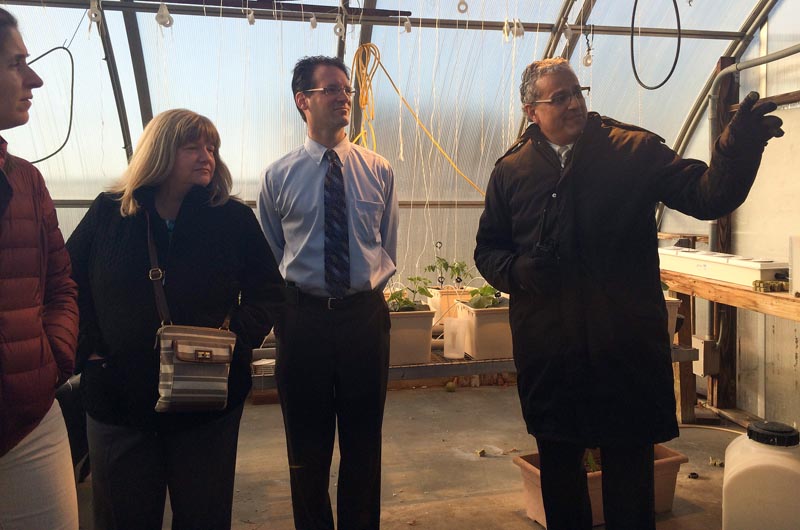
<p>It might well have been dubbed the cook’s tour, since among other things when principal Gil Traverso took wide-eyed school committee members on an early-morning walk around the regional high school recently, the culinary arts teaching space was one of the first stops along the way that jarred the senses. But it certainly was not the only one.</p>
It might well have been dubbed the cook’s tour, since among other things when principal Gil Traverso took wide-eyed school committee members on an early-morning walk around the regional high school recently, the culinary arts teaching space was one of the first stops along the way that jarred the senses. But it certainly was not the only one. Rotting windows, mildew in the weight room, poorly functioning air exchange systems, safety hazards in the gymnasium — the general theme was clear enough. Six years of deferred maintenance at the high school have come home to roost, and today the building that houses some seven hundred and fifty students in grades nine through twelve from September until June is in a state of widespread disrepair.
It’s ironic to note that this is the year the high school has also retired a twenty-year bond that was used to pay for the building when it was new. Wasn’t it just yesterday that Island voters were wrestling with the decision to spend some $18 million to renovate and expand the high school?
Of course it wasn’t, and Mr. Traverso, who has just stepped in this year to take the helm at the regional school, had made his point. District committee members responded on Monday, swiftly voting to approve an $18.6 million budget for the coming year that includes money for short-term building repairs.
The crumbling state of the high school building came as no surprise to Vineyard schools superintendent Dr. James H. Weiss. The problems have been known, Mr. Weiss told the Gazette later, and he cited the need to develop a comprehensive plan to bring the school building up to standard. With Mr. Weiss retiring at the end of the school year, the leadership for that project will fall to his successor.
Mr. Weiss is justifiably proud of the Vineyard school system, and the regional high school consistently gets high marks for achievements in academics, sports and creative arts. And while we understand that improving the quality of the education our children receive should take precedence over bricks and mortar, having a safe and attractive environment is an important part of learning, too. Why was the condition of the high school allowed to deteriorate to this extent before someone raised a flag? Where was the former principal on this? And why did problems with the building come as a shock even to members of the regional high school committee?
Now that the situation has been laid bare, school leaders should start laying the groundwork for the future. There is widespread expertise on the Vineyard in the fields of architecture and building technology, including solar and other alternative energy. The high school vocational program teaches building trades. And let’s be honest, the Vineyard loves committees. Why not assemble a blue-ribbon group that involves students, teachers and community leaders from the construction sector to sketch a concept for a rehabbed low-maintenance, energy-efficient high school building of the future? It could save a lot of taxpayer money in the long run and perhaps give the Island a renovated high school building to be as proud of as the students whose achievements we celebrate constantly.
Comments
I was on the "cook's tour" of
JAMES MALKIN ChilmarkI was on the "cook's tour" of the MVRHS facility as an observer. My personal opinion is that the condition of the physical plant is appalling. The former principal is gone, whomever else had the responsibility and authority for monitoring and addressing the glaring issues should be asked to "pursue his excellence elsewhere."
I'd also suggest that there needs to be a comprehensive review of the issues resulting in a report prioritizing problem items by safety and cost. This report needs to be presented to each town and its voters and all should be encouraged to take their own cook's tour and see the condition of the school in the daylight (not at night when much of this goes unnoticed due to lighting.)
Further, blue-ribbon committees are useful at idea generation, but less effective at execution. I would suggest that we need a full-time Project Manager with a civil engineering background who can monitor the building, reconstruction, project components and systems from initial engineering through the life of the systems. It seems that we need an integrated and continual approach to this issue. We need to provide funding not just for the project components, but for maintenance over time. And we need to install systems that Vineyard contractors and suppliers can support.
I'd further note that there are a number of island school buildings that need similar attention. It may be that the cost of a full-time project manager might be shared if appropriate.
It was embarrassing when
Carla Cooper edgartownIt was embarrassing when visiting student athletes would remark how "ghetto" the high school is. The grounds could also use some sprucing up.
Add new comment