

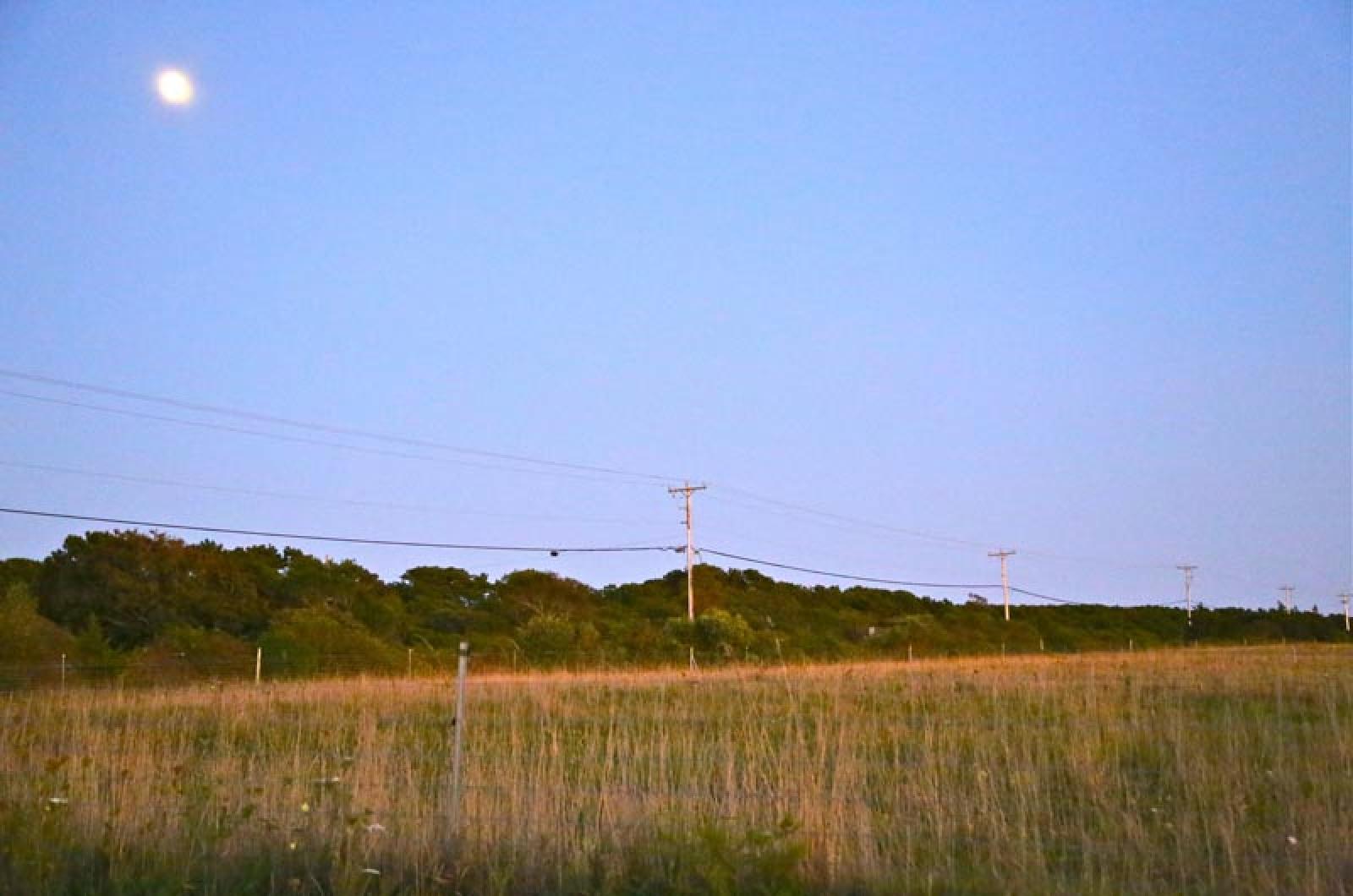
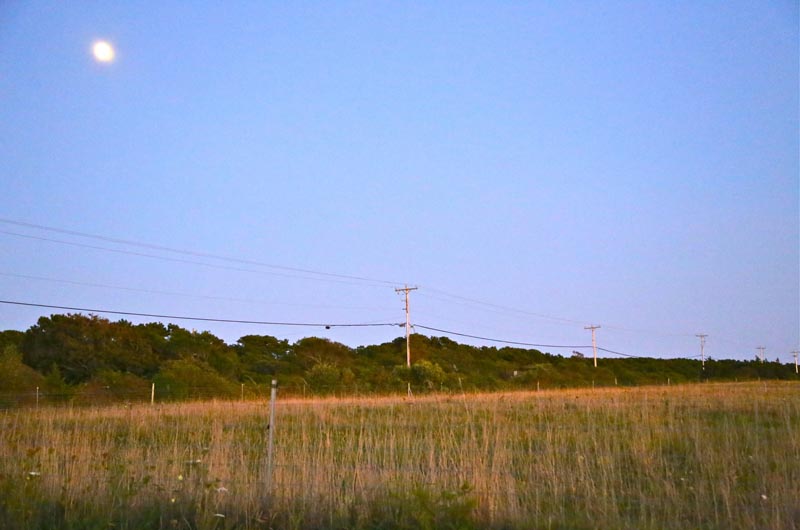
The power company resumed an herbicide spraying program last month, reigniting a debate about threats to the environment on the Cape and Vineyard.
The power company NStar resumed an herbicide spraying program last month, reigniting a debate about threats to the environment.
NStar began spraying again on the Cape and Vineyard on Nov. 18 after receiving approval for its 2013 yearly operational plan from the state Department of Agricultural Resources. NStar spokesmen said they plan to continue selective application of herbicides in 2014. The action ends a four-year moratorium on spraying, which the company voluntarily imposed in 2009.
Toward the end of November, herbicides approved by the state for use in environmentally-sensitive areas were applied to vegetation along some of the right-of-way territories the company maintains beneath power lines in Oak Bluffs and Tisbury.
Department of Agriculture will accept public comment about NStar plans.
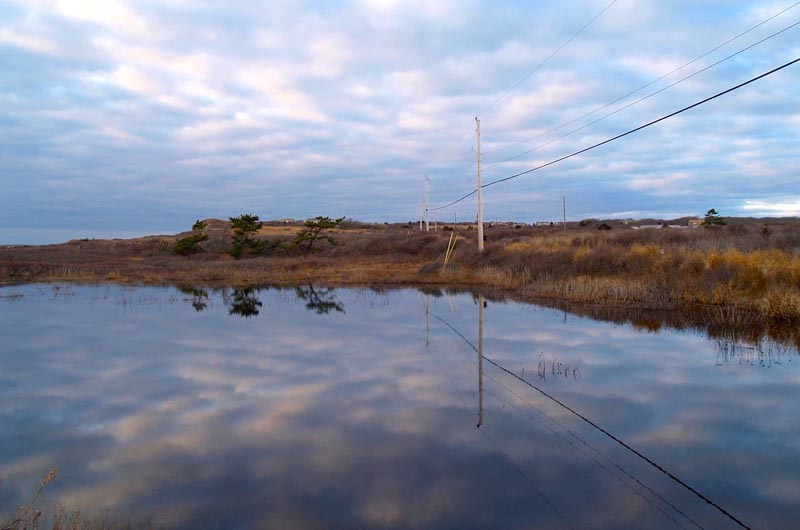
Department of Agriculture will accept public comment about NStar plans.
NStar’s actions and the state’s approval of the plan have drawn concern from Cape and Island residents who fear that the chemicals approved for use may be harmful to the environment, especially in private wells, ponds and streams.
On Tuesday an NStar arborist will appear at the Tisbury board of health meeting to discuss the integrated vegetation management program.
During a 90-day extended public comment period, the state agency received more than 500 public comment letters on the issue of herbicide use.
A spokesman for the state Department of Agricultural Resources declined repeated requests from the Gazette for a telephone interview this week.
“MDAR reviewed the comments to determine if there were any that demonstrated NStar’s plan was not compliant with the requirements set forth,” spokesman Mary-Leah Assad wrote in email. She would not provide information about the content of the comments, which are only accepted in hard copy, via mail.
Some of the letters were submitted by affiliates of Green Cape, a regional nonprofit which is involved in a campaign to pressure NStar to return to mechanical control of vegetation under power lines. Like Islanders, Cape residents are served by a single source aquifer, which Green Cape says is threatened by the use of herbicides.
Last week, 30 parties affiliated with Green Cape took formal action to appeal the department of agriculture’s approval of the 2013 plan, but said they have not yet heard back from the agency. In the interim, the agency is expected to consider the various complaints filed.
NStar maintains that the use of herbicides is essential to their vegetation management plan.
“Our integrative vegetation management program has proven time and again to be the most effective way to maintain electric service reliability and promote self-sustaining low-growing meadowlands,” said spokesman Michael Durand.
The plan outlines a multi-part management system, which includes mechanical controls, such as hand cutting, trimming and mowing and chemical controls.
When undesirable vegetation is controlled in this way, over time, less and less human intervention is necessary, Mr. Durand said.
The plan explains that controlling vegetation using mechanical methods is a short-term solution and can increase the density of the vegetation. In the four years where chemical spraying was not practiced, plants have grown much higher than what would have been desirable, Mr. Durand said.
Chemical spraying in Oak Bluffs, Tisbury and Edgartown is also included in the company’s 2014 yearly operational plan, which is currently under review by state agriculture officials, but Mr. Durand said the Vineyard schedule was not yet set.
“It is possible that once we do finalize our schedule, we may or may not be in those towns,” he said.
The moratorium, self-imposed by the company in 2009, allowed the Cape Cod Commission to map private wells on the Cape, locations of which were previously unknown to NStar.
“The Cape Cod Commission asked us to hold off so they could look further into the mapping of wells and further research into testing of wells,” Mr. Durand said.
But that moratorium expired this year, and now the concerns of residents who abut the right of ways have surfaced again.
“Our health is at risk,” said Tisbury resident Jaime Hamlin. “You can’t tell me that it’s not toxic to our groundwater . . . if it’s killing conifers, it’s also going to get [in] your groundwater.”
James Kozak, a Tisbury resident who owns the Martha’s Vineyard Honey Company, has joined Green Cape to speak out against NStar’s use of herbicides on the Vineyard. He lives on Vincent’s Way and keeps more than 80 beehives. He’s concerned about the effect of the herbicides on the drinking water he uses from a nearby well, which is located close to Lake Tashmoo, as well as the potential threat to his bees.
“This isn’t vegetation management, this is poison spraying,” Mr. Kozak said. “I don’t think anyone could look at this and not call it poison spraying because it is poisonous to those trees.”
He worries that his bees will mistake the glue-like herbicide for nectar and bring it back with them to the hives, eventually compromising the central nervous system and reproductive capabilities of the queen.
While the active ingredients in the tank mixes may be registered with the EPA, Mr. Kozak said little is known about the vast majority of these substances. He said there is not enough research to prove that the inactive or “other” ingredients in herbicides are not harmful.
“When NStar says that this is perfectly harmless when applied properly, maybe the one per cent is, but there is so much that is unknown that people would be fooling themselves to believe what they are told,” he said.
Sue Phelan, executive director of Green Cape, goes further to question the safety of even the active ingredients in the herbicides deemed appropriate for environmentally sensitive areas. She said when many of the chemicals were registered with the Environmental Protection Agency decades ago, very few studies had been conducted to assess their environmental impact.
She speculates that NStar may be resuming chemical spraying to increase profits, a presumption shared by Cape and Islands state Sen. Daniel Wolf, who published an opinion piece denouncing NStar’s practices in the Cape Cod Times last week.
“While the company has never released a cost analysis of spraying compared to other methods (despite numerous requests), it’s likely they are convinced that spraying is the cheapest alternative,” Mr. Wolf wrote. He criticized the company for ignoring the concerns of Cape community officials and residents who have opposed spraying in their towns.
Ms. Phelan said many other Islanders had reached out to her with their own concerns. “It seems to me that people were getting more informed and not happy with the way things were going,” she said. But she warned that the issue has a steep learning curve, due to all the state and federal regulations involved.
Meanwhile, the department of agriculture is accepting public comment about NStar’s 2014 yearly operational plan for the Cape and Islands. Comments can be mailed to commissioner Greg Watson at the Massachusetts Department of Agricultural Resources, 251 Causeway Street, Suite 500 Boston, MA 02114-2151. Comments must be received by Jan. 5.
Comments
So essential.... that they
DanSo essential.... that they weren't used for the last 4 years.
Curious if the NStar decision
TomCurious if the NStar decision makers would be willing to spray this same chemical "solution" in their back yards to prove to Vineyard families living in and around the power lines that its of no concern.
Of course this has everything to do with profits. Yes, it cost more to mechanically manage vegetation. But is that reason enough to disregard the health concerns of my family and that of my neighbors who abut these sensitive vistas? And now, equally concerning to that of health risks, we Vineyarders must endure the emotional duress about the potential harm to our children, our domestic animals and ourselves.
The chems are so toxic they
Monica Miller Oak BluffsThe chems are so toxic they last for 2-4 years to kill the targeted (and not specifically targeted) life forms.
dear Gazette, I may have
Monica Miller Oak Bluffsdear Gazette, I may have posted more than one comment, this is the only comment I wish to post, thank you!
I lost whole bee hives in a toxic town West Tisbury this summer and last summer, whole hives dead, bees with tongues hanging out and exploded abdomens. That IS chemical poisoning. Landscapers spray during the day, farmers spray at night, right next to your "organic" gardens. Wake up and ask questions people? What if it rains all week and those chemicals never dry? what if the chemicals travel right into your yard, your well, your pinkletinks puddle, your beehives, the tiny cracks and crevices native insects live in? Follow CHEM FREE MV on fb and contact us to get your business / personal property/ farm certified BEE friendly. All of life is at stake.
NStar also needs permission
EdwardNStar also needs permission under the Wetlands Protection Act especially for the picture above that is immediately adjacent to a water body. Applying herbicides (destruction of vegetation) within a "Resource Area" and an "Area Subject to Protection" should require a Notice of Intent or at least a "Determination of Applicability" including work performed in the "Buffer Zone" which is 100 feet on either side of the Resource Area. It can also be argued that the aquifer recharge area, which is a substantial portion of the island, is an area subject to protection under the act.
There is no mention in the story of whether NStar has even filed the proper paperwork under the Wetlands Protection Act.
Here's an idea: HIRE some
Chris Daly AquinnahHere's an idea: HIRE some people to get out there and prune, chop, cut, chip, and mulch. More jobs, no chemicals. Build the cost into the rate base (minus the cost of the herbicides and the reserves that NStar would need to settle the lawsuits resulting from its polluting activities).
As a big fan of the
Richard Vineyard HavenAs a big fan of the electricity provided by N. Star, I have a couple comments. It seems that N. star is doing what the state says is fine to do. On the island, if we combined our voices and votes we could put an end to a lot of unnecessary pesticides, fertilizers, and the like. It seems we are willing to go farther than the state to keep our environment and citizens living in better conditions. Let's put it to a vote! Let's limit the hazardous chemicals from reaching the island. Let's hire an entity to test the soil and punish the perpetrators! Let's save our island with votes and dollars and bring back the eel grass! But please, don't single out N. Star. Blame the list of people and businesses that spread, spray, and dump all these legal products all over our island. If you want to blame N. Star, suggest to them to communicate a bit better to our elected officials when they are making changes, as it is evident we are a sensitive and concerned group of islanders when comes to these things-and we want some input-
How bout an Island wide ban
PaulB EdgartownHow bout an Island wide ban on all pesticides, including landscapers, how green do we need lawns!
We must protect our Islands water supply and ponds!
I agree, Paul. Everyone who
Steve East FalmouthI agree, Paul. Everyone who protests N star's actions should take a hard look at their own use of pesticides. I am sure that the amount of herbicide / pesticide / nitrogen fertilizer etc applied to private property on the vineyard is far greater that used by N star!
The cancer rates are high
Deborah Pedersen SpydebergThe cancer rates are high enough down there. Fight this with every breath. They are tampering with environment, the air you breathe, the food you eat; killing off those 'unimportant' little bugs and weeds. 'Selective herbicides' what?! Get better definitions, don't let them pollute your wells, ponds, swampy land, in the process killing off whole species - DON'T LET THEM!! It's soo destructive, with little or no thought for long term effects. Get detailed info, and find out specifically WHY this poison is supposedly necessary! Please, people, they are killing off the land too quickly. Find out if there are natural alternatives. This is no joke, you will not be able to replace the land and wildlife killed or poisoned by these measures. Don't let them do it.
Go Debbie. Let's keep MVRHS
EdwardGo Debbie. Let's keep MVRHS Class of 1970 involved in local politics regardless of how far we currently live from MV.
Ed
Here's a thought.. If they
Maggie Oak BluffsHere's a thought.. If they put the electric cables underground, they wouldn't have a weed problem. The island would be more beautiful, safer during storms, the environment would prosper, It would put people to work and property values would rise. Don't tell me Nstar can't afford...
Maggie, you are so right. We
Frank BrunelleMaggie, you are so right. We have for example, telephone poles in the MIDDLE of the sidewalk right of ways on Beach Road. We need that space for bicycles, and pedestrians. NSTAR has never been in the least concerned about the public. The town of Tisbury has written to them asking them to put the poles underground and they have not responded. This is not right. They cut away tree limbs butchering them for their lines, just look up when you drive, they put in huge poles, but never put them underground. It really is horrible what they do to the citzenry.
NSTAR has filed a public
Bobbie McDonnell Harwich PortNSTAR has filed a public notice that they will be spraying the 2014 designated towns on the Cape and Islands beginning this Monday, August 18th and going until the end of the year. In actuality, they sprayed all designated areas (excluding Osterville, where NSTAR CEO Tom May has a new home) in only 6 weeks, in wind and rain, oblivious to the pesticide label advisories about wind drift and the protection of the EPA designated sole-source-aquifer that is our only water supply. Edgartown,Oak Bluffs and Tisbury are on this years list, but they will need to return to "touch up" last years spraying also.
How fortunate for us that the President and his family will be here to see what happens when Federal and State agencies ignore the public health issues of the citizens they are supposed to be protecting. Residents, tourists, businesses, health officials and selectmen have all protested mightily to Nstar, MDAR, EPA and the President himself, to no avail.
NSTAR should not be allowed to make decisions which risk the public health without even supply facts and figures to show why the use of chemicals is even necessary. "Everyone does it" is not good enough for us. Read the pesticide labels, look at the maps and be informed. Nstar's filing is at : http://www.kenersongroup.com/yop/capecod2014/nstar/
Add new comment